Summary:
What Makes a Roof Solar-Ready
Solar-ready doesn’t mean “any roof with space.” It means your roof can handle the weight, won’t need replacing before your panels do, and makes installation straightforward without voiding warranties or creating leak risks.
Most solar panels last 25 to 30 years. Your roof needs to match or exceed that timeline, or you’re paying to remove and reinstall everything when the shingles fail at year 15. That’s not a small expense. It’s also not a quick project.
The best materials share three traits: they’re durable enough to outlast the panels, compatible with standard mounting systems, and they don’t complicate installation. Metal, asphalt, and tile each fit the bill—but they work differently depending on your home, budget, and energy goals.
Standing Seam Metal Roofing for Solar Panels
Standing seam metal is the top choice if longevity matters to you. These roofs last 40 to 70 years, which means your solar system will likely need upgrading before your roof does. That’s the ideal scenario.
Installation is cleaner, too. Instead of drilling holes through your roof, installers use clamps that attach directly to the raised seams. No penetrations means no new leak points. Your roof stays watertight, and your warranty stays intact.
Metal roofs also reflect heat instead of absorbing it. That keeps your attic cooler, which reduces your air conditioning load. It also keeps the panels themselves cooler, and cooler panels perform better. You’re generating more power on the same sunny day compared to a darker, heat-absorbing roof.
The upfront cost is higher than asphalt. But when you factor in the lifespan, the energy savings, and the fact that you’ll never reroof during your solar system’s life, metal often pencils out as the smarter investment. Especially in Contra Costa and Alameda Counties, where summer heat is intense and roofs take a beating from UV exposure.
If you’re building new or replacing an old roof anyway, standing seam metal is worth the conversation. It’s not the cheapest option. It’s the one that saves you money over 40 years instead of 15.
Asphalt Shingles with Solar Panels
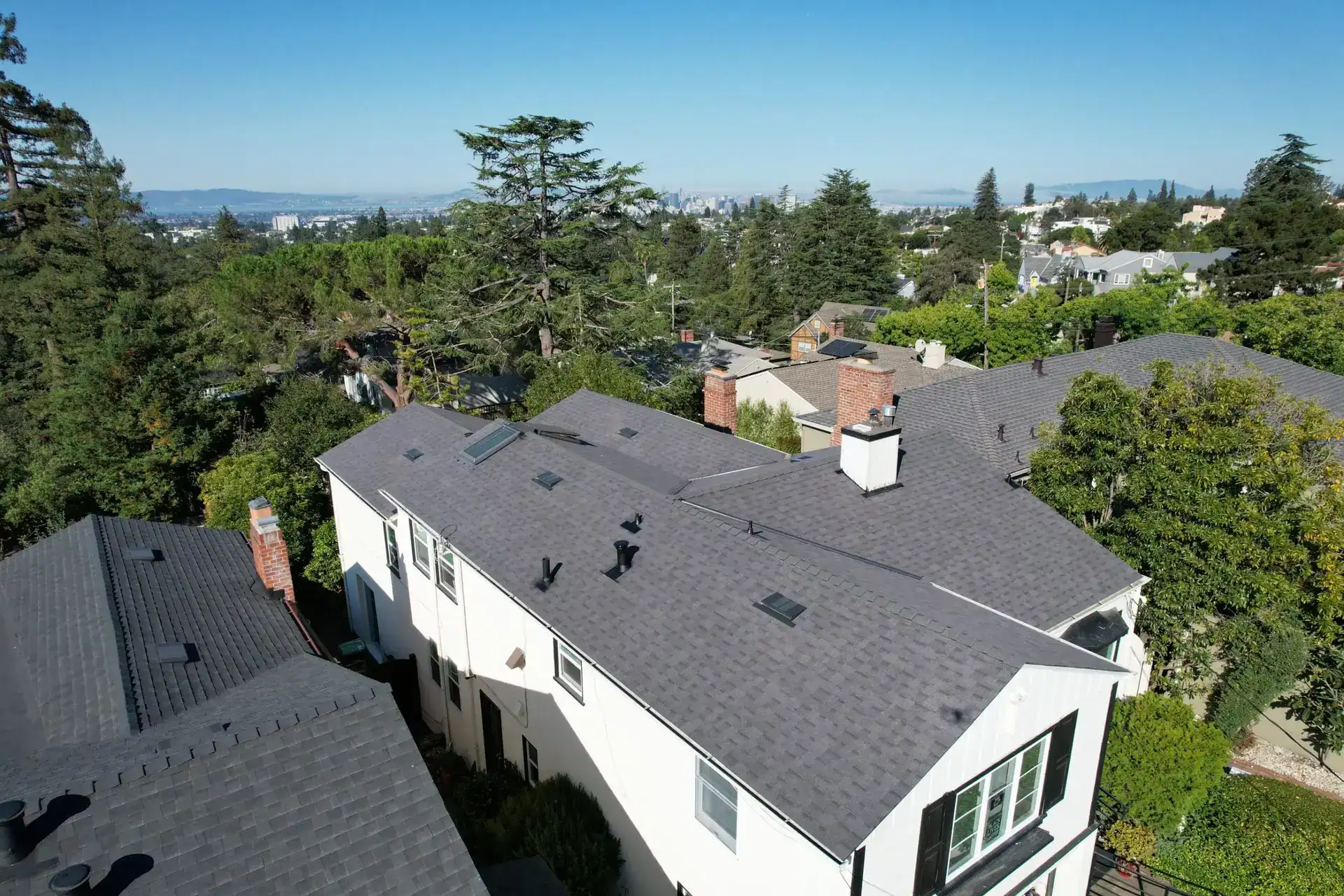
Asphalt shingles are the most common roofing material in California, and they work fine with solar panels—if they’re in good shape. The key word is “if.”
Most asphalt roofs last 15 to 30 years depending on quality and maintenance. If your shingles are already 10 or 12 years old, you’re looking at a replacement sometime during your solar system’s life. That means paying to remove the panels, replace the roof, and reinstall everything. It’s not impossible, but it’s expensive and disruptive.
Here’s the move: if your roof is older than 10 years and you’re going solar, replace it first. Get it done at the same time. You’ll save on labor costs, avoid future headaches, and ensure both systems age together. Plus, the federal tax credit covers the solar portion of the project, which helps offset the total investment.
Installation on asphalt is straightforward. Contractors drill studs into the roof deck, attach the mounts, and seal everything with flashing to prevent leaks. Any reputable installer knows how to do this without compromising your roof’s integrity. Just make sure they’re using proper flashing and high-quality sealant—cheap shortcuts lead to water damage down the line.
Asphalt shingles are affordable, available, and compatible with every major solar mounting system. They’re not as durable as metal, but if you’re working with a tighter budget or your roof is relatively new, they’ll get the job done. Just be honest about the timeline. If replacement is coming in the next five years, deal with it now, not later.
Solar Shingles and Integrated Roofing Systems
Solar shingles are a different animal. Instead of mounting panels on top of your existing roof, you’re replacing the roof itself with shingles that generate power. They look like regular roofing materials—no bulky panels, no visible racking—but they’re doing the same job.
Brands like GAF Timberline Solar and Tesla Solar Roof have made this technology more accessible. The shingles integrate directly into your roof deck, so you’re getting weather protection and energy generation in one system. It’s cleaner looking, and in some neighborhoods with strict HOA rules, it’s the only option that gets approved.
The tradeoff is cost. Solar shingles are more expensive upfront than traditional panels. But you’re also getting a new roof in the deal, so if you need both anyway, the gap narrows. And because they’re part of the roof structure, they often come with the same warranties as your roofing materials—25 years or more in many cases.
How Solar Shingles Perform in the Bay Area
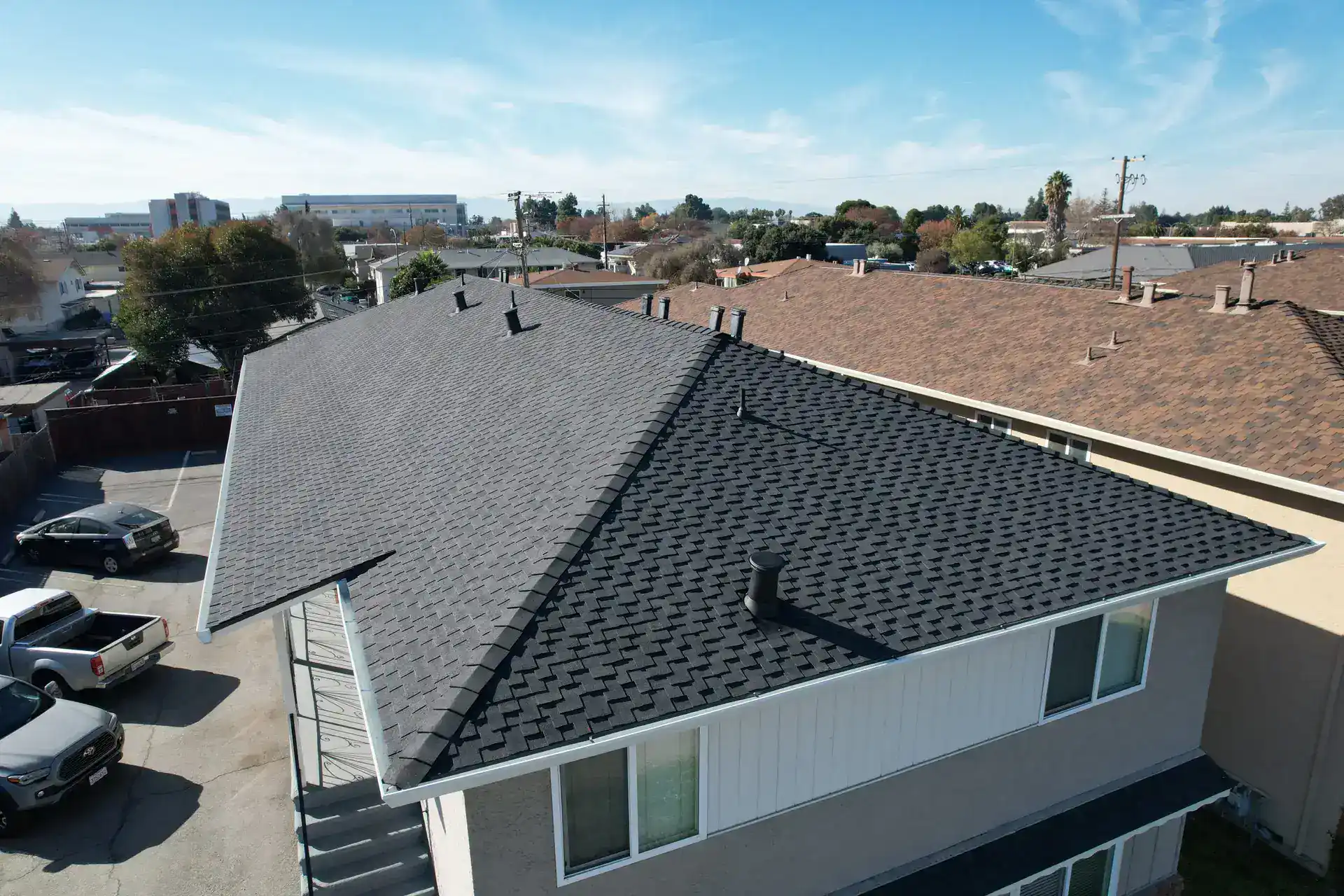
Bay Area weather is a mixed bag. You’ve got intense summer sun, occasional heavy rain, and coastal humidity depending on where you live. Solar shingles handle all of it, but performance depends on installation quality and system design.
The shingles themselves are durable. Most are made from tempered glass with photovoltaic cells embedded inside. They’re rated to withstand high winds, hail, and fire—often better than traditional asphalt shingles. That matters in areas like Contra Costa County, where wildfire risk and strict building codes go hand in hand.
Energy output is comparable to traditional panels, but it depends on your roof’s orientation and pitch. South-facing roofs with a 30-degree angle perform best. If your roof is flat or faces north, you’ll generate less power. That’s true for any solar system, but with shingles, you can’t adjust the angle after installation. The roof is the system.
One advantage in the Bay Area: solar shingles qualify for the same federal tax credit as traditional panels. That’s 30% of your total system cost, which can be substantial. California also offers a property tax exclusion, meaning your home’s assessed value won’t increase just because you added solar. You get the benefit without the tax hit.
Installation takes longer than traditional panels because you’re essentially reroofing the house. But once it’s done, maintenance is minimal. You’re not dealing with separate roofing and solar warranties or coordinating multiple contractors for repairs. It’s one system, one point of contact.
Cool Roofs and Energy Efficiency with Solar
Cool roofs are designed to reflect more sunlight and absorb less heat than standard materials. They can stay 50 degrees cooler than dark roofs on a summer afternoon. That’s not just comfort—it’s money.
When your roof stays cooler, your attic stays cooler. Your air conditioner doesn’t work as hard. Your energy bills drop. And if you’ve got solar panels on that roof, they perform better because heat degrades panel efficiency. A cooler roof means more power generation on the same sunny day.
Cool roof options include reflective metal, light-colored shingles, and specialized coatings. Some materials, like stone-coated metal with cool pigments, can reduce cooling costs by up to 25%. In California’s Central Valley and East Bay, where summer temps regularly hit triple digits, that’s a real number.
The benefits stack. You’re saving on cooling costs. Your solar panels are producing more power. And you’re extending the life of your roof because UV damage happens slower when the surface isn’t absorbing as much heat. It’s not a magic bullet, but it’s one of those upgrades that pays for itself over time without requiring any behavior change on your part.
California building codes already encourage cool roofs in new construction, and some local utilities offer rebates for retrofitting existing homes. If you’re replacing your roof and going solar, ask your contractor about cool roof materials. The upcharge is often minimal, and the return is measurable.
Choosing the Right Solar-Ready Roof for Your Home
The right roof depends on your timeline, budget, and energy goals. Metal lasts longest and installs cleanest. Asphalt works if your roof is young and you’re watching costs. Solar shingles make sense if you need a new roof and want the integrated look.
What matters most: match your roof’s lifespan to your solar system’s lifespan. Don’t install panels on a roof that’ll need replacing in 10 years unless you’re planning to reroof first. And don’t skip the federal tax credit—it’s 30% of your system cost, and it’s available through the end of 2025 for systems placed in service.
If you’re in Contra Costa or Alameda County and you’re ready to explore solar-ready roofing options, we can help. At DoPro Construction, we hold both roofing and solar licenses, so we understand how both systems work together. You won’t need two separate crews trying to coordinate. We can walk you through material options, permitting, and financing without the runaround—everything under one roof.