

Summary:
You’ve found the right contractor for your remodeling project. The quote looks solid, the timeline makes sense, and you’re ready to move forward. Then comes the question that stops most homeowners in their tracks: “How much do I need to pay upfront?”
If you’re not sure what’s standard, what’s fair, or what’s even legal in California, you’re not alone. Payment terms can make or break a project, and understanding them protects both your wallet and your peace of mind. Let’s walk through what typical payment terms for contractors actually look like, what California law requires, and how to structure payments that keep your project moving without putting you at risk.
Typical Payment Terms for Contractors
Most contractors use one of a few common payment structures, and knowing which one fits your project helps you plan your budget and avoid surprises. The structure you choose depends on project size, timeline, and complexity.
For smaller jobs, you might see a simple deposit-and-final-payment arrangement. For larger renovations, milestone-based or progress payment schedules are more common. Each approach has its place, and understanding the differences helps you negotiate terms that work for both sides.
The key is making sure payments are tied to actual work completed, not just time passing. That protects you from overpaying for unfinished work and gives your contractor steady cash flow to keep the project moving.
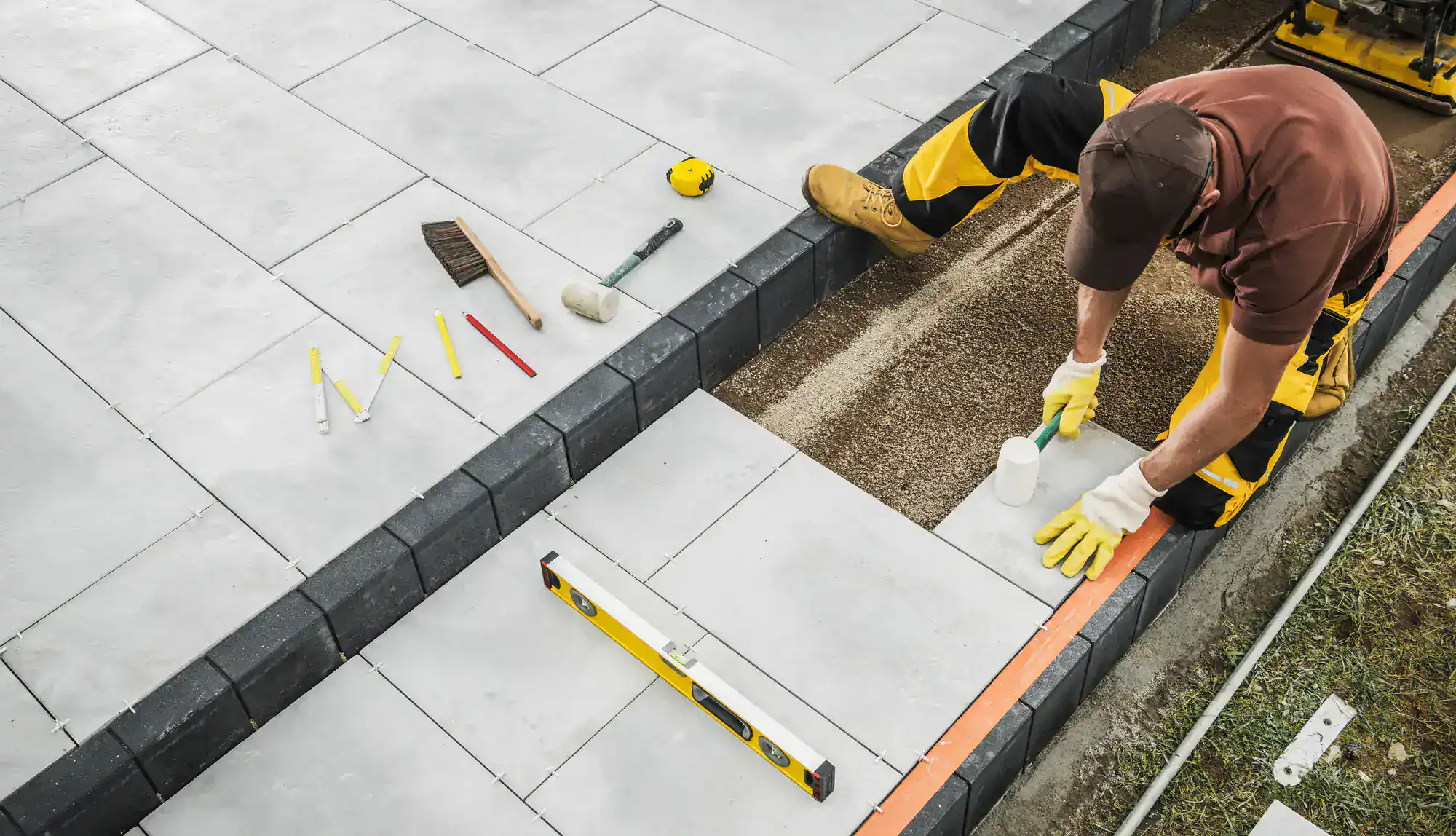
What Are Standard Contractor Payment Schedules
Net-30 payment terms are the most common in the construction industry. That means you pay within 30 days of receiving an invoice. Some contractors use Net-15 or Net-60, but 30 days is standard.
For home remodeling projects, though, you’ll more often see milestone-based payment schedules. These tie payments to specific phases of work. For example, you might pay when demolition is complete, another payment when framing is done, and so on until the final walkthrough.
Progress payments work similarly but are typically based on percentages of completion rather than specific milestones. Your contractor might bill monthly for the percentage of work completed during that period. This requires regular evaluations to verify what’s been done before releasing funds.
Deposit-and-final-payment structures are simpler and work well for smaller projects. You pay an initial deposit to cover startup costs and materials, then the balance when everything’s finished. This keeps paperwork minimal but requires you to have funds available for a larger final payment.
The best payment schedule for your project depends on its scope. A bathroom refresh might only need a deposit and final payment. A whole-house remodel needs a more detailed plan with multiple payment points. Your contractor should be willing to discuss options and create a clear, written schedule that protects both of you.
What matters most is that the schedule is in writing, tied to verifiable work, and complies with California law. Verbal agreements create confusion. Written terms create clarity.
How Much Can a Contractor Ask for Upfront in California
Here’s where California law gets specific, and it’s important. For home improvement contracts, contractors cannot legally request more than $1,000 or 10% of the total contract price, whichever is less, as an upfront deposit. This comes from California Business and Professions Code Section 7159.
Let’s break that down. If your kitchen remodel costs $25,000, the maximum legal deposit is $1,000, not $2,500. If you’re doing a smaller project for $8,000, 10% would be $800, so that’s your legal maximum. For a very small job of $600, the legal limit is $60.
This law exists to protect homeowners from losing large sums to contractors who might disappear or abandon projects. It’s enforced by the Contractors State License Board, and violating it can lead to fines, license suspension, or even criminal charges for the contractor.
You can’t get around this limit by calling the deposit something else. Some contractors try to label it a “mobilization fee” or “pre-construction cost,” but courts have ruled that disguising excessive deposits is still illegal. If a contractor asks for more than the legal limit, that’s a red flag.
This rule applies specifically to home improvement contracts. Commercial projects have different regulations. New home construction may also have different terms. But for remodeling, repairs, renovations, and additions to existing residential properties, the $1,000 or 10% rule is absolute.
What about materials? Some contractors want payment upfront for custom cabinets, windows, or other long-lead items. California law says you cannot pay for materials not yet delivered or work not yet completed, beyond that initial deposit. The risk is supposed to fall on the contractor, not you.
Reputable contractors understand these laws and structure their payment schedules accordingly. They work with suppliers to get credit terms or staged payments, minimizing the need for large upfront deposits from homeowners. If a contractor pressures you for a higher deposit, it might indicate financial instability or unfamiliarity with California regulations.
Construction Contract Terms That Protect You
A written contract isn’t just a good idea in California—it’s legally required for any home improvement project over $500. That contract should spell out every detail of the payment arrangement, including when payments are due, what triggers each payment, and what happens if something goes wrong.
Payment terms should include the total contract price, the payment schedule with specific amounts and dates, and descriptions of what work must be completed before each payment. The more specific, the better. Vague language creates disputes.
Your contract should also address change orders, retainage, and final payment conditions. These details protect both you and your contractor by setting clear expectations from the start.

Milestone-Based Payment Structures for Home Remodeling
Milestone-based payments tie each payment to a specific, verifiable phase of work. This is considered best practice in the industry because it aligns payment with actual progress, not just time passing.
For a typical home remodel, milestones might include completion of demolition, rough framing, rough plumbing and electrical, drywall, trim work, and final finishes. Each milestone should have a clear definition of what “complete” means and a corresponding payment amount.
A common structure might look like this: initial deposit of $1,000 or 10% (whichever is less), 20% when demolition and prep work are complete, 25% when framing is done, 25% when plumbing and electrical rough-in are complete, 20% when finishes are installed, and 10% held back until final inspection and punch list items are complete.
That final holdback is called retainage, and it’s your leverage to ensure the contractor finishes all the details. Industry standard retainage ranges from 5-10% of the total contract value. It’s released only after you’ve done a final walkthrough, verified that all work is complete to your satisfaction, and confirmed that any punch list items have been addressed.
Before releasing each payment, you should inspect the work yourself. Don’t just take the contractor’s word that a milestone is complete. Walk the site, ask questions, and verify that what was promised has been delivered. If something doesn’t look right, address it before signing off on that payment.
Milestone-based schedules work well for projects that last more than a few weeks. They give you control over the process and give your contractor steady cash flow to pay subcontractors and purchase materials. It’s a win-win when structured fairly.
The key is making sure milestones are clearly defined in writing before work begins. “Rough framing complete” should mean something specific, not just a vague description. Your contract should spell out what constitutes completion for each phase.
Red Flags in Contractor Payment Terms
Knowing what’s normal helps you spot what’s not. Certain payment requests should immediately raise concerns and prompt you to ask more questions or walk away entirely.
Requests for payment exceeding California’s legal limits are the biggest red flag. If a contractor asks for $3,000 upfront on a $20,000 project, they’re either unaware of the law or deliberately violating it. Neither scenario is acceptable.
Cash-only payment demands are another warning sign. Legitimate contractors accept checks, credit cards, or electronic transfers and provide detailed receipts. Cash payments leave no paper trail, making it nearly impossible to prove payment if disputes arise later.
Pressure for immediate decisions or “sign today to get this price” tactics are classic scam moves. Legitimate professionals understand that home improvements are major financial decisions. They give you time to review contracts, compare bids, and make informed choices.
Contractors who show up door-to-door claiming they “noticed damage” or have “leftover materials from another job in the area” are often running scams. Especially after natural disasters, these “storm chasers” move through neighborhoods targeting vulnerable homeowners.
If a contractor asks you to pull the permits yourself, that’s a red flag. Licensed contractors handle permitting as part of the job. Asking you to do it might mean they’re unlicensed or trying to avoid inspection requirements.
No written contract is a deal-breaker. California law requires it for projects over $500, but even for smaller jobs, you should insist on written terms. Verbal agreements are nearly impossible to enforce if something goes wrong.
Quotes that seem too good to be true usually are. If one contractor’s bid is significantly lower than others, there’s a reason. They might be planning to cut corners, use inferior materials, or add surprise fees later.
If subcontractors or suppliers contact you directly asking for payment, that’s a warning sign the main contractor isn’t managing finances properly. While you contract with the general contractor, not the subs, unpaid subcontractors can place liens on your property.
Making Payment Terms Work for Your Project
Understanding independent contractor payment terms gives you the knowledge to protect your investment and work with contractors confidently. California’s deposit laws exist to protect you. Milestone-based payment schedules keep projects moving while limiting your financial risk. Written contracts create clarity for everyone involved.
The right payment structure depends on your project’s size and complexity, but the principles stay the same. Tie payments to completed work, never pay in full upfront, verify everything before releasing funds, and make sure every detail is in writing.
When you’re ready to move forward with your Contra Costa County remodeling project, we bring transparency to every payment conversation at DoPro Construction. With our Never Get Burnt Guarantee, zero upfront payment requirements, and milestone-based payment structures that protect your investment, we’ve built our reputation on doing things the right way.