Your kitchen works against you every day. Cramped counters. Cabinets that don’t close right. A layout that made sense in 1985 but feels ridiculous now.
You know it needs work. The question is how much work, and whether you’ll actually get that money back. Because in Contra Costa County, where a minor kitchen refresh can cost $25,000 and a full remodel hits six figures, every decision matters. You’re about to learn which upgrades deliver real returns and which ones just look good on Pinterest. Let’s start with the numbers that actually matter.
Why Minor Kitchen Upgrades Beat Full Remodels on ROI
Here’s what most contractors won’t tell you upfront. A $28,000 kitchen refresh typically returns 113% of its cost nationally. A $164,000 gut renovation? You’re looking at 36% if you’re lucky.
The math doesn’t lie. Strategic upgrades—the kind that update what people see and touch without moving plumbing or tearing out walls—deliver better returns than luxury overhauls. You keep your existing layout, focus on high-impact changes, and avoid the structural work that inflates budgets.
Bay Area homeowners face this reality even more sharply. Labor costs here run higher than most of the country. Permits take longer. Every decision to move a gas line or reconfigure your floor plan adds weeks and thousands to your timeline. The smartest money goes into improvements that transform how your kitchen looks and functions without the complexity that kills ROI.
Cabinet Makeovers That Cost Half of Replacement
Your cabinets dominate your kitchen visually. They’re also where most people blow their budget unnecessarily.
Cabinet refacing gives you new doors, drawer fronts, and hardware while keeping your existing boxes. In Contra Costa County, that typically runs $4,000 to $10,000 for an average kitchen—about half what you’d spend on full replacement. You get the same visual transformation. The boxes stay put, which means no demo, no disposal fees, and no surprises when you open walls.
The ROI sits between 80-90% because you’re updating what people actually see. Most buyers can’t tell the difference between refaced cabinets and new ones. They notice the style, the finish, and whether everything looks current. The structural boxes behind those doors? Nobody’s checking.
This approach works best when your existing cabinets are solid. If you’ve got quality construction from 20 or 30 years ago, those boxes often outlast what you can buy today. Reface them in a current style—shaker doors in white or gray, modern hardware in brushed nickel or matte black—and you’ve updated your kitchen without the cost of starting over. Just painting existing cabinets runs even less, typically $1,500 to $4,500, though you’re limited to working with your current door style.
The timeline matters too. Cabinet refacing wraps up in 3-5 days versus weeks of disruption for full replacement. You’re not coordinating demo crews, dealing with dust everywhere, or eating takeout for two months. The work happens, your kitchen looks new, and you move on with your life.
Countertop and Backsplash Updates That Actually Pay Back
Countertops take up visual real estate. Worn laminate or tile from 1992 broadcasts “dated” the moment someone walks in. Upgrading this surface delivers immediate impact without the complexity of cabinet work.
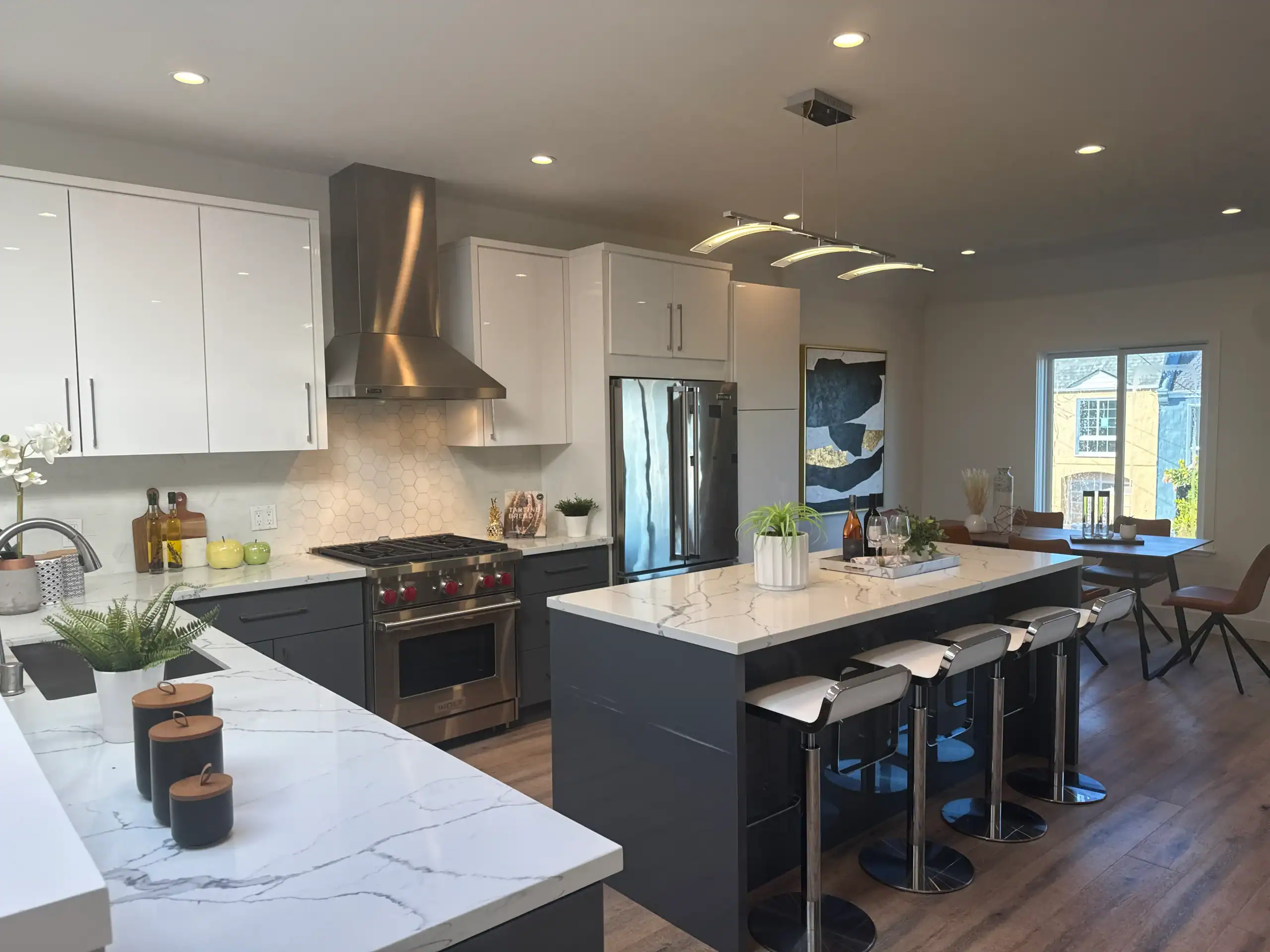
Quartz countertops cost $3,000 to $4,500 installed for a typical 40-square-foot kitchen and add $2,500 to $4,000 in home value. The ROI sits around 70-80%, especially when you’re replacing obviously worn surfaces. Quartz handles daily use without staining, doesn’t need sealing like granite, and comes in styles that work with any cabinet color. It’s not the cheapest option, but it’s the one that makes sense for families who actually cook.
Your backsplash works differently. It’s a smaller surface area, but it’s also where you can add personality without risk. Subway tile remains timeless—white, beveled, in a classic brick pattern—and costs $1,000 to $2,000 installed. Natural stone tile backsplashes trend in 2025, giving you texture and interest while staying neutral enough for resale.
The key is proportion. If you’re keeping builder-grade laminate counters, a $4,000 marble backsplash makes no sense. But if you’ve upgraded to quartz, a quality backsplash completes the look and signals that the kitchen’s been thoughtfully updated. Buyers notice cohesion. They notice when one element looks premium and everything else looks tired. Balance your investments so the whole space feels current, not just one corner of it.
Don’t overthink the details. Peel-and-stick options exist for budget-conscious updates, running $200-500 for materials if you install yourself. They work fine for short-term improvements, though they won’t hold up like real tile if you’re staying long-term. Choose based on your timeline and whether you’re updating for yourself or for sale.
Kitchen Upgrade Cost: Where to Spend and Where to Save
Budget allocation determines whether your kitchen upgrade makes financial sense or becomes a cautionary tale. In Contra Costa County, costs run higher than national averages—labor, permits, and materials all reflect Bay Area pricing.
Minor kitchen remodels here typically range from $25,000 to $50,000. That includes cabinet refacing or painting, new countertops, updated lighting, fresh paint, and maybe new flooring. You’re working within the existing footprint, avoiding plumbing and electrical overhauls, and focusing on surfaces people see and touch.
Mid-range remodels jump to $75,000-150,000 once you start moving things. New appliances, layout changes, additional electrical circuits, and custom cabinetry drive costs up fast. The ROI drops as your budget climbs because you’re adding features that matter to you but may not matter to the next owner. That’s fine if you’re staying for a decade. It’s questionable if you’re selling in three years.
Budget-Friendly Kitchen Remodel Priorities
Smart budgeting starts with understanding what actually transforms your kitchen versus what just spends money. Paint delivers the highest ROI for the lowest cost. A professional paint job runs $800-1,200 and typically returns 70-80% of that investment. Fresh white or light gray on walls makes everything else look cleaner and more current.
Hardware updates cost $200-600 for a full kitchen depending on how many cabinets you have and what style you choose. Brushed brass, matte black, or brushed nickel in a modern profile changes how your cabinets read visually. It’s the easiest upgrade that makes the biggest difference for the least money. Bulk packs of 20-30 knobs or pulls keep costs down—you’ll find quality options for $3-15 per piece.
Lighting often gets overlooked but transforms how your kitchen feels. Under-cabinet LED strips run $200-500 for materials and eliminate the shadows that make food prep harder. Replacing a dated ceiling fixture with a modern pendant or flush-mount costs $150-400 and updates your kitchen’s style immediately. Frosted bulbs instead of clear ones soften the light and make the space feel more polished.
Keep your existing layout if possible. Moving a sink means rerouting plumbing. Relocating your range means gas line work and permits. Knocking out a wall requires engineering, permits, and structural work that can add $10,000-30,000 to your budget. These changes make sense when your layout genuinely doesn’t function. They don’t make sense when you’re just chasing an open-concept trend.
Refinish instead of replace when you can. Existing hardwood floors can be sanded and refinished for $3-5 per square foot versus $8-15 for new flooring. If your appliances work fine but look dated, appliance paint exists for $50-100 and buys you another few years. Not everything needs to be new to look updated.
Where Premium Investments Actually Matter
Some upgrades justify spending more. Your faucet gets used dozens of times daily—cheap ones leak, corrode, and need replacement within a few years. A quality faucet in the $200-400 range lasts decades and makes every interaction with your sink better. High-arc designs with pull-down sprayers add functionality that budget models can’t match.
Appliances matter when they’re visible and used constantly. Stainless steel returns about 75% of its cost because buyers expect it in updated kitchens. You don’t need professional-grade ranges or built-in espresso machines—those rarely pay back. But a matching set of midrange stainless appliances signals that your kitchen’s been thoughtfully updated, not just patched together.
Flooring takes abuse in kitchens. Luxury vinyl plank costs $3-7 per square foot installed and handles spills, traffic, and dropped pans better than most options. It mimics wood or stone convincingly enough that most people can’t tell the difference. Real hardwood runs $8-15 per square foot and requires more maintenance, but it’s still the premium choice that buyers recognize. Choose based on your household and whether you’re staying long enough to enjoy it.
Storage solutions deliver value you feel every day even if they don’t show up in resale numbers. Pull-out shelves, lazy Susans, drawer dividers, and pantry organizers cost $500-2,000 depending on how much you add. They won’t increase your home value dollar-for-dollar, but they’ll eliminate the daily frustration of digging through cabinets. If you’re staying in your home, these upgrades improve your quality of life in ways that pure ROI calculations miss.
Energy-efficient upgrades sometimes qualify for rebates that offset costs. LED lighting throughout your kitchen, Energy Star appliances, and improved ventilation can reduce your utility bills while meeting California’s Title 24 requirements. Check available programs before you start—some offer hundreds back on qualifying improvements. The upfront cost matters less when you’re getting rebates and lower monthly bills.
Smart Kitchen Upgrades Start With the Right Plan
Your kitchen upgrade should improve how you live now and protect your investment for later. That means focusing on improvements that deliver both: better daily function and solid ROI when it’s time to sell.
Start with the high-impact, lower-cost changes. Cabinet refacing or painting, updated hardware, fresh countertops, and improved lighting transform how your kitchen looks and feels without the complexity and cost of full remodels. Keep your layout unless it genuinely doesn’t work. Avoid trendy finishes that’ll look dated in five years. Choose quality materials in neutral styles that appeal to the broadest range of buyers.
If you’re ready to move forward with upgrades that actually make sense for your Contra Costa County home, we bring the local expertise and transparent pricing that turns planning into reality. We handle everything from permits to final walkthrough, so your project delivers the results you’re expecting without the surprises that derail most remodels.