
Summary:
What Does ADU Construction Cost in the Bay Area
Let’s start with the number everyone wants to know. Bay Area ADU construction costs run between $150,000 and $500,000 depending on size, type, and finishes. The median sits around $177,500, or roughly $329 per square foot.
Garage conversions typically land on the lower end—$90,000 to $300,000—because you’re working with an existing structure. New detached construction pushes toward the higher range. Custom designs with high-end finishes can exceed $500,000.
Most homeowners initially think $50,000. That’s not realistic in this market. Between permits, impact fees, utility connections, and actual construction, the costs add up fast. But here’s what changes the math: the return on that investment and how quickly it starts working for you.
How Garage Conversion ADUs Compare to New Construction
Garage conversions offer the most cost-effective entry point for ADU construction in Contra Costa and Alameda Counties. You’re transforming existing square footage instead of building from scratch, which saves on foundation work, framing, and site preparation.
The typical garage conversion runs $90,000 to $300,000. New detached ADU construction starts around $230,000 in the Bay Area and climbs from there. That’s a significant difference when you’re evaluating your budget and talking with general contractors about your options.
Timeline matters too. Garage conversions often take 4-8 months from design through final inspection. New construction can stretch 12 months or longer, especially when you factor in permit delays and material availability. Experienced remodeling contractors in Walnut Creek, Concord, or Oakland will walk you through realistic timelines based on your specific project.
California’s 2025 ADU laws made garage conversions even more attractive. You’re no longer required to replace parking spaces when you convert a garage to living space. That removed one of the biggest obstacles homeowners faced.
The structure itself determines much of your cost. Older detached garages might need extensive foundation work or complete demolition. Attached garages built with the main house usually convert more easily since they already meet residential building standards.
Your existing utilities matter. If electrical, plumbing, and sewer lines are nearby, connection costs stay reasonable. If you’re running new lines across your property, expect higher expenses. A structural engineer can assess your specific situation during the planning phase.
Kitchen and bathroom installations drive costs in any ADU project. These aren’t optional—California requires both for a legal ADU. A full kitchen with quality appliances and a complete bathroom with proper ventilation will represent a significant portion of your budget regardless of ADU type. Kitchen remodelers and bathroom remodelers who specialize in compact spaces can help you maximize functionality without blowing your budget.
The good news: garage conversions still deliver strong returns. Monthly rental income of $2,000 to $4,500 in Bay Area markets means you’re covering a substantial portion of your investment within the first few years. Property value increases of 20-30% add to the financial benefit.
Breaking Down Real ADU Construction Costs and Timelines
Understanding where your money goes helps you make informed decisions about your ADU project. Construction costs break into several major categories, each with its own variables.
Design and permitting typically run $5,000 to $15,000 combined. This covers architectural plans, engineering work, energy calculations, and permit fees. Cities in Contra Costa and Alameda Counties charge different permit fees, but expect $3,000 to $15,000 depending on jurisdiction and project scope.
Foundation and structural work varies dramatically. Garage conversions might need minimal foundation upgrades if the existing slab is sound. New construction requires complete foundation work, which can run $20,000 to $50,000 depending on soil conditions and size. Home remodelers with ADU experience can evaluate your property’s specific requirements.
Utility connections add another layer of cost. Running electrical, plumbing, and sewer lines to your ADU typically costs $15,000 to $40,000. Some properties can tie into existing systems more easily. Others need panel upgrades, new sewer laterals, or extended utility runs.
Kitchen and bathroom installations combined usually represent $40,000 to $75,000 of your total budget. This includes cabinets, countertops, appliances, fixtures, tile work, and all necessary plumbing and electrical. These spaces pack a lot of infrastructure into small square footage.
Interior finishes—drywall, flooring, paint, trim, doors, windows—typically account for 15-20% of your construction budget. Quality matters here. Durable materials reduce long-term maintenance and appeal to renters if you’re planning rental income.
The timeline for ADU construction depends on several factors. Permit review takes 2-4 weeks for straightforward projects in cities like Pleasant Hill or San Ramon, though complex designs can stretch to 6-8 weeks. California law requires cities to review complete applications within 60 days, which has improved timelines significantly.
Construction itself varies by project type. A simple garage conversion might take 10-16 weeks once permits are in hand. New detached construction typically runs 6-12 months from groundbreaking to certificate of occupancy. Weather, material availability, and inspection schedules all affect timing.
Financing options have expanded for ADU projects. Home equity lines of credit work for many homeowners. Renovation loans like Fannie Mae HomeStyle or FHA 203(k) let you finance construction based on your property’s after-renovation value. Some lenders now allow you to use projected ADU rental income to qualify for financing.
State rebates can offset some costs. The ADU Accelerator Program offers up to $7,500 for standard ADUs or $15,000 for income-restricted units in eligible Contra Costa and Alameda County cities including Danville, Lafayette, Berkeley, Livermore, and Pleasanton. As of mid-2025, many rebates have been claimed, but checking current availability makes sense.
The Real ROI of Building an ADU in Contra Costa and Alameda Counties
Return on investment for ADUs goes beyond simple math. Yes, the financial returns matter. But homeowners consistently report benefits they didn’t anticipate when they started the project.
The financial side first: Bay Area homeowners typically see 8-10% annual ROI from ADU rental income. Properties with ADUs appreciate 20-30% more than comparable properties without them. A 2025 Federal Housing Finance Agency study found that California properties with ADUs appreciated 22% more than those without them over a ten-year period.
Monthly rental income in Contra Costa and Alameda Counties ranges from $2,000 to $4,500 depending on size, location, and finishes. A well-designed 600-800 square foot ADU in Walnut Creek or Oakland can command $3,000 to $4,000 monthly. That’s $36,000 to $48,000 in annual gross income.
How ADU Rental Income Actually Works in Practice
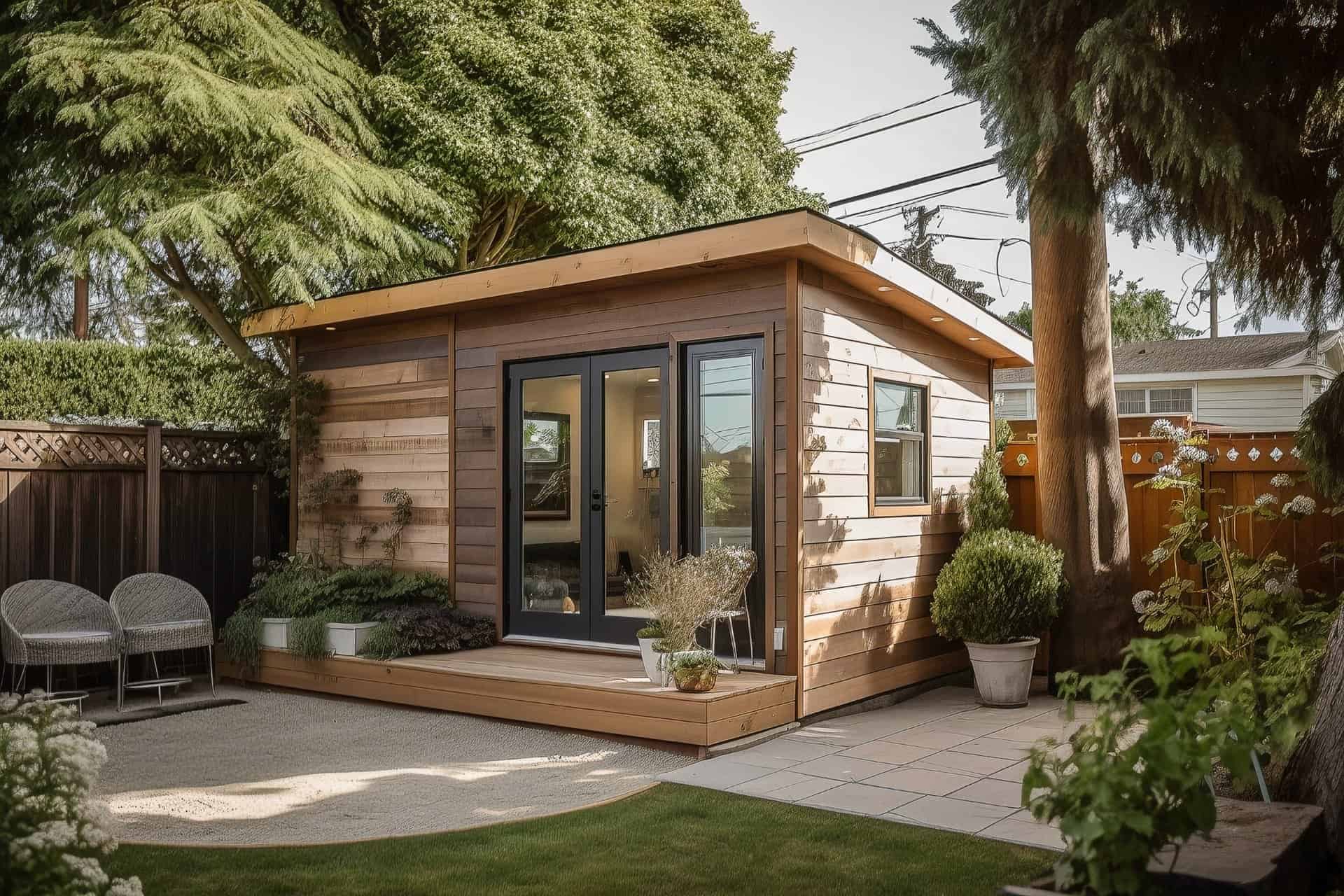
Rental income from an ADU provides consistent monthly cash flow that many homeowners use to offset their mortgage, cover property taxes, or build savings. The math works differently than most real estate investments because you’re not buying additional land.
A typical scenario: You invest $250,000 in a detached 750-square-foot ADU. You rent it for $3,500 monthly, generating $42,000 in annual gross income. After accounting for property tax increases, insurance, and maintenance (roughly 25-30% of gross rent), you net around $29,000 to $31,500 annually.
That’s a 12% return on your construction investment before considering property value appreciation. Most traditional investments don’t deliver that kind of yield. The returns improve if you finance the construction, though interest costs reduce your net income.
Some homeowners take a different approach. They move into the ADU themselves and rent out the main house for significantly higher monthly income. This strategy works particularly well for empty nesters who no longer need a large home but want to stay on their property.
Long-term tenants provide the most stable income. Month-to-month leases or annual renewals mean predictable cash flow without the management intensity of short-term rentals. Most Contra Costa and Alameda County jurisdictions require minimum 30-day rental terms anyway, which limits short-term rental options.
Tenant quality matters as much as rental rates. Screening thoroughly, maintaining the unit properly, and responding quickly to maintenance requests keeps good tenants in place longer. Vacancy costs you money, so tenant retention becomes part of your ROI calculation.
Property management companies can handle tenant relations, maintenance, and rent collection for 8-10% of monthly rent. Some homeowners prefer this hands-off approach. Others manage their ADU themselves to maximize net income.
Tax implications require attention. Rental income is taxable, but you can deduct mortgage interest, property taxes, insurance, maintenance, and depreciation. A tax professional familiar with rental properties can help you understand your specific situation and maximize deductions.
The income potential extends beyond traditional rentals. Some homeowners use their ADU for family initially, then convert to rental income later when circumstances change. Others rent to traveling professionals or use platforms that connect remote workers with monthly housing. Flexibility is one of the ADU’s strongest features.
Property Value Increases and Long-Term Appreciation
ADUs increase your property value from day one. The exact amount depends on your location, the ADU’s quality, and local market conditions, but the impact is consistently positive across Contra Costa and Alameda Counties.
One common valuation method: multiply monthly rental value by 100. An ADU renting for $3,500 monthly adds roughly $350,000 to your property value. This isn’t precise, but it gives you a reasonable estimate for planning purposes.
Real appraisal data supports strong value increases. A 2024 study of Bay Area ADU projects found that the average construction cost was $318,750, with an average return of 62% above the initial investment. That means a $318,750 ADU added $516,375 to the property’s total value.
The value calculation considers several factors. Properties with ADUs get compared to other properties with ADUs when possible. Appraisers look at the ADU’s size, finishes, functionality, and income potential. A well-designed ADU with quality construction appraises higher than a basic conversion.
Location within Contra Costa and Alameda Counties affects value differently. High-demand areas like Walnut Creek, Danville, Berkeley, and Oakland see stronger ADU value appreciation. Properties in these markets already command premium prices, and adding usable square footage amplifies that premium.
Long-term appreciation matters for homeowners planning to sell eventually. Properties with ADUs appeal to a broader buyer pool. Families value the multigenerational living option. Investors see the rental income potential. That increased demand supports higher selling prices.
The timing of your return matters too. If you plan to sell within 3-5 years, make sure your construction costs align with realistic value increases in your specific neighborhood. If you’re holding the property long-term, both rental income and appreciation work in your favor.
Some homeowners never realize the appreciation through a sale. They build ADUs for family housing or personal use, not investment returns. The value increase still matters for refinancing, estate planning, or knowing your net worth has grown.
California’s 2024 law allowing ADU sales as separate condominiums opens new possibilities. Cities like San Jose, Santa Monica, and San Diego have adopted ordinances permitting this. If your city allows it, you could eventually sell the ADU separately, creating two valuable assets from one property.
Property taxes will increase when you add an ADU. The county assessor adds the ADU’s value to your assessed value, which raises your annual property tax bill. Budget for this ongoing cost when calculating your net returns.
What to Know Before Starting Your ADU Project
ADU construction delivers real returns for Contra Costa and Alameda County homeowners—both financial and personal. The key is understanding your specific goals and choosing the right approach for your property and situation.
The financial case is strong. Rental income of $2,000 to $4,500 monthly, property value increases of 20-30% or more, and annual returns of 8-10% make ADUs one of the better residential investments available. Garage conversions offer lower entry costs while new construction maximizes long-term value.
Beyond the numbers, ADUs solve real problems. They house aging parents who need to be close but want independence. They provide affordable living space for adult children in an expensive market. They create home offices, guest suites, or rental income that changes your financial flexibility.
The process has become more simplified. California’s 2025 laws removed major obstacles—no owner-occupancy requirements, no parking replacement for garage conversions, faster permitting timelines, and clearer state standards. Cities in Contra Costa and Alameda Counties have adapted their processes accordingly.
Working with experienced remodeling contractors who understand local requirements makes the difference between a smooth project and a frustrating one. We bring 40 years of combined experience to ADU projects throughout Contra Costa and Alameda Counties, handling everything from permits to final inspection with dedicated project management and transparent communication.
Your ADU project deserves the same attention you’d give to any major investment. The returns are real, but only when the work is done right.