
Summary:
Why Bathroom Remodeling Delivers Strong ROI in the Bay Area
Bathroom remodels consistently rank among the highest-return home improvement projects you can take on. In the Pacific region—which includes California—homeowners recoup an average of 87.7% of their bathroom remodeling costs at resale. That’s significantly higher than most other regions in the country.
Why does it work so well here? Buyers in Contra Costa County, CA and Alameda County, CA expect updated, functional bathrooms. They’re comparing your home to newer construction and recently remodeled properties. An outdated bathroom doesn’t just fail to impress—it actively costs you money by driving down offers or extending your time on the market.
But ROI isn’t the only reason to remodel. Homeowners report a 9.6 out of 10 joy score after completing a bathroom renovation. When you’re using the space twice a day, every day, that matters. You’re not just investing for a future buyer—you’re investing in how you live right now.
What Makes a Bathroom Upgrade Worth the Investment
Not every bathroom upgrade delivers the same return. The projects that perform best share a few common traits: they solve real problems, appeal to a broad range of buyers, and balance modern style with timeless design.
Think about the upgrades that make daily life easier. Better lighting so you can actually see what you’re doing. More storage so your counters aren’t cluttered with products. A shower that’s easy to step into without feeling like you’re climbing over a wall. These aren’t flashy changes, but they’re the ones people notice—and the ones they’re willing to pay for.
Material choices matter too. Porcelain tile with absorption rates under 0.5% performs better than ceramic in wet areas. Durable, moisture-resistant materials reduce maintenance headaches down the line. Buyers recognize quality when they see it, even if they can’t articulate exactly why one bathroom feels better than another. It’s in the details—the way a door closes smoothly, the consistency of grout lines, the way light reflects off a well-chosen surface.
Then there’s the question of style. Trends come and go, but certain design principles hold up. Clean lines, warm neutrals, and natural materials create spaces that feel calm and current without screaming “2026 remodel.” You want your bathroom to look fresh when you sell, whether that’s next year or ten years from now. Overly trendy choices—bold patterns, neon fixtures, or ultra-specific color schemes—can date quickly and narrow your buyer pool.
The sweet spot? Upgrades that improve function, use quality materials, and maintain broad appeal. That’s where you see the strongest returns, both financially and in day-to-day satisfaction. When you’re planning your remodel, ask yourself: does this solve a problem? Will it still look good in five years? Would a range of buyers appreciate it? If the answer is yes to all three, you’re likely making a smart investment.
How Much Value Does a Bathroom Remodel Add to Your Home
Let’s talk numbers. A midrange bathroom remodel—think new tile, updated fixtures, improved lighting, and a refreshed vanity—typically costs between $20,000 and $30,000 in the Bay Area. Based on regional ROI data, you can expect to recoup roughly $17,000 to $26,000 of that investment when you sell. That’s a 70-87% return, which is strong compared to most home improvement projects.
Upscale remodels tell a different story. If you’re installing heated floors, custom tilework, high-end fixtures, and luxury finishes, your costs might hit $60,000 to $80,000. The return? Usually around 60-70%, or about $36,000 to $56,000. You’re still adding value, but the percentage return drops. That’s the reality of diminishing returns—the fancier you go, the smaller the percentage of your investment you’ll see back at closing.
Does that mean you shouldn’t do an upscale remodel? Not necessarily. If you’re planning to stay in your home for several years, the daily enjoyment factor matters. Stepping onto heated floors every morning or soaking in a freestanding tub might be worth more to you than maximizing resale percentage. But if you’re remodeling specifically to sell, midrange upgrades typically offer the best balance of impact and return.
Location within your home matters too. Remodeling your primary bathroom usually delivers a stronger return than updating a guest bath. Buyers care most about the spaces they’ll use every day. A dated master bath can knock $20,000 to $30,000 off your home’s perceived value compared to similar properties with updated primary suites. Investing $35,000 to $50,000 in a modern layout with quality finishes typically adds $25,000 to $40,000 in value—plus you get to enjoy it until you sell.
One more thing: bathroom remodels don’t just add dollar value. They also help homes sell faster. Recent data shows that homes with recently renovated bathrooms sell about 23% faster than comparable properties with outdated bathrooms. In a competitive market, that speed advantage can be just as valuable as the price increase. Fewer carrying costs, less stress, and a quicker move to your next chapter—that’s worth considering alongside the raw ROI numbers.
Curbless Showers: Modern Design Meets Universal Accessibility
Curbless showers—also called zero-threshold or walk-in showers—have moved from luxury hotels into everyday homes. The appeal is immediate: no step to navigate, no awkward climb over a tub wall, just a smooth transition from bathroom floor to shower floor.
From a resale perspective, curbless showers check multiple boxes. They make bathrooms feel more spacious and modern. They photograph beautifully for listings. And they appeal to buyers thinking about aging in place or multi-generational living. Universal design features aren’t just for retirees anymore—younger buyers recognize the long-term value of accessibility features that won’t require expensive retrofits later.
The practical benefits show up daily. Water containment is handled through proper floor slope and drainage rather than a physical barrier. Cleaning becomes easier without a lip to scrub around. And if you’ve ever tried to give a dog a bath or help a small child in and out of a traditional tub, you already know why barrier-free access matters.

What Goes Into Installing a Curbless Shower
Installing a curbless shower isn’t as simple as removing your tub and calling it done. The floor needs to slope properly toward the drain—typically a minimum of 1/4 inch per foot—to prevent water from pooling or escaping into the rest of the bathroom. That often means adjusting the subfloor, which can affect your budget and timeline.
Waterproofing becomes critical. Without a curb to contain water, your waterproofing membrane needs to extend further into the bathroom floor. Most contractors use a pan system or liquid-applied membrane that creates a watertight barrier under your tile. This isn’t the place to cut corners—water damage from improper waterproofing can cost far more than doing it right the first time.
Drainage choices matter too. Linear drains—long, narrow drains typically placed along one wall—have become popular because they allow for a single-direction floor slope and create a clean, modern look. Traditional center drains work fine too, but they require the floor to slope from all directions, which can be trickier to execute properly. We can help you decide which makes sense for your space and budget.
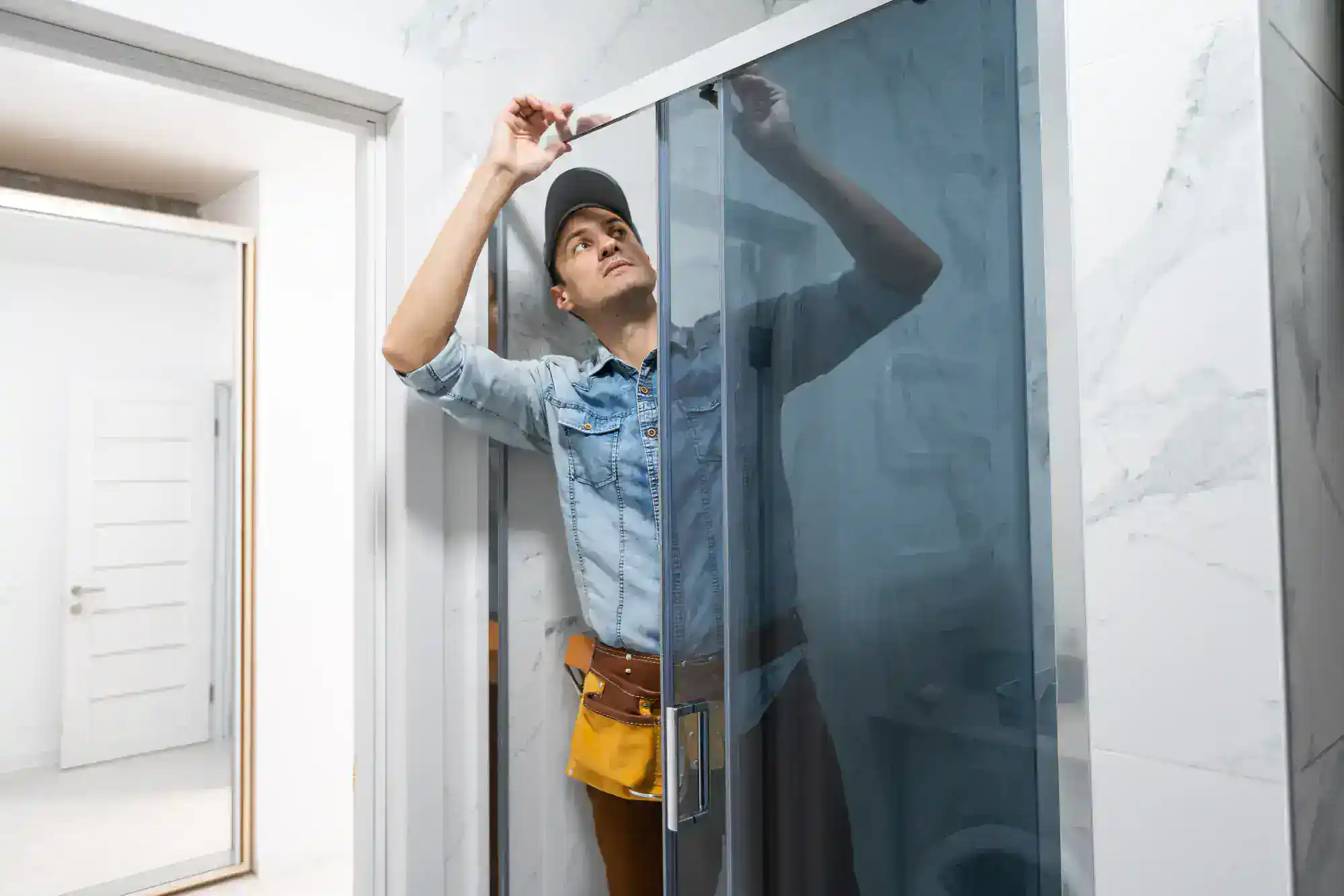
Glass enclosures complete the look. Frameless glass panels or half-walls let light flow through the space and maintain that open, airy feeling. Some homeowners worry about water splashing out, but with proper floor slope and thoughtful placement of the showerhead, water stays where it should. If you’re concerned, we can adjust the glass configuration or add a small threshold—just an inch or two—that maintains most of the accessibility benefits while providing extra peace of mind.
The cost for a curbless shower conversion typically ranges from $8,000 to $15,000, depending on the complexity of your space, tile choices, and whether you’re working with an existing drain location or moving plumbing. It’s not the cheapest upgrade, but it’s one of the most impactful for both daily use and resale appeal.
Design Options That Work in Bay Area Homes
Curbless showers adapt to different bathroom sizes and styles. In smaller bathrooms—common in older Bay Area homes—a curbless shower can actually make the space feel larger by eliminating visual barriers. The continuous floor plane tricks your eye into seeing more square footage than actually exists.
For larger primary bathrooms, you have more flexibility. Some homeowners create a dedicated wet room where the entire bathroom floor is waterproofed and sloped, with the shower area defined by glass panels or a change in tile pattern rather than physical barriers. Others maintain a more traditional layout but simply remove the curb from their shower enclosure.
Tile selection plays a big role in both function and aesthetics. Smaller tiles—like 2×2 inch mosaics—provide more grout lines, which means better traction when the floor is wet. Larger format tiles create a sleeker look but may need textured or matte finishes to prevent slipping. Porcelain tile with a certified slip-resistance rating works well in shower floors, balancing safety with style.
Bench seating is worth considering if you have the space. A built-in bench doesn’t just provide a place to sit while shaving your legs or washing your feet—it also serves as a shelf for products and adds a spa-like quality that buyers notice. Benches can be tiled to match your shower walls or made from a contrasting material like teak or stone for visual interest.
Color and finish choices should align with the rest of your bathroom. Neutral palettes—warm whites, soft grays, natural stone tones—appeal to the widest range of buyers and won’t look dated in a few years. If you want to add personality, do it through accent tiles in a niche or a feature wall rather than covering your entire shower in a bold pattern you might tire of quickly.
Lighting inside the shower is often overlooked but makes a real difference. Recessed LED fixtures rated for wet locations provide even illumination without creating harsh shadows. Some homeowners add a separate switch so shower lighting can be dimmed for evening baths or brightened for morning showers. These small touches elevate the experience and signal to buyers that the remodel was done thoughtfully.
Smart Toilets: High-Tech Hygiene That Buyers Actually Want
Smart toilets used to feel like an over-the-top luxury. Not anymore. Features like heated seats, integrated bidets, automatic lids, and self-cleaning functions have moved into mainstream bathroom remodels, especially in areas like Contra Costa County, CA and Alameda County, CA where buyers expect modern conveniences.
The hygiene benefits are real. Bidet functions reduce toilet paper use while providing a more thorough clean. Self-cleaning wands with UV sterilization minimize bacteria buildup. Touchless operation—from automatic lid opening to hands-free flushing—reduces surface contact and the spread of germs. For families with young children or elderly members, these features make daily routines easier and more sanitary.
From a resale perspective, smart toilets signal that a home has been updated with current technology. They photograph well in listings and become talking points during showings. Buyers who’ve experienced them in hotels or friends’ homes often add them to their must-have list. And while the upfront cost is higher than a standard toilet, the return comes through faster sales and higher perceived value.