Summary:
Why Hidden Storage Solutions Transform Kitchen Functionality
Walk into most kitchens and the counters tell the story. Appliances everywhere, utensils in jars, cutting boards leaning against the backsplash. It looks cluttered because it is cluttered. And when you need to prep dinner, you’re moving things around just to find space to chop vegetables.
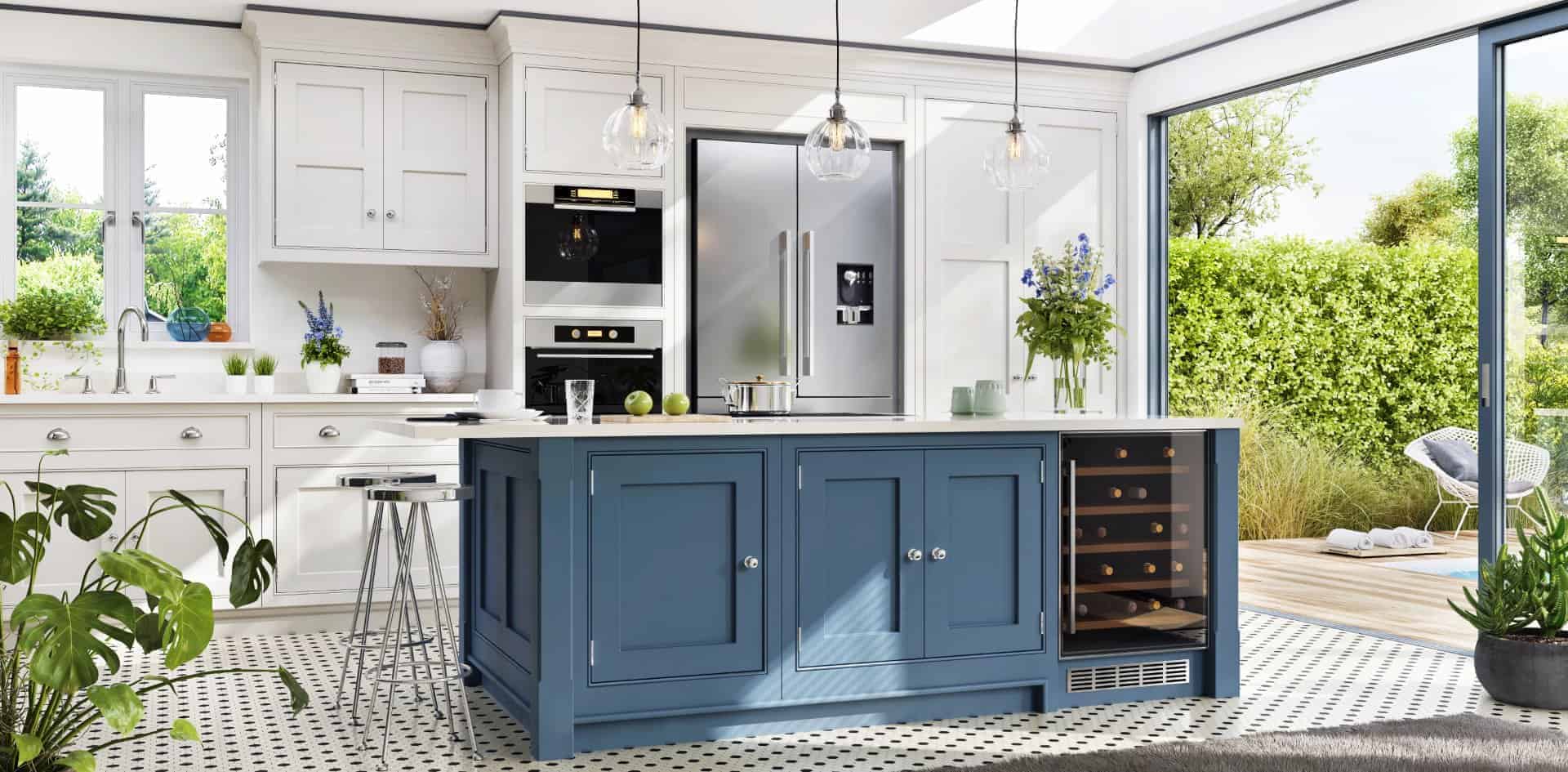
Hidden storage solves this by giving every item a home that’s accessible but not visible. Appliance garages tuck away toasters and coffee makers behind cabinet doors. Pull-out drawers organize spices and utensils. Concealed pantries handle bulk items and small appliances without taking over your main workspace.
The goal isn’t perfection. It’s function. When your kitchen design includes dedicated spaces where the mess can disappear, you spend less time managing clutter and more time actually cooking. That’s what’s driving the shift in kitchen remodeling projects across Contra Costa County, CA and Alameda County, CA right now.
What Are Appliance Garages and How Do They Work in Your Kitchen
An appliance garage is exactly what it sounds like—a dedicated cabinet space, usually at counter height, with a door that closes to hide small appliances. Think of it as a parking spot for your toaster, coffee maker, blender, or stand mixer. The difference is that these spaces come with built-in outlets, so your appliances stay plugged in and ready to use.
You open the door, use what you need, and close it when you’re done. No unplugging, no hauling things out of deep cabinets, no cords tangled on the counter. It’s designed for the appliances you use daily but don’t want staring at you all day.
Most appliance garages sit in a corner or along a stretch of counter where they don’t interrupt your main prep zone. Some use lift-up doors, others use pocket doors or tambour-style roll-ups. The key is that they’re shallow enough to access easily but deep enough to fit a coffee maker or food processor without crowding.
This setup works especially well in Bay Area kitchens where counter space is limited. You’re not sacrificing storage or workspace. You’re just organizing it better so your counters stay clear for actual cooking. Minimalist cabinetry with concealed appliance storage creates the clean, streamlined look that’s defining kitchen design in 2026.
One thing to plan for during your kitchen remodel: electrical. If you’re adding an appliance garage, make sure we run dedicated outlets inside the cabinet. That’s what makes the whole system functional. Without power, it’s just another cabinet. With it, you’ve got a command center that disappears when you’re not using it.
Walk-In Pantries vs Butler's Stations: Which Storage Solution Fits Your Kitchen
Walk-in pantries and butler’s stations serve different purposes, but both address the same core issue: your main kitchen doesn’t have enough storage or prep space to handle everything you need it to do.
A walk-in pantry is dedicated food storage. Floor-to-ceiling shelving, organized zones for dry goods, canned items, snacks, and bulk purchases. It’s a room—or a closet-sized space—that keeps all your food and overflow supplies in one place. The benefit is visibility. You can see everything at a glance, which reduces waste and makes meal planning easier. Walk-in pantries don’t require plumbing or complex infrastructure, which makes them a practical addition during kitchen remodeling projects in homes with available square footage.
Butler’s stations are different. They’re secondary prep zones, usually located between the kitchen and dining area. These spaces include countertop workspace, a sink, cabinetry, and sometimes a beverage fridge or wine storage. The purpose is to handle tasks that would otherwise clutter your main kitchen—staging appetizers, washing serving dishes, setting up coffee stations, or prepping ingredients while someone else is cooking at the main stove.
Butler’s pantries keep your primary kitchen clean when you’re entertaining. Guests see the polished main space, while the real work happens behind closed doors. This setup is especially popular in Alameda County, CA homes where open-concept layouts mean your kitchen is always on display.
The choice between a walk-in pantry and a butler’s station depends on how you use your kitchen. If storage is your main pain point, a walk-in pantry makes sense. If you entertain frequently or share cooking duties with multiple people, a butler’s station gives you the flexibility to work in separate zones without stepping on each other.
Both options reduce countertop clutter and improve workflow. Both require planning during the design phase of your kitchen renovation. And both deliver long-term value by making your kitchen easier to use every single day. In Contra Costa County, CA, where kitchen remodeling costs can range from $45,000 to $120,000 or more, investing in storage solutions that actually solve problems makes financial sense.
Integrated Appliances and Minimalist Cabinetry in Modern Kitchen Design
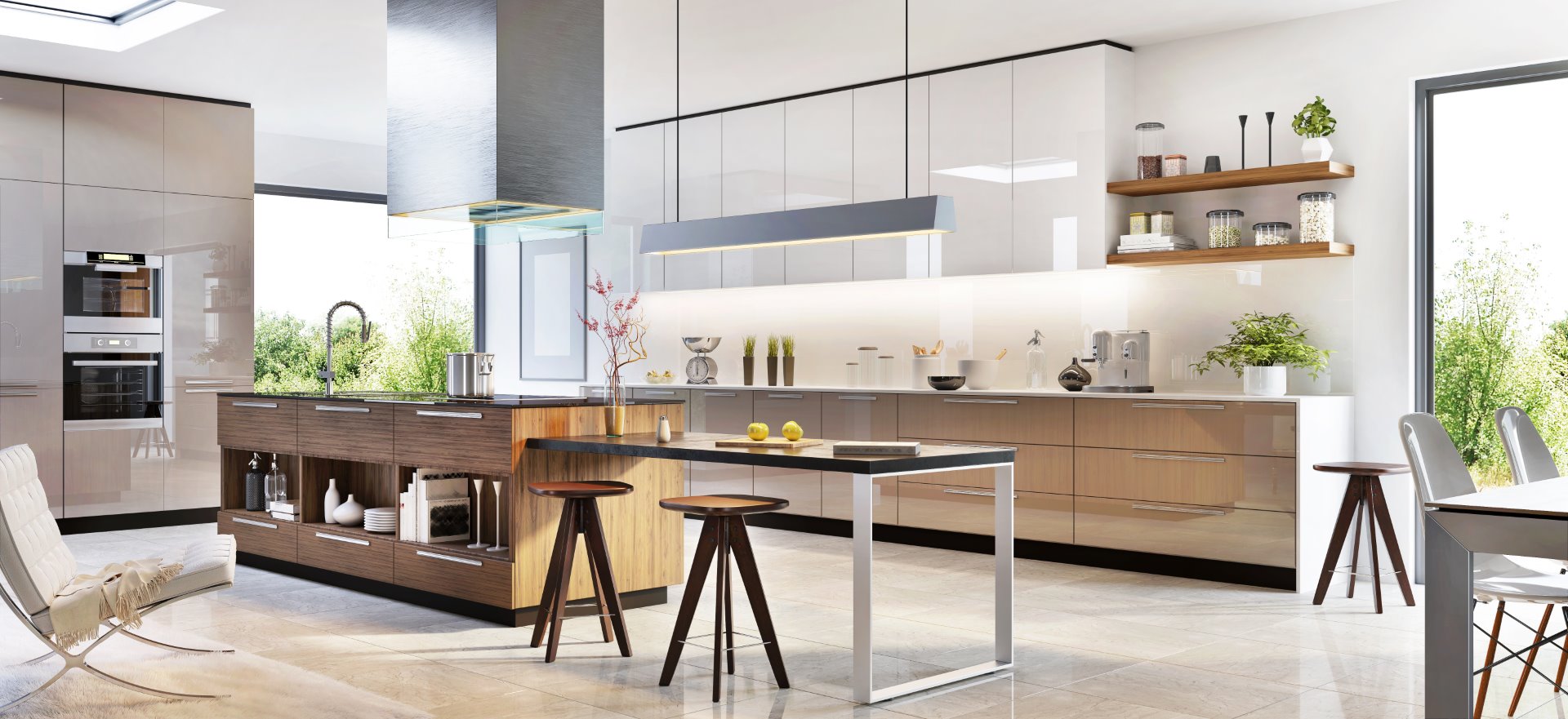
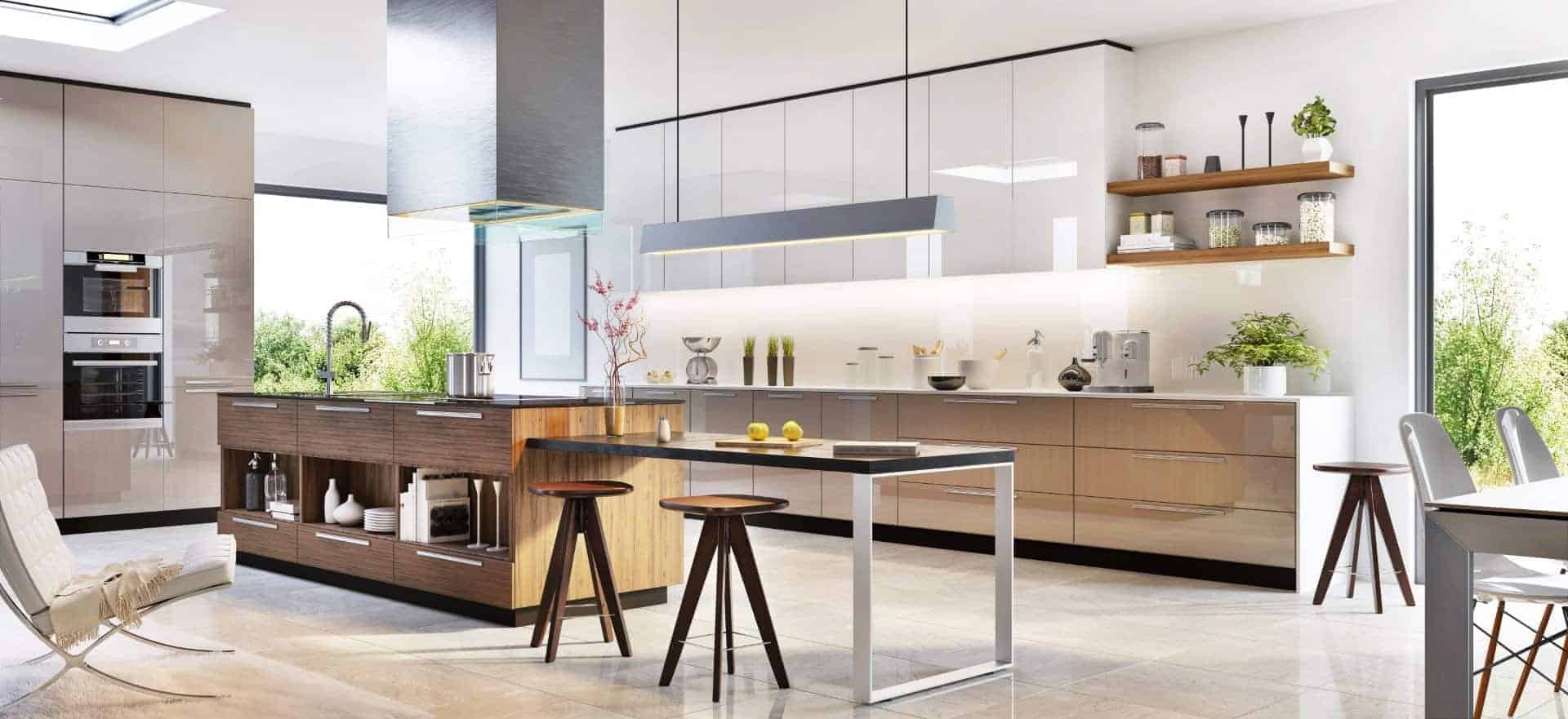
Integrated appliances and minimalist cabinetry go hand in hand. The idea is simple: create a seamless look where appliances blend into the surrounding cabinetry instead of standing out as separate units. Panel-ready refrigerators, built-in ovens, concealed dishwashers—all designed to disappear into the overall design.
This approach reduces visual clutter. When your refrigerator looks like another cabinet door, your kitchen feels more cohesive and less like a showroom for stainless steel appliances. Minimalist cabinetry with clean lines, hidden hardware, and soft-close mechanisms completes the effect.
The functional benefit is just as important as the aesthetic one. Integrated appliances free up space and improve flow. Built-in ovens at eye level eliminate bending. Concealed dishwashers maintain clean sightlines. Everything is designed to support how you actually move through the kitchen during meal prep and cleanup.
How Integrated Appliances Improve Kitchen Workflow and Reduce Clutter
Integrated appliances aren’t just about looks. They’re about creating a kitchen that works better because everything is positioned intentionally.
Start with built-in ovens. When you install an oven at eye level instead of below the cooktop, you eliminate the need to bend over while checking on food or pulling out heavy roasting pans. That’s an ergonomic win, especially if you cook frequently or deal with back pain. Wall ovens also separate your cooking zones, which gives you more flexibility in your kitchen layout and frees up space for additional storage next to the oven.
Built-in microwaves work the same way. Instead of sitting on the counter taking up valuable workspace, they’re installed into a cabinet stack—usually next to the wall oven. This creates a unified cooking zone and keeps your counters clear for food preparation.
Panel-ready refrigerators integrate seamlessly with your cabinetry. The front of the refrigerator is covered with the same cabinet panels as the rest of your kitchen, so it blends in completely. This matters in open-concept homes where the kitchen is always visible. When your appliances don’t stand out, the space feels more intentional and less cluttered.
Concealed dishwashers follow the same principle. The control panel is hidden behind the cabinet door, and the exterior matches your cabinetry. This creates a streamlined look and reduces visual noise in your kitchen design.
The common thread here is that integrated appliances support a “fast reset” approach to kitchen organization. When appliances are built into the design rather than sitting out as separate units, your kitchen naturally stays cleaner and more organized. There are fewer surfaces collecting dust, fewer gaps where crumbs accumulate, and fewer visual distractions pulling your eye in different directions.
For kitchen remodeling projects in Contra Costa County, CA and Alameda County, CA, integrated appliances also make sense from a resale perspective. Bay Area buyers expect modern, well-designed kitchens. Integrated appliances signal that the space was thoughtfully planned, not just assembled from off-the-shelf components. In a competitive real estate market where kitchen renovations can return 70-80% of their cost in added home value, these details matter.
Ergonomic Storage Solutions That Make Your Kitchen Easier to Use Daily
Ergonomic storage is about placing items where you can reach them without bending, stretching, or straining. It’s not complicated, but it makes a massive difference in how your kitchen feels to use every day.
The basic principle: store everyday items at arm height. That’s roughly between your waist and shoulders—the zone where you can grab something without thinking about it. Plates, glasses, cooking utensils, spices, and anything else you use daily should live in this zone. Occasional-use items—holiday platters, specialty appliances, seasonal cookware—can go higher or lower because you’re not accessing them multiple times a day.
Deep drawers are one of the most effective ergonomic storage solutions. Instead of lower cabinets with shelves that force you to crouch and dig, deep drawers let you see everything at once. Pull-out organizers for pots and pans, drawer dividers for utensils, and full-extension glides that let you access the back of the drawer without reaching—all of these features reduce physical strain during cooking.
Pull-out pantry systems work the same way. Instead of reaching into a deep cabinet where items get lost in the back, you pull out a shelf system that brings everything forward. No more getting on your hands and knees to find a can of tomatoes. No more knocking over other items to reach what you need.
Corner cabinets are notorious for wasted space. Ergonomic solutions like lazy Susans, magic corner units, or pull-out shelves turn those awkward spaces into functional storage. You’re not losing items in the back of a dark cabinet. Everything is accessible with a simple pull or spin.
Under-cabinet storage—like pull-down shelves for spices or coffee pods—keeps frequently used items within easy reach without cluttering your countertop. Hanging racks for utensils or dish towels utilize vertical space and keep tools accessible during cooking.
The goal of ergonomic storage is to design your kitchen so it supports your body, not fights it. When you’re not constantly bending, reaching, or straining, cooking becomes less exhausting. That’s especially important in Bay Area kitchens where space is limited and every inch of storage needs to work hard.
During your kitchen remodeling project, talk with us about where you spend the most time and what tasks cause the most frustration. We’ll plan storage zones around your actual workflow—prep, cooking, cleaning, pantry—so each task has a dedicated area with the right tools and ingredients within easy reach. This level of customization is what separates functional kitchen design from generic layouts that look good but don’t actually solve problems.
Planning Your Kitchen Remodel With Smart Storage Solutions
Kitchen remodeling in 2026 isn’t about chasing trends. It’s about solving the problems that make your current kitchen frustrating to use. Countertop clutter, cramped cabinets, inefficient layouts—these are design issues, not discipline issues. And they’re fixable with the right approach to kitchen design.
Hidden storage, appliance garages, walk-in pantries, butler’s stations, integrated appliances, and ergonomic solutions all work together to create a kitchen that resets quickly and supports how you actually cook. When clutter has a place to go and everything is positioned where you can reach it without thinking, your kitchen becomes easier to use and easier to maintain.
If you’re planning a kitchen renovation in Contra Costa County, CA or Alameda County, CA, start by identifying what’s not working in your current space. Then design around those pain points. The result is a kitchen that looks clean, functions efficiently, and makes daily life easier—not because you’re more organized, but because the space is designed to support you. That’s what we build at DoPro Construction.