
Summary:
What Makes Smart Kitchen Appliances Worth the Investment
Smart kitchen appliances connect to your home’s WiFi network and respond to voice commands, smartphone apps, or automated routines. Think refrigerators that track what’s inside, ovens you can preheat from your car, and faucets that turn on with a wave of your hand.
The difference between 2026 and five years ago? These features actually work reliably now. They’re not finicky tech experiments anymore.
Bay Area homeowners are adding smart appliances to kitchen remodeling projects because the benefits show up in daily life, not just on paper. You save time. You waste less energy. Your kitchen works with you instead of against you.
How Touchless Faucets Save Water and Make Cooking Easier
Touchless faucets use infrared sensors to detect motion. Wave your hand in front of the spout, and water flows. Move away, and it stops automatically.
This isn’t about convenience alone—though that matters when you’re holding a raw chicken or a stack of dirty dishes. It’s about water conservation. Traditional faucets run while you reach for soap, grab a towel, or get distracted. Touchless versions shut off immediately, saving hundreds of gallons annually without you thinking about it.
For Contra Costa County and Alameda County homeowners watching utility bills climb, that adds up. Touchless faucets can reduce water usage by 20% or more compared to standard models, according to EPA WaterSense data. Over a year, that’s real money back in your pocket.
Installation during kitchen remodeling is straightforward. Most models run on batteries (lasting 1-2 years) or can connect to an AC adapter if you have an outlet under the sink. We handle the setup, and you get a faucet that’s cleaner (fewer germs from touching handles), more efficient, and genuinely easier to use.
The hygiene factor matters too. You touch the faucet handle before washing your hands, transferring whatever you were handling straight to that surface. With touchless operation, you avoid that entirely. For families with young kids or anyone concerned about kitchen cleanliness, it’s a simple upgrade that makes a noticeable difference.
Why Induction Cooktops Are Replacing Gas in Bay Area Kitchens
Induction cooktops use electromagnetic fields to heat your cookware directly, rather than heating a burner that then heats your pan. The result? Faster cooking, precise temperature control, and dramatically better energy efficiency.
Gas cooktops operate at roughly 32% efficiency—meaning 68% of the energy you’re paying for escapes as wasted heat. Electric coil burners hit about 75-80%. Induction cooktops? They reach 85% efficiency or higher. That’s three times more efficient than gas and noticeably better than standard electric.
For Bay Area homeowners dealing with high energy costs, that efficiency translates to lower monthly bills. Induction cooktops also heat up faster—boiling water in half the time of gas—which means less energy used overall.
Safety is another factor driving adoption in kitchen remodeling projects. The cooktop surface stays relatively cool because it’s not the heat source. Your cookware heats up, but the glass surface around it doesn’t. That means fewer burns, especially important if you have kids in the kitchen. The cooktop also shuts off automatically when you remove the pan, eliminating the risk of leaving a burner on.
Cleaning becomes easier too. Spills don’t bake onto a hot surface. The smooth glass top wipes clean in seconds. No grates to scrub, no crevices for food to hide.
The main consideration? You need magnetic cookware—cast iron and most stainless steel pans work fine. If your current pots and pans aren’t compatible, that’s an additional cost to factor into your kitchen remodeling budget. But for most homeowners making the switch, the benefits far outweigh that one-time expense.
Smart Lighting and Kitchen Automation That Actually Makes Sense
Energy-efficient lighting has come a long way from the harsh, cold LEDs of a decade ago. Modern LED systems for kitchen remodeling offer adjustable color temperatures, dimming capabilities, and smart controls that respond to voice commands or automated schedules.
The energy savings are substantial. LED lighting uses 75% less electricity than traditional incandescent bulbs and lasts up to 25 times longer. For a kitchen with multiple fixtures running several hours daily, that’s a noticeable reduction in your utility bill.
Kitchen automation in 2026 means lights that turn on when you walk in, adjust brightness based on time of day, and shut off when you leave. No more hunting for switches with your hands full. No more leaving lights on all day by accident.
How Voice Control Works in Modern Kitchen Design
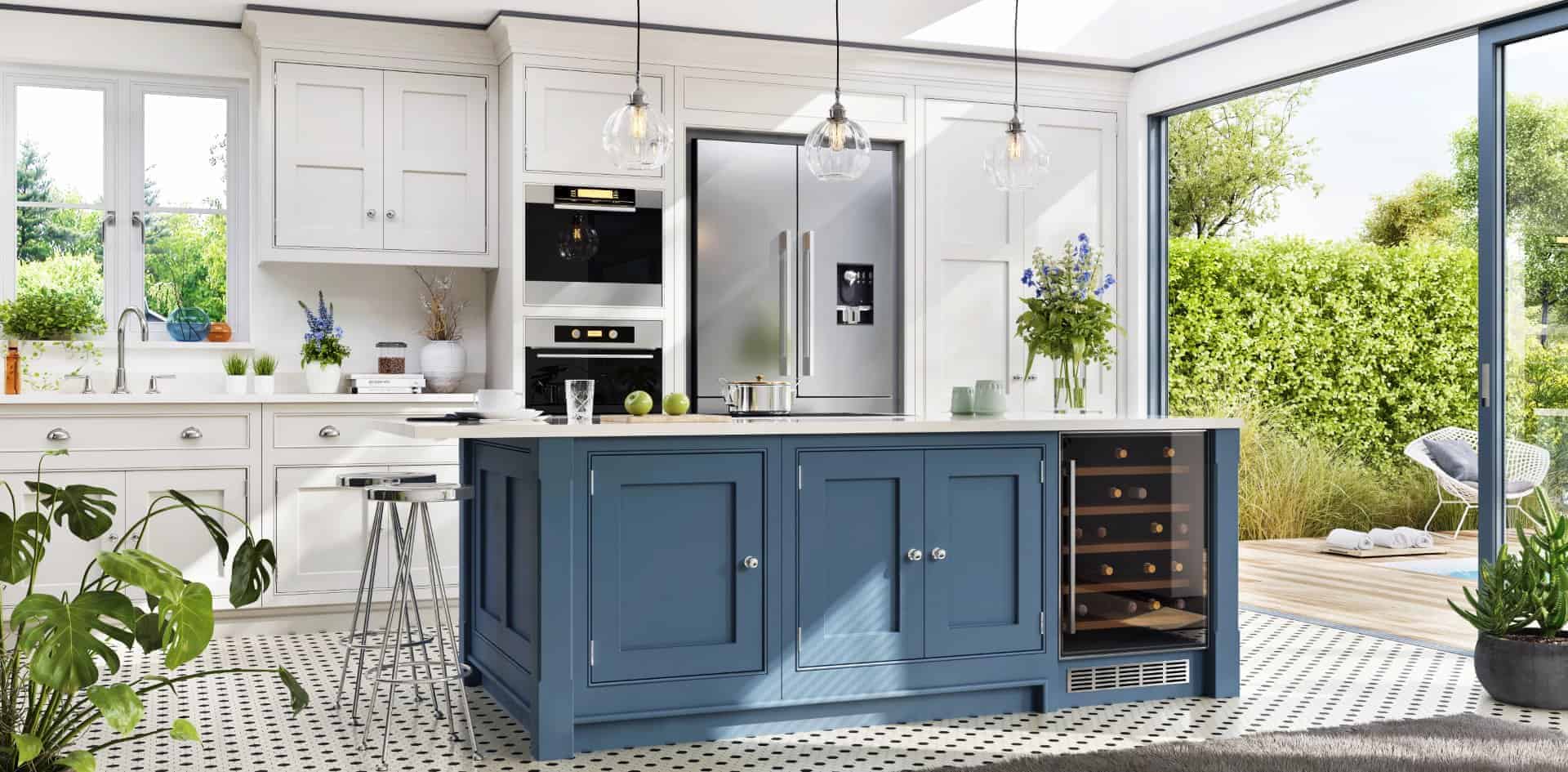
Voice-controlled appliances connect to systems like Amazon Alexa, Google Assistant, or Apple HomeKit. You speak a command—”preheat the oven to 375″—and the appliance responds.
This isn’t science fiction anymore. It’s standard functionality in mid-range and higher-end kitchen appliances. The technology has matured to the point where it reliably understands natural speech, even in noisy kitchens with multiple people talking.
The practical benefits show up during cooking. Your hands are covered in dough, but you need to set a timer. Just say it. You’re stirring a pot and realize the lighting is too dim. Tell your smart lights to brighten up. You’re carrying groceries and need the faucet on. A quick voice command handles it.
Bay Area homeowners integrating voice control into kitchen remodeling projects appreciate how it reduces friction in daily routines. Small conveniences add up when you’re using the kitchen multiple times every day.
Setup typically happens through a smartphone app during installation. We connect the appliances to your home network, you link them to your preferred voice assistant, and you’re done. Most systems work offline for basic functions too, so you’re not completely dependent on internet connectivity.
The key is choosing appliances that integrate with the voice assistant you already use. If you have Alexa devices throughout your home, look for Alexa-compatible kitchen appliances. If you’re in the Apple ecosystem, prioritize HomeKit compatibility. This ensures everything works together smoothly rather than requiring multiple apps and systems.
What Energy-Efficient Lighting Really Costs and Saves
LED lighting costs more upfront than traditional bulbs, but the math works strongly in your favor over time. A quality LED bulb might cost $5-10 compared to $1 for an incandescent, but it lasts 25,000-50,000 hours versus 1,000 hours for incandescent.
That means a fixture you install during your 2026 kitchen remodeling project could still be working in 2046 with normal use. You’re not replacing bulbs every year. You’re not dealing with fixtures burning out at inconvenient times.
The energy savings are equally compelling. Lighting accounts for about 15% of a typical home’s electricity use. Switching to LED can cut that portion by 75%, saving the average household around $225 annually according to Department of Energy data.
For kitchen remodeling in Contra Costa County and Alameda County, where energy costs run higher than national averages, those savings matter. Over the 20-30 year lifespan of LED fixtures, you’re looking at thousands of dollars in reduced utility bills.
Modern LED systems also offer features that weren’t possible with old technology. Adjustable color temperature means you can have bright, cool light for food prep in the morning and warm, ambient light for dinner in the evening. Dimming controls let you set the exact brightness you need. Smart integration means lights respond to voice commands or turn on automatically when you enter the kitchen.
Installation during kitchen remodeling is the ideal time to upgrade your lighting system. We’re already doing electrical work, making it simple to add under-cabinet LED strips, recessed ceiling fixtures, and pendant lights over islands. The incremental cost is minimal compared to doing it as a separate project later.
Making Smart Technology Work for Your Kitchen Remodeling Project
Smart technology in kitchen remodeling isn’t about chasing trends. It’s about investing in features that genuinely improve how your kitchen functions while reducing long-term costs and increasing your home’s value.
Touchless faucets save water and improve hygiene. Induction cooktops cook faster while using less energy. Smart lighting adapts to your needs and lasts decades. Voice control eliminates small daily frustrations. These upgrades pay for themselves through utility savings while making your kitchen more attractive to future buyers.
The key is working with a contractor who understands how to integrate these systems properly. Poor installation or mismatched components create headaches instead of convenience. When you’re ready to start your kitchen remodeling project in Contra Costa County or Alameda County, we bring the expertise to make smart technology work seamlessly in your space—with transparent pricing, no upfront payments, and the confidence that comes from 40+ years of Bay Area experience.