Summary:
You’re standing in a showroom with two samples in hand. One’s vinyl at $5 per square foot. The other’s hardwood at $15. Your budget says one thing, but that nagging voice about resale value says another.
Here’s what most flooring guides won’t tell you: the upfront price is only part of the story. The real cost shows up over 10, 20, even 50 years—in replacement cycles, maintenance bills, and what buyers are willing to pay when you sell.
This isn’t about which material is “better.” It’s about understanding what you’re actually buying at each price point, and which investment makes sense for your home, your timeline, and your Contra Costa County property value. Let’s break down the real numbers.
What Drives the Price Difference Between Vinyl and Hardwood
The price gap between vinyl and hardwood flooring isn’t arbitrary. It reflects fundamental differences in materials, manufacturing, and what you’re getting for your money.
Vinyl flooring typically runs $2 to $8 per square foot installed in 2026. Hardwood flooring costs $12 to $20 per square foot installed, with some premium options reaching $23 or more. That’s a difference of $10,000 to $15,000 on a typical 1,000-square-foot installation.
Vinyl is synthetic—manufactured from polyvinyl chloride (PVC) with a photographic layer that mimics wood or stone. Production is efficient and scalable, which keeps costs down. Hardwood comes from actual trees, milled into planks. The material itself costs more to source, process, and transport. Oak and maple start around $4 to $14 per square foot before installation. Exotic woods like Brazilian cherry or teak can hit $25 per square foot for materials alone.

Installation Costs and Complexity
Installation labor accounts for a significant chunk of your total project cost, and the gap between vinyl and hardwood is substantial here too.
Vinyl installation typically adds $1.50 to $4 per square foot to your project. Many luxury vinyl planks use click-lock systems that make installation straightforward. If you’re handy with tools, you might tackle it yourself and save on labor entirely. Even professional installation moves quickly—installers can lay 200 to 500 square feet per day.
Hardwood installation runs $6 or more per square foot. Solid hardwood requires precise nailing or stapling to the subfloor. The boards need to acclimate to your home’s humidity levels before installation. Installers work slower—typically 80 to 120 square feet per day for nail-down methods. The subfloor must be completely level and structurally sound, which sometimes means additional prep work and cost.
There’s also the matter of what you’re working with now. Removing old flooring costs $1 to $3 per square foot depending on the material. Subfloor repairs, if needed, add another layer of expense. Vinyl is more forgiving of minor imperfections. Hardwood demands perfection, or you’ll see it in the finished floor—boards that don’t sit flush, gaps that develop, or squeaks that drive you crazy for years.
California’s building codes add another consideration. Permits may be required for major flooring changes, especially when altering structural elements. Professional contractors handle this paperwork, but it’s factored into your timeline and budget. In Contra Costa County, working with local building departments is part of the process, and experienced contractors navigate these requirements without the delays that plague DIY projects or inexperienced installers.
Material Quality Tiers and What You're Actually Buying
Not all vinyl is created equal, and the same goes for hardwood. Understanding quality tiers helps you make sense of price ranges and avoid comparing apples to oranges.
Vinyl flooring comes in three main categories. Sheet vinyl is the budget option at $0.50 to $2 per square foot—functional but basic. Luxury vinyl planks (LVP) run $2 to $7 per square foot and offer realistic wood-look designs with better durability. Premium LVP with thick wear layers, waterproof cores, and enhanced textures can approach or exceed $8 per square foot.
The wear layer thickness matters significantly. Budget vinyl might have a 6-mil wear layer that shows scratches and fading within a few years. Premium options feature 20-mil or thicker wear layers that resist damage and maintain appearance far longer. You’re not just paying for looks—you’re buying years of durability.
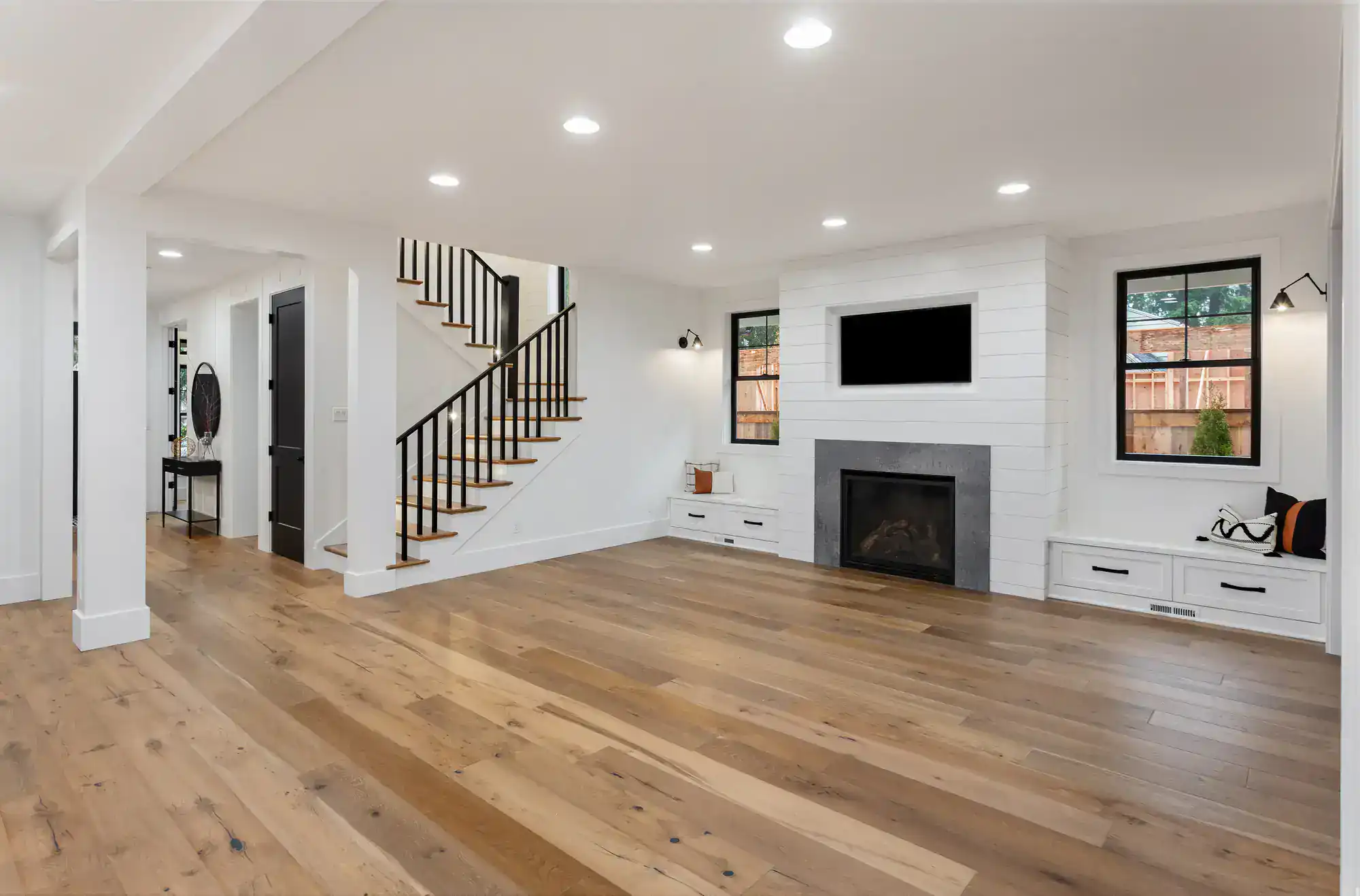
Hardwood quality varies by species, grade, and finish. Oak and maple are workhorses—durable, widely available, and reasonably priced at $4 to $14 per square foot. Exotic species offer unique colors and grain patterns but command premium prices. The grade affects appearance and price too. Clear grade shows minimal knots and variation, commanding top dollar. Character grades embrace natural imperfections and cost less while offering a rustic aesthetic many homeowners prefer.
Pre-finished versus unfinished hardwood is another decision point. Pre-finished floors arrive ready to walk on, with factory-applied finishes that cure under controlled conditions. Installation is faster and you avoid the dust and fumes of on-site finishing. Unfinished floors offer more customization—you choose the stain color and finish type—but require additional time and labor for sanding and finishing after installation.
In California’s climate, engineered hardwood deserves consideration alongside solid hardwood. It features a real hardwood veneer over a plywood core, offering better dimensional stability in areas with humidity fluctuations. Engineered hardwood costs $4 to $12 per square foot—less than solid hardwood but more than vinyl—and handles temperature swings and moisture changes better than solid wood. For Bay Area homes, this middle ground often makes the most practical sense.
Hardwood vs Vinyl Flooring: Lifetime Value Analysis
The sticker price tells you what you’ll spend this month. Lifetime value tells you what you’ll spend over the years you own your home—and what you’ll recoup when you sell.
Hardwood flooring can last 50 to 100 years with proper maintenance. It can be refinished five or more times to remove surface damage and restore its appearance. Vinyl flooring lasts 10 to 25 years depending on quality and traffic. Once the wear layer is damaged, replacement is your only option.
Run the numbers on a 1,000-square-foot installation. Vinyl at $5,500 installed needs replacement every 15 years. Over 30 years, you’re looking at two installations—$11,000 total. Hardwood at $15,000 installed lasts the full 30 years, maybe needing one refinish at $3,000. Total: $18,000. The gap narrows significantly when you factor in longevity.

Flooring Durability Comparison and Maintenance Reality
Durability isn’t just about how long a floor lasts—it’s about how it holds up to your actual life and what you’ll spend keeping it looking decent.
Vinyl excels at resisting daily wear. It’s waterproof, scratch-resistant, and handles dropped objects better than hardwood. Spills wipe up without panic. High-quality LVP withstands heavy foot traffic, pets, and kids without showing significant damage for years. Maintenance is minimal—regular sweeping and occasional mopping with vinyl-safe cleaner. No refinishing, no special treatments.
Hardwood is tougher than people think, but it has vulnerabilities. Water is its enemy. Spills need immediate attention or you risk staining and warping. Hardwood scratches and dents from furniture, high heels, and pet claws. In high-traffic areas, these marks accumulate into a patina some homeowners love and others find frustrating.
Maintenance for hardwood requires more attention. Regular sweeping removes grit that acts like sandpaper underfoot. Periodic mopping with wood-safe cleaners keeps it looking good. Every few years, you might need refinishing to address accumulated scratches and restore the finish. Refinishing costs $3 to $5 per square foot—less than replacement, but still a significant expense and disruption.
California’s climate adds specific considerations. The dry air and temperature swings can cause hardwood to expand and contract, potentially leading to gaps or cupping. Engineered hardwood handles this better than solid wood. Vinyl remains completely stable regardless of humidity or temperature changes, making it particularly practical for areas prone to moisture exposure or temperature fluctuations.
For Bay Area homeowners, the durability question often comes down to room function. Kitchens, bathrooms, and entryways see water exposure and heavy traffic—vinyl’s waterproof nature makes it the practical choice. Living rooms, dining rooms, and bedrooms where moisture is minimal and you want that authentic wood aesthetic—hardwood delivers the look and feel vinyl can’t quite match.
Resale Value and ROI: What Buyers Actually Pay For
Your flooring choice affects your home’s market value, and the numbers tell a clear story about what buyers value.
Hardwood flooring consistently delivers strong returns at resale. Industry data shows hardwood returns 70% to 80% of your initial investment when you sell. Homes with hardwood floors sell faster and command higher prices than comparable homes without. Real estate agents report that hardwood is among the most desired features buyers look for, often willing to pay a premium for it.
The National Hardwood Flooring Association confirms what realtors see daily—homes with hardwood flooring are easier to sell, sell faster, and sell for more money compared to homes with other flooring types. That timeless appeal and long lifespan make hardwood an investment that holds value.
Vinyl tells a different story. Traditional vinyl adds minimal long-term value to your home. Even high-quality luxury vinyl plank, while increasingly popular, doesn’t command the same buyer enthusiasm as real hardwood. LVP can yield 60% to 70% ROI—respectable, especially given the lower upfront cost—but it doesn’t carry the prestige or longevity that hardwood offers.
There’s nuance here worth understanding. In starter homes, townhomes, or rental properties, buyers often prefer durable, low-maintenance LVP over hardwood that might get damaged. The practical benefits outweigh the traditional preference for wood. In single-family homes, especially in areas like Contra Costa County where median values exceed $1.2 million, hardwood remains the gold standard that buyers expect and pay for.
The resale calculation isn’t just about recouping your flooring investment. It’s about how your choice positions your home in the market. Dated or worn flooring—whether vinyl or hardwood—hurts your sale price. Fresh, quality flooring in appropriate areas helps your home show well and justifies your asking price. The question becomes whether you’re planning to stay long enough for hardwood’s longevity to matter, or whether vinyl’s lower cost and easier maintenance better fits your timeline.
Making the Right Flooring Investment for Your Contra Costa County Home
There’s no universal “right answer” in the vinyl versus hardwood decision. The right choice depends on your budget, your timeline, how you use your space, and what matters most to you.
Choose vinyl when you need waterproof protection, want lower upfront costs, prefer minimal maintenance, or know you might replace flooring again in 10 to 15 years. It’s practical, durable for daily life, and increasingly realistic in appearance. For kitchens, bathrooms, basements, and high-traffic areas, vinyl often makes the most sense.
Choose hardwood when you’re investing for the long term, want authentic wood beauty, plan to stay in your home for years, and care about maximizing resale value. Yes, it costs more upfront and requires more maintenance, but it lasts generations and returns most of your investment when you sell.
Or consider a hybrid approach—hardwood in main living areas where it makes the biggest visual impact, vinyl in moisture-prone or high-traffic spaces where its practical benefits shine. Many Bay Area homeowners take this route, getting the best of both materials where each makes the most sense.
If you’re planning a flooring project in Contra Costa County and want guidance that accounts for your specific situation, we bring over four decades of combined experience helping Bay Area homeowners make these decisions. Our team understands local building codes, California climate considerations, and what works in homes like yours. Reach out to discuss your project—no pressure, just straight talk about what makes sense for your home and budget.