Summary:
Common Roofing Problems In Hayward, CA
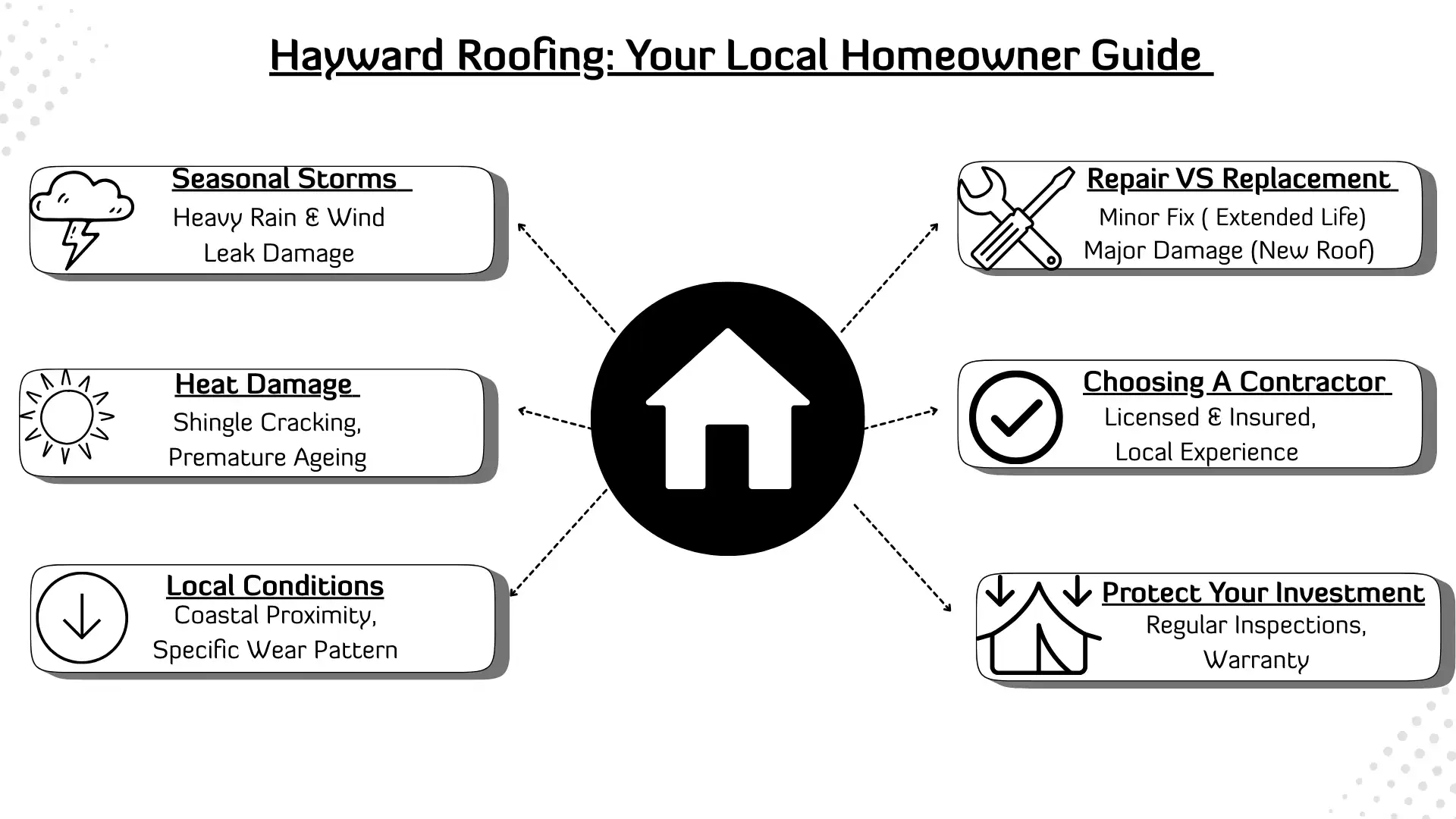
Hayward’s location creates a perfect storm for roof problems. We get the seasonal weather from the Bay, temperature swings from our inland position, and enough sun exposure to accelerate aging on roofing materials.
The most common issues local homeowners face include leak damage from winter storms, shingle deterioration from heat exposure, and wind damage during our windier months. Many of the homes built in Hayward’s growth period from the 1940s-1960s are now dealing with roofs that have reached or passed their expected lifespan.
Understanding these patterns helps you spot problems early and make better decisions about repairs versus replacement.
Storm Damage And Emergency Repairs
Hayward’s seasonal storms hit roofs hard. High winds can lift shingles, heavy rains find weak spots in flashing, and debris from nearby trees can cause immediate damage that needs fast attention.
The challenge with storm damage is timing. When everyone in the area gets hit at once, good contractors get booked quickly. That’s why having a relationship with a reliable local roofer before you need emergency service makes such a difference.
Emergency repairs aren’t just about stopping leaks—they’re about preventing small problems from becoming major headaches. Water damage spreads fast once it gets into your home’s structure. A temporary fix done right can buy you time to plan proper repairs without dealing with interior damage, mold issues, or structural problems.
The key is working with contractors who understand the difference between a quick patch job and a temporary solution that actually protects your home. Good emergency work considers how the temporary fix will integrate with permanent repairs later. Poor emergency work can actually make final repairs more complicated and expensive.
When you’re dealing with storm damage, documentation matters too. Take photos before any work starts, keep records of all repairs, and understand what your insurance covers. Many homeowners don’t realize that proper documentation during emergency repairs can make insurance claims much smoother later.
Heat Damage And UV Exposure Issues
Hayward’s heat exposure creates roofing problems that many contractors from cooler areas don’t fully understand. Our combination of direct sun and temperature fluctuations causes roofing materials to expand and contract repeatedly, which accelerates wear.
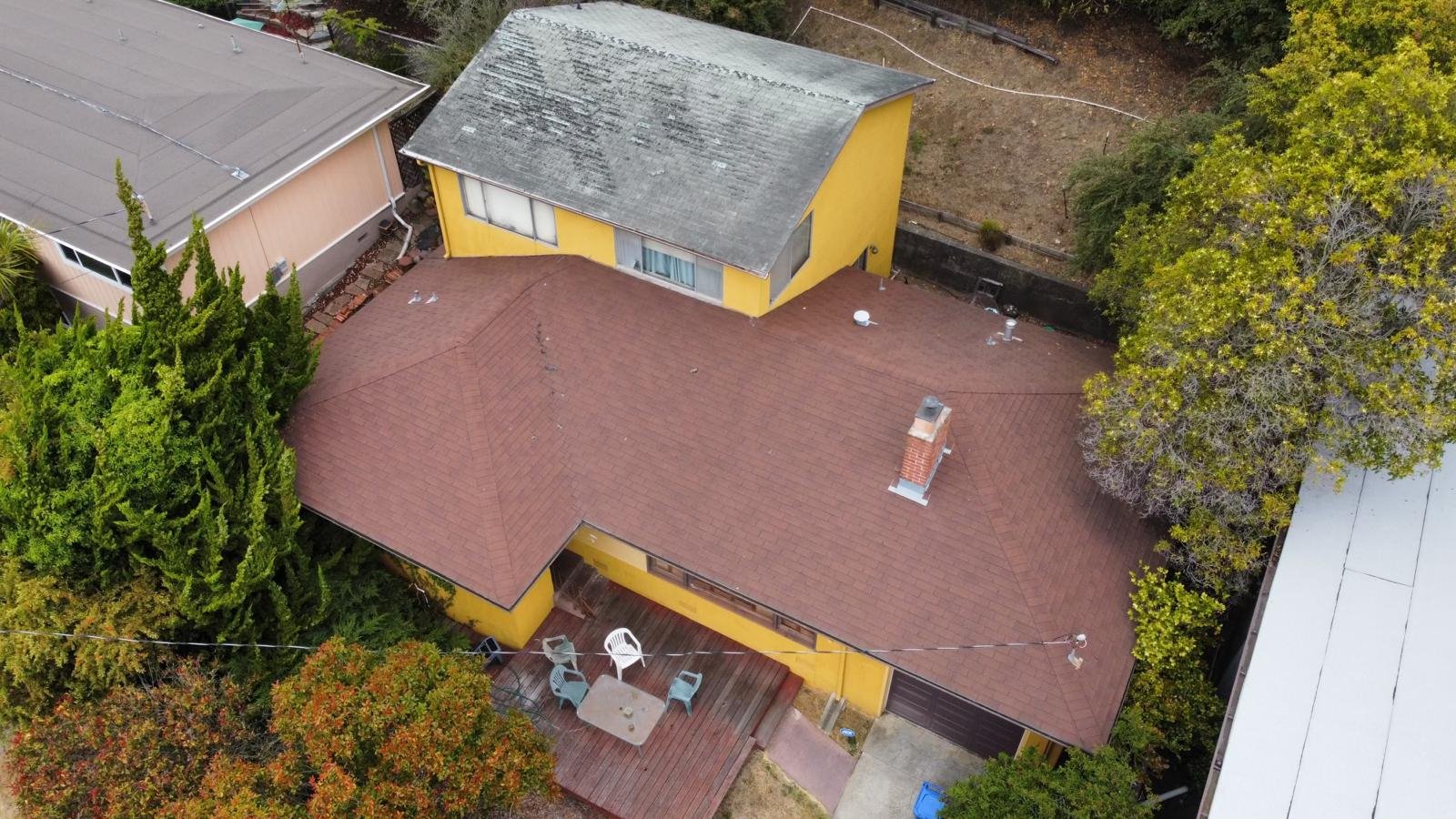
Asphalt shingles, the most common roofing material in Hayward, are particularly vulnerable to heat damage. You’ll notice granule loss in gutters, curling edges on shingles, and premature cracking. These aren’t just cosmetic issues—they’re signs that your roof’s protective capabilities are declining.
Metal roofing handles heat better but comes with its own considerations in our climate. Proper installation with adequate ventilation becomes crucial when temperatures climb. Poor ventilation can create heat buildup that affects your home’s energy efficiency and puts additional stress on roofing materials.
The solution isn’t just choosing heat-resistant materials—it’s understanding how installation techniques need to adapt to our local conditions. Proper underlayment, adequate ventilation, and attention to expansion joints make the difference between a roof that lasts and one that fails prematurely.
Color choice matters more in Hayward than many homeowners realize. Lighter colors reflect heat and can extend roof life, while darker colors absorb more heat and may show wear sooner. This doesn’t mean you’re stuck with limited options, but it’s worth discussing with contractors who understand how color affects performance in our climate.
Regular maintenance becomes more important in high-heat areas. Annual inspections can catch heat-related damage before it becomes major problems. Look for contractors who understand what heat damage looks like and can spot early warning signs during routine maintenance.
Roof Repair Vs Replacement Decisions
Deciding between repair and replacement isn’t always straightforward, especially in Hayward where our weather can make small problems bigger quickly. The decision usually comes down to the age of your roof, extent of damage, and your long-term plans for the property.
A good rule of thumb: if repair costs exceed 30% of replacement cost, replacement usually makes more sense. But that’s just the starting point. You also need to consider how much life the rest of your roof has left and whether you’re dealing with isolated damage or signs of system-wide aging.
The key is getting honest assessments from contractors who won’t push unnecessary work but also won’t underestimate what you’re dealing with.
When Repairs Make Sense
Repairs work best when you’re dealing with localized damage on a roof that’s otherwise in good condition. Storm damage to a small section, isolated leaks around penetrations, or damage from fallen branches often fall into this category.
The age of your roof plays a big role here. If your roof is less than 15 years old and the damage is clearly from a specific incident rather than general wear, repairs usually make financial sense. You’re preserving the investment you’ve already made while addressing the immediate problem.
Quality repairs require more than just fixing the obvious damage. Good contractors will inspect surrounding areas for related issues, ensure proper integration between new and existing materials, and address underlying causes rather than just symptoms.
Timing matters with repairs. Putting off small fixes often leads to larger problems, especially in Hayward’s climate where water intrusion can cause rapid damage. But rushing into repairs without proper assessment can mean missing underlying issues that will cause problems later.
The best repair work considers your roof as a system. Fixing a leak isn’t just about patching the obvious hole—it’s about understanding why the leak happened and ensuring it won’t happen again. This might mean addressing ventilation issues, improving flashing details, or upgrading materials in vulnerable areas.
Documentation becomes important with repairs too. Keep records of what was done, materials used, and any warranties provided. This information becomes valuable if you need additional work later or when you eventually do replace the roof.
Signs You Need Full Replacement
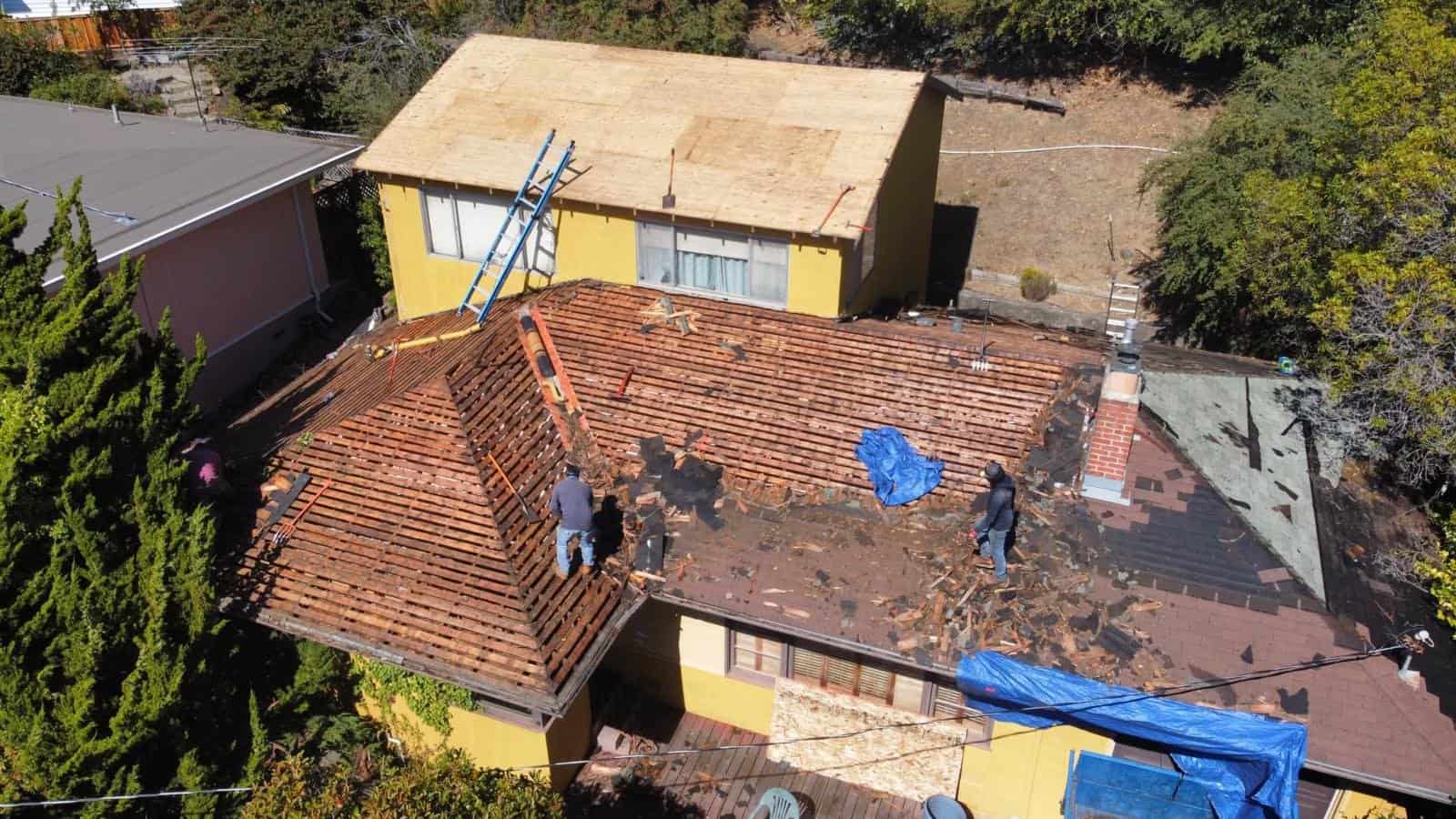
Some situations clearly call for replacement rather than continued repairs. Multiple leaks, widespread shingle damage, or structural issues usually mean your roof has reached the end of its useful life.
Age alone isn’t always the deciding factor, but it’s a strong indicator. Most asphalt shingle roofs in Hayward last 20-25 years with proper maintenance. If your roof is approaching or past that age and showing multiple problems, replacement often makes more sense than ongoing repairs.
Look for patterns rather than isolated issues. If you’re dealing with problems in multiple areas, or if recent repairs haven’t held up as expected, these are signs that your roof’s overall condition has declined beyond what repairs can effectively address.
Energy efficiency considerations matter too. Older roofs often lack modern insulation and ventilation features that can significantly impact your utility bills. When replacement costs are weighed against ongoing energy savings, the math often favors replacement sooner rather than later.
Insurance considerations come into play with older roofs. Some insurers limit coverage on roofs over a certain age, or require inspections that might reveal problems you’ll need to address anyway. Understanding your insurance situation before problems arise helps you make better timing decisions.
The condition of your roof deck matters as much as the surface materials. If inspections reveal deck damage, structural issues, or inadequate support, these problems need to be addressed regardless of surface condition. Once you’re dealing with structural work, full replacement often becomes the most cost-effective approach.
Choosing Reliable Roofing Contractors In Hayward
Finding the right contractor makes all the difference between a roofing project that protects your investment and one that creates ongoing headaches. In Hayward’s market, you want contractors who understand our specific climate challenges and have a track record of quality work that lasts.
Look for proper licensing, insurance, and local references from projects similar to yours. The best contractors will provide detailed written estimates, explain their approach to local weather challenges, and stand behind their work with solid warranties. Don’t just focus on price—consider the total value of experience, quality materials, and reliable service.
When you find contractors who treat your home like their own and communicate clearly throughout the process, you’ve found partners worth building a relationship with. We at Dopro Construction bring decades of local experience and the comprehensive approach that makes roofing projects successful from start to finish.