Summary:
Your roof isn’t something you think about until you have to. Then suddenly you’re staring at water stains on your ceiling, or you’ve got a contractor knocking on your door after a storm, and you’re supposed to make a $20,000+ decision with almost no experience doing it.
The problem isn’t just finding someone who can install shingles. It’s finding someone who won’t disappear with your deposit, who actually knows how Bay Area weather affects roofing materials, and who’ll still answer your calls six months from now if something goes wrong.
This isn’t about picking the cheapest bid or the flashiest website. It’s about knowing what actually matters when you’re trusting someone with one of your home’s most important systems. Let’s start with what separates the contractors who’ll protect your investment from the ones who’ll leave you worse off than when you started.
What to Look for When Comparing Roofing Companies
Before you even think about materials or pricing, you need to know you’re dealing with someone legitimate. That sounds obvious, but the roofing industry has a lower barrier to entry than most, which means anyone with a truck and some tools can call themselves a contractor.
Start with licensing. In California, roofing work requires either a C-39 roofing license or a general contractor license. You can verify any license number directly through the Contractors State License Board website. Don’t just take their word for it—look it up yourself. An active, current license means they’ve met minimum requirements and carry the required bonds.
Insurance matters just as much. You need to see proof of both liability insurance and workers’ compensation coverage. If someone gets hurt on your property and the contractor doesn’t have workers’ comp, you could be held liable. If they damage your home and don’t have liability coverage, you’re paying to fix it. Ask for certificates and verify them directly with the insurance company.
Red Flags That Should Make You Walk Away
Some warning signs are obvious. Others are subtle enough that homeowners miss them until it’s too late. If a contractor shows up at your door right after a storm offering a “free inspection,” be skeptical. These storm chasers follow severe weather, pressure homeowners into quick decisions, and often disappear once they’ve collected payment. Legitimate local companies don’t need to cold-knock doors—they build their business on referrals and reputation.
Watch out for anyone demanding large upfront payments. A standard deposit runs 10-20% of the total project cost. If someone wants 50% or more before work even starts, that’s a red flag. Reputable contractors have credit with suppliers and don’t need your money to buy materials. They also don’t ask to be paid in cash or offer deals for cash payments—that’s usually about avoiding taxes and paper trails.
No written estimate or contract? Walk away. Everything should be documented in detail: specific materials by brand and model number, scope of work, timeline, payment schedule, and warranty information. Vague language like “quality materials” or “as needed” leaves room for substitutions and disputes. If they won’t put it in writing, they’re not planning to stand behind their work.
Pressure tactics are another major warning sign. “This price is only good if you sign today” or “Your roof could collapse any day now” are designed to rush you into a decision before you can think clearly or get competing bids. Legitimate contractors give you time to review proposals, ask questions, and make an informed choice. They’re not afraid of you shopping around because they know their work speaks for itself.
Finally, if a contractor offers to “waive” or “cover” your insurance deductible, that’s insurance fraud. Your policy requires you to pay your deductible. Contractors who offer to handle it are either inflating the claim amount to cover it or committing fraud that could get your claim denied entirely. Some insurance companies have even refused to renew policies over this kind of scheme.
Questions You Should Ask Before Hiring
The right questions separate contractors who know what they’re doing from those who are winging it. Start with experience: How long have they been working specifically in the Bay Area? This matters because our climate creates unique challenges. Coastal moisture, salt air, fog, and earthquake considerations aren’t things you learn from a YouTube video. You want someone who understands why certain materials fail here and which ones actually last.
Ask about their process. Who will be your main point of contact? How often will they update you on progress? What happens if they find unexpected damage once they start work? How do they protect the rest of your property during the project? The answers tell you whether they’ve thought through the details or if they’re making it up as they go.
Get specific about materials. Don’t accept “architectural shingles” as an answer. What brand? What model? What’s the warranty, and who backs it—them or the manufacturer? How do they handle underlayment and flashing? These details matter more than most homeowners realize because improper installation of these components causes the majority of premature roof failures.
Ask about permits. Any reputable contractor pulls the necessary permits and handles inspections. If they suggest you pull the permits yourself or claim permits aren’t needed, that’s a sign they’re either unlicensed or trying to avoid accountability. Permitted work protects you because it means the installation was inspected and approved.
Finally, ask for references from projects completed in the last year. Not just names—actual addresses you can drive by and see their work. Call those references and ask specific questions: Did they show up when promised? How was communication? Did they clean up properly? Were there any issues, and if so, how were they handled? Would you hire them again? The answers will tell you more than any sales pitch ever could.
Understanding Metal Roofing for Bay Area Homes
Metal roofing has moved way beyond the industrial warehouse look most people picture. Modern metal roofs can mimic traditional shingles, tile, or shake while delivering performance that asphalt simply can’t match in Bay Area conditions.
The biggest advantage is longevity. Where asphalt shingles last 20-25 years in our climate, metal roofing runs 40-70 years with minimal maintenance. That’s potentially the last roof you’ll ever install. Metal also handles our weather extremes better—it doesn’t absorb moisture like asphalt, it reflects heat instead of absorbing it (cutting cooling costs by 10-25%), and it carries a Class A fire rating, which matters increasingly as wildfire risk grows.
Cost is higher upfront—expect $10-25 per square foot in the Bay Area compared to $4-7 for asphalt shingles. But when you factor in the longer lifespan, lower energy bills, and reduced maintenance, the lifetime cost often works out lower. Plus, metal roofing typically increases property values more than asphalt.
Steel Roofing vs Other Metal Options
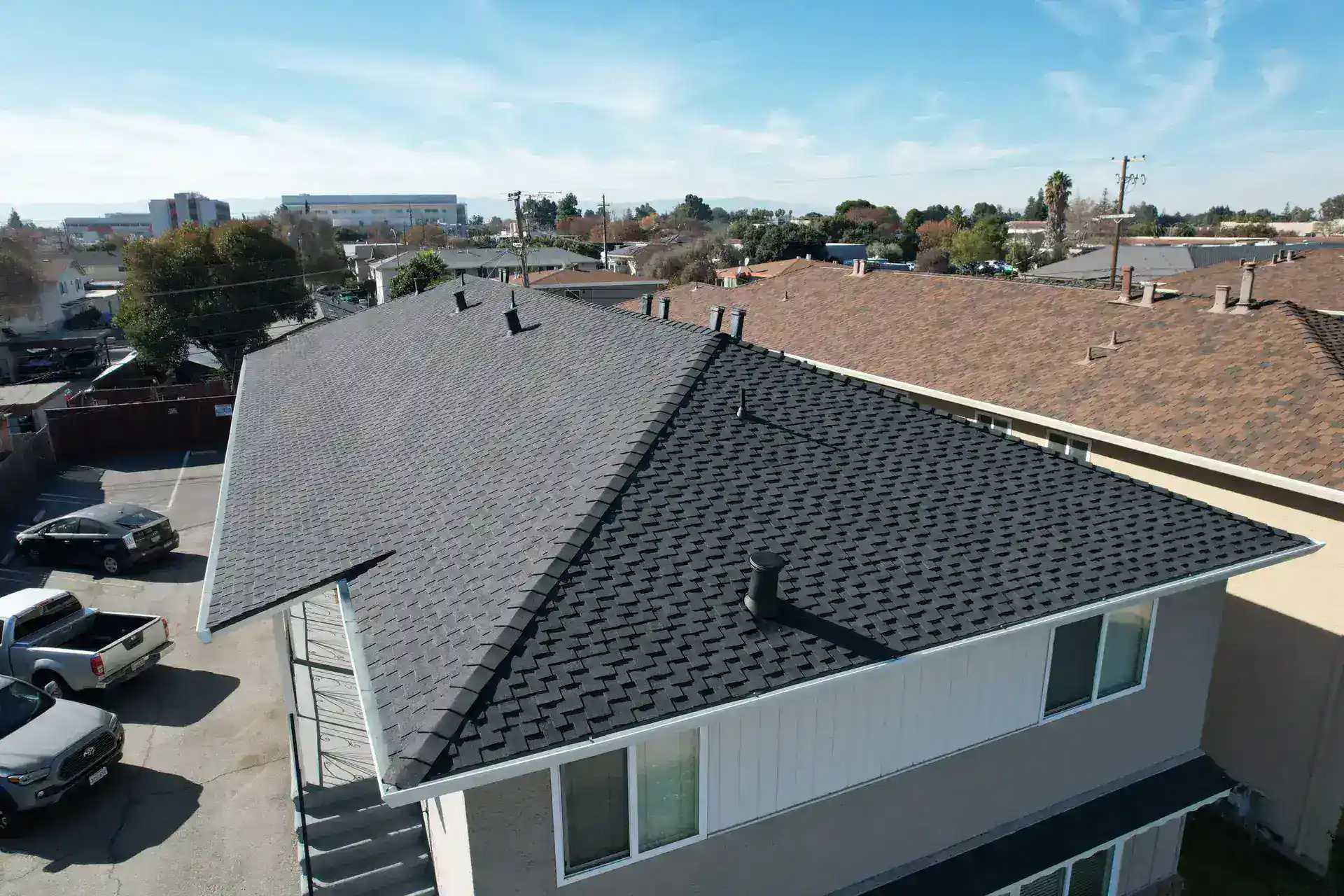
When contractors talk about metal roofing, they’re usually referring to steel, which is the most common and affordable metal roofing material. Steel roofing comes in 24 to 26 gauge thickness for residential applications—lower numbers mean thicker, more dent-resistant material. The steel itself needs a protective coating to prevent rust, typically either galvanized (zinc coating) or Galvalume (aluminum and zinc mixture). Galvalume performs better in most Bay Area conditions, especially in areas with higher moisture.
Steel’s main advantage is strength and affordability. It’s significantly more dent-resistant than aluminum and costs less than copper or zinc. It can withstand high winds, heavy debris, and hail better than most other roofing materials. The downside is that steel isn’t ideal for coastal areas within about five miles of salt water. Even with protective coatings, salt air accelerates corrosion on steel. If you’re in places like Pacifica or Half Moon Bay, aluminum might be a better choice despite the higher cost.
Aluminum roofing costs more but never rusts, making it perfect for coastal homes. It’s also lighter weight, which can matter for older structures or homes where adding load is a concern. The tradeoff is that aluminum is softer and more prone to denting from falling branches or hail. Copper is the premium option—it can last over 100 years and develops a distinctive patina over time. It’s also the most expensive by a significant margin, which limits its use to high-end homes or specific architectural applications.
For most Bay Area homeowners not right on the coast, steel roofing with a quality Galvalume coating and good paint finish offers the best balance of performance, longevity, and cost. The key is making sure your contractor understands which coating system works best for your specific microclimate. What works perfectly in Walnut Creek might fail prematurely in Richmond if the wrong materials are specified.
TPO Roofing for Flat and Low-Slope Applications
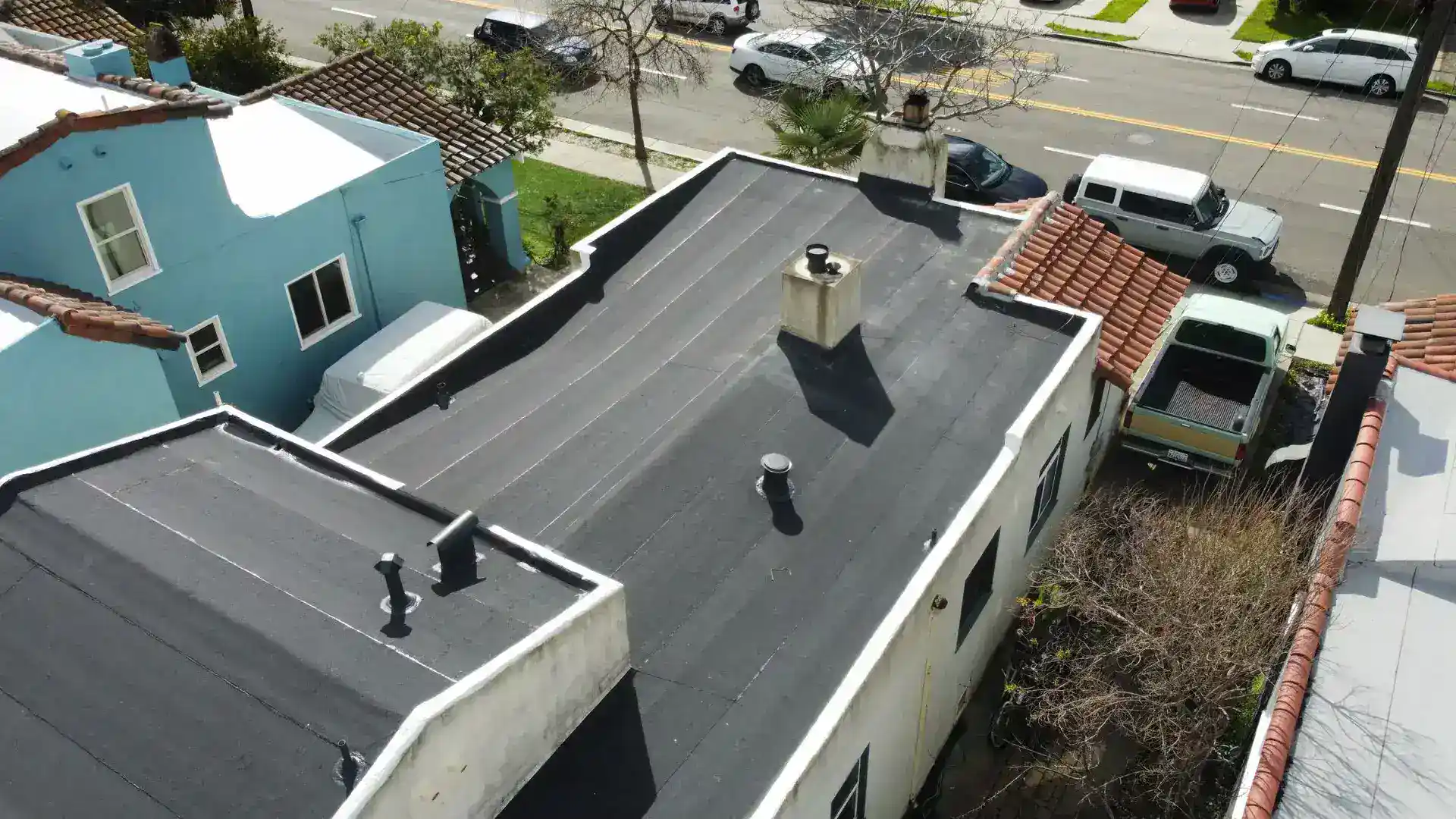
If you have a flat or low-slope roof—common on modern homes, additions, or commercial buildings—TPO roofing has become one of the most popular and cost-effective solutions. TPO stands for Thermoplastic Polyolefin, which is a single-ply membrane that’s heat-welded at the seams to create a completely watertight barrier.
TPO started in commercial applications but has gained serious traction in residential use over the last 25 years. The main appeal is energy efficiency. TPO membranes are typically bright white and highly reflective, which means they bounce solar heat away instead of absorbing it. In Bay Area summers, that can reduce your cooling costs by 10-25%. The material is also highly resistant to UV damage, ozone, and chemical exposure, which gives it a solid 20-30 year lifespan with minimal maintenance.
Installation quality matters enormously with TPO. The seams are heat-welded together, creating bonds that are actually stronger than the membrane itself when done correctly. Poor installation, on the other hand, can lead to seam failures and leaks. The membrane comes in different thicknesses, with 45 mil being the most common for residential applications. Thicker is generally better for durability, but it also costs more.
TPO costs less than PVC (another single-ply option) while delivering similar performance, which is part of why it’s become so popular. It’s also fully recyclable at the end of its life, making it one of the more environmentally friendly roofing options. The material is flexible enough to handle building movement without cracking, which matters in earthquake country. And unlike some roofing materials that require regular recoating or sealing, TPO basically just needs occasional cleaning and inspection.
The catch is that TPO only works for flat or low-slope applications. If you have a traditional pitched roof, you’re looking at shingles, tile, or metal panels. But for the right application, TPO delivers excellent performance at a reasonable price point. Just make sure whoever installs it has specific experience with TPO—it’s not the same skill set as installing asphalt shingles, and mistakes are expensive to fix.
Making a Decision You Can Trust
Choosing roofing companies doesn’t have to feel overwhelming once you know what actually matters. Focus on verification over promises. Check licenses, confirm insurance, get everything in writing, and don’t let anyone rush you into a decision. The contractors who are confident in their work will give you time to think and won’t be threatened by you getting multiple bids.
Pay attention to how they communicate. Do they explain things clearly? Do they return calls promptly? Do they answer your questions without getting defensive? These might seem like small things, but they’re often the best predictor of how the actual project will go. A contractor who communicates well before you hire them will probably communicate well when issues come up during the job.
Remember that the Bay Area’s climate creates specific challenges that not every contractor understands. Coastal moisture, salt air, fog, UV exposure, and earthquake requirements all affect which materials will actually last and which will fail prematurely. Experience in this specific market matters more than generic roofing experience from somewhere else.
If you’re in Contra Costa County or Alameda County and want to talk with someone who understands these local challenges, we at DoPro Construction have over 40 years of combined experience specifically in Bay Area residential roofing and remodeling. We hold both general contractor and roofing licenses, maintain BBB accreditation, and back our work with a Never Get Burnt Guarantee that includes zero upfront payments. That’s the kind of structure that protects homeowners instead of putting them at risk.