Hardwood Installation Contra Costa & Alameda County

Floors Built Right the First Time

Licensed hardwood installation with no upfront payments, proper acclimation protocols, and crews who treat your home like their own. Get the floors you’ve been dreaming about without the installation nightmares you’ve heard about.
A spacious, modern living room with light wood floors, white walls, a black fireplace, built-in benches under windows, and recessed ceiling lights—expertly crafted by a general contractor in Contra Costa & Alameda County, CA. A staircase with metal railings leads upstairs.

Get a Free Estimate Today!

Don’t compromise on quality. Hire only the best.

Approved FHA Title I Lender

Financing Through Service Finance Company

Service Finance Company, LLC is a nationally licensed sales finance company providing outstanding financial solutions to homeowners looking to invest in their homes.

Flexible Financing Options

Choose from a variety of loan term options to find the one that fits your financial plan best — so your home improvements work with your budget, not against it.

Quick & Easy Approvals

Get a fast credit decision with a simple, streamlined application process. Less waiting means you can start your project sooner.

No Equity Required

Unlike traditional financing methods, you don't need home equity to qualify. Open the door to improvements regardless of how long you've owned your home.

Competitive Rates

Service Finance offers competitive rates to ensure your home improvements are both beneficial and affordable — maximizing the value of every dollar.

Fund Your Home Improvement Project Today

From energy-efficient upgrades to a complete home makeover, Service Finance LLC provides financing solutions so you can invest in your home without the financial worry.

Apply for Financing No obligation · Quick credit decision

Dual Licensed Expertise

Both general contractor and roofing licenses mean you’re working with verified professionals, not unlicensed installers who cut corners or disappear mid-project.

No Payment Until Complete

Our Never Get Burnt Guarantee means zero upfront costs. You pay only when the job’s done right and you’re completely satisfied with your new floors.

40 Years Combined Experience

Four decades of expertise means we know how to prevent moisture issues, subfloor problems, and installation mistakes that plague inexperienced contractors.

BBB Accredited Business

Third-party verification of our commitment to quality work, transparent pricing, and customer satisfaction. We’ve earned trust through consistent results, not empty promises.
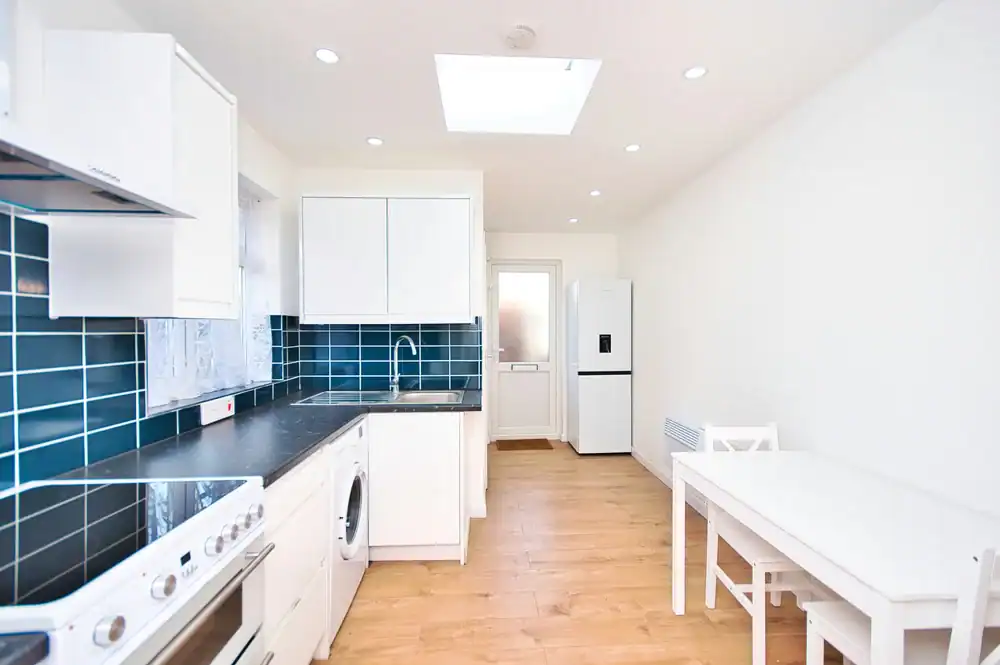
A modern, bright kitchen by a general contractor in Contra Costa & Alameda County, CA, features white cabinets, black countertops, blue subway tile backsplash, light wood flooring, a white dining table with chairs, and a fridge near the back door.

Professional Hardwood Floor Installation Bay Area

More Than Just Laying Planks Down

Real hardwood installation isn’t about speed. It’s about doing it right so your floors don’t buckle six months later or develop gaps you could lose your keys in. That means proper moisture testing before we start, giving the wood enough time to acclimate to your home’s humidity, preparing your subfloor so it’s actually level, and installing with the precision that only comes from experience.

You’re not just getting new floors. You’re getting a surface that’ll handle Bay Area humidity changes, daily foot traffic, and still look incredible twenty years from now. That only happens when the installation is done by people who know what they’re doing and actually care about the outcome.

What You Get With Expert Installation

The Difference Between Good Floors And Great Floors

Proper installation isn't just about aesthetics. It's about creating a floor that performs beautifully for decades without the squeaks, gaps, or warping that come from rushed or amateur work.

Your floors stay flat and stable through Bay Area’s seasonal humidity swings because we acclimate the wood properly before installation.
No squeaking or popping sounds when you walk across the room because your subfloor was prepped correctly and fasteners placed right.
You’ll avoid the cupping and buckling that happens when moisture isn’t tested or subfloors aren’t dried completely before installation.
Your investment holds its value because quality installation means you can refinish these floors multiple times over the decades.
You get back into your home on schedule because we plan realistic timelines and stick to them, no disappearing for days.
Your house stays protected throughout the project with meticulous site protection and optional cleaning when we’re done.
Sunlight streams onto a shiny wooden floor in this modern CA living space. Designed by a general contractor Contra Costa & Alameda County, plants, a sofa, and dining table in the background create a cozy, inviting atmosphere.

Solid Hardwood vs Engineered Wood Flooring

Choosing the Right Wood for Your Home

Solid hardwood and engineered wood both have real wood surfaces, but they perform differently in Bay Area homes. Solid hardwood can last 100 years and be refinished multiple times, making it ideal for main living areas where you want that forever floor. It’s milled from a single piece of wood, giving you maximum refinishing potential down the road.

Engineered wood has a real hardwood top layer over a stable plywood core. That layered construction handles humidity changes better, which is why it works well in kitchens or areas where moisture is more of a concern. It won’t expand and contract as dramatically as solid wood, so you get more dimensional stability.

The choice depends on your space, your timeline, and how long you plan to stay in the home. We’ll walk you through both options based on your specific rooms and what you’re trying to accomplish. Neither one is universally better—they’re just built for different situations.

A close-up view of a polished wooden floor by a general contractor Contra Costa & Alameda County, with rich brown planks reflecting light from large CA windows in the background.

Oak Flooring and Wide Plank Installation

What's Included in Your Hardwood Installation

Your installation starts with a thorough subfloor inspection. We’re checking for moisture content, levelness, and structural integrity before a single plank goes down. If your subfloor isn’t right, your floors won’t be either, so we handle any repairs or leveling work upfront.

The wood gets delivered and sits in your home for at least seven days. This acclimation period lets the planks adjust to your indoor humidity and temperature. Skip this step and you’re gambling with gaps and warping later. We test moisture levels in both the wood and subfloor to confirm they’re compatible before installation begins.

Installation itself involves precise layout planning, proper fastening techniques, and leaving the right expansion gaps around walls and fixed objects. We’re accounting for the wood’s natural tendency to expand and contract with seasonal changes. You also get trim work, transitions between rooms, and detail cuts around obstacles like fireplaces or doorways. Everything’s included in your quote—no surprise charges for the finishing touches that complete the job.

Frequently Asked Questions

How long does hardwood floor installation actually take from start to finish?
From the day your wood is delivered to when you can walk on it, you’re looking at roughly 10 to 15 days for most projects. That includes seven days minimum for the wood to acclimate to your home’s temperature and humidity, which is non-negotiable if you want floors that don’t develop problems later. The actual installation typically takes one to three days depending on square footage and complexity. If you’ve got stairs, intricate patterns like herringbone, or a lot of obstacles to work around, add extra time. Prefinished hardwood is ready to walk on right after installation. Site-finished floors need a few extra days for the finish to cure before you can put furniture back. We give you a realistic timeline upfront based on your specific project, not some generic estimate that leaves you guessing.
Prefinished hardwood arrives with the stain and protective coating already applied at the factory. It installs faster and you can walk on it the same day or next day, which means less disruption to your life. The finish is typically very durable because it’s cured in controlled factory conditions. The tradeoff is you’re limited to available colors and finishes, and you’ll see slight bevels between boards. Site-finished hardwood gets installed raw, then sanded and finished in your home. This takes longer because you need to wait for multiple coats to dry and cure, but you get complete customization on stain color and sheen level. The floor also ends up perfectly smooth with no bevels between planks. Both options can look fantastic and last for decades. The right choice depends on your timeline, your desire for customization, and how much disruption you can handle during the project.
Your subfloor needs to be clean, dry, level, and structurally sound. Moisture content is the big one—if your subfloor is reading above 12% moisture, you’ve got a problem that’ll cause warping or mold growth down the road. The wood’s moisture content should be within 2 to 4 percentage points of your subfloor. We test both with moisture meters before installation begins. Levelness matters too. Dips, humps, or uneven areas need to be ground down, patched, or shimmed so your hardwood doesn’t bounce or squeak later. Any loose sections get secured, and damaged areas get repaired or replaced. This prep work isn’t glamorous, but it’s the foundation of a successful installation. Contractors who skip subfloor prep are setting you up for expensive problems. We inspect your subfloor during the initial consultation and include any necessary prep work in your quote so there are no surprises.
It depends on the thickness of the top wear layer. Cheap engineered hardwood with a thin veneer can’t be sanded at all—it’s a one-time floor that gets replaced when it wears out. Quality engineered hardwood with a 3mm or thicker wear layer can typically be refinished once or twice. Premium engineered products with 4mm to 6mm wear layers can handle three to five refinishing cycles, which gets you pretty close to solid hardwood’s lifespan. Solid hardwood, by comparison, can be refinished four to six times over its lifetime because the entire plank is solid wood. If you’re planning to stay in your home long-term and want maximum refinishing potential, solid hardwood gives you more options. If you need the moisture stability of engineered wood, just make sure you’re getting a quality product with a thick enough wear layer to sand and refinish at least once. We’ll show you the difference and help you pick the right option for your situation.
The number one mistake is skipping proper acclimation. Wood needs at least three to seven days to adjust to your home’s humidity and temperature. Install it too soon and you’ll get gaps or buckling as the wood expands or contracts after it’s down. Moisture issues are the second biggest problem—about 80% of wood flooring failures come from moisture that wasn’t properly tested or controlled. Bad contractors also rush subfloor prep, leaving you with squeaks, uneven surfaces, or boards that pop loose. Not leaving proper expansion gaps around walls and fixed objects is another classic error that leads to buckling when the wood naturally expands. Poor racking strategy makes your floor look awkward with weird color patterns or plank placements. Using too many or too few fasteners causes warping or squeaking. The good news is all of these mistakes are completely avoidable when you work with experienced installers who follow proper protocols. We’ve been doing this long enough to know where shortcuts lead, and we don’t take them.
Throughout our region, you should expect a varied investment for most home flooring projects, though the total fluctuates based on whether you choose accessible options or premium products and intricate layouts. This encompasses both the supplies and the professional craftsmanship. Local labor scales are higher than elsewhere in the country because you are hiring seasoned experts in a premier market. Your final requirement depends on the timber species you select, whether you prefer solid or layered planks, pre-sealed or finished-in-place boards, and the amount of foundation work needed. Broad styles, rare woods, and complex designs like herringbone require more resources. Staircases increase the commitment because they demand significant hand-crafted effort. Be cautious of estimates that appear unusually low—they typically are. Budget installations often imply unseasoned teams, weak moisture protection, or masked charges that surface later. We provide clear details beforehand that encompass preparation, assembly, borders, transitions, and site tidying so you understand precisely what your project covers.

Consultation and Planning

We assess your space, discuss wood options, test subfloor conditions, and give you a transparent quote that includes everything from prep to cleanup.

Acclimation and Preparation

Wood is delivered and acclimated for 7+ days while we prep your subfloor, ensuring moisture levels are right and surfaces are level and stable.

Professional Installation and Finishing

Planks are installed with proper fastening, expansion gaps, and precision cuts. Trim, transitions, and site protection ensure your home looks perfect when we’re done.
Scroll to Top