
Summary:
Your commercial floor takes a beating every single day. Hundreds of footsteps, rolling carts, spills, furniture shuffling, and whatever else gets tracked through the door. Most business owners learn the hard way that cheap flooring decisions cost far more in the long run – through premature replacement, constant maintenance, or safety incidents that could have been prevented.
The difference between flooring that lasts 20 years and flooring that fails in five often comes down to understanding what your space actually needs. Not marketing promises or the lowest bid, but real-world performance in conditions like yours. Let’s talk about what actually holds up when your business depends on it.
What Makes Commercial Flooring Actually Durable
Durability in commercial flooring isn’t just about being “tough.” It’s about handling the specific abuse your space dishes out day after day without showing it.
High-traffic commercial areas face compressive stress from constant foot traffic – sometimes thousands of people daily. That cumulative pressure warps, cracks, or wears down materials that weren’t engineered for it. Then there’s impact resistance for dropped equipment, chemical resistance for cleaning products and spills, moisture resistance in areas that get wet, and scratch resistance from moving furniture and carts.
The materials that excel in commercial applications are designed with these factors in mind. They’re not residential products marketed as “commercial grade” – they’re purpose-built for environments where failure means business disruption and replacement costs that make the initial savings look ridiculous in hindsight.
Luxury Vinyl Tile and Plank Performance in Real-World Conditions
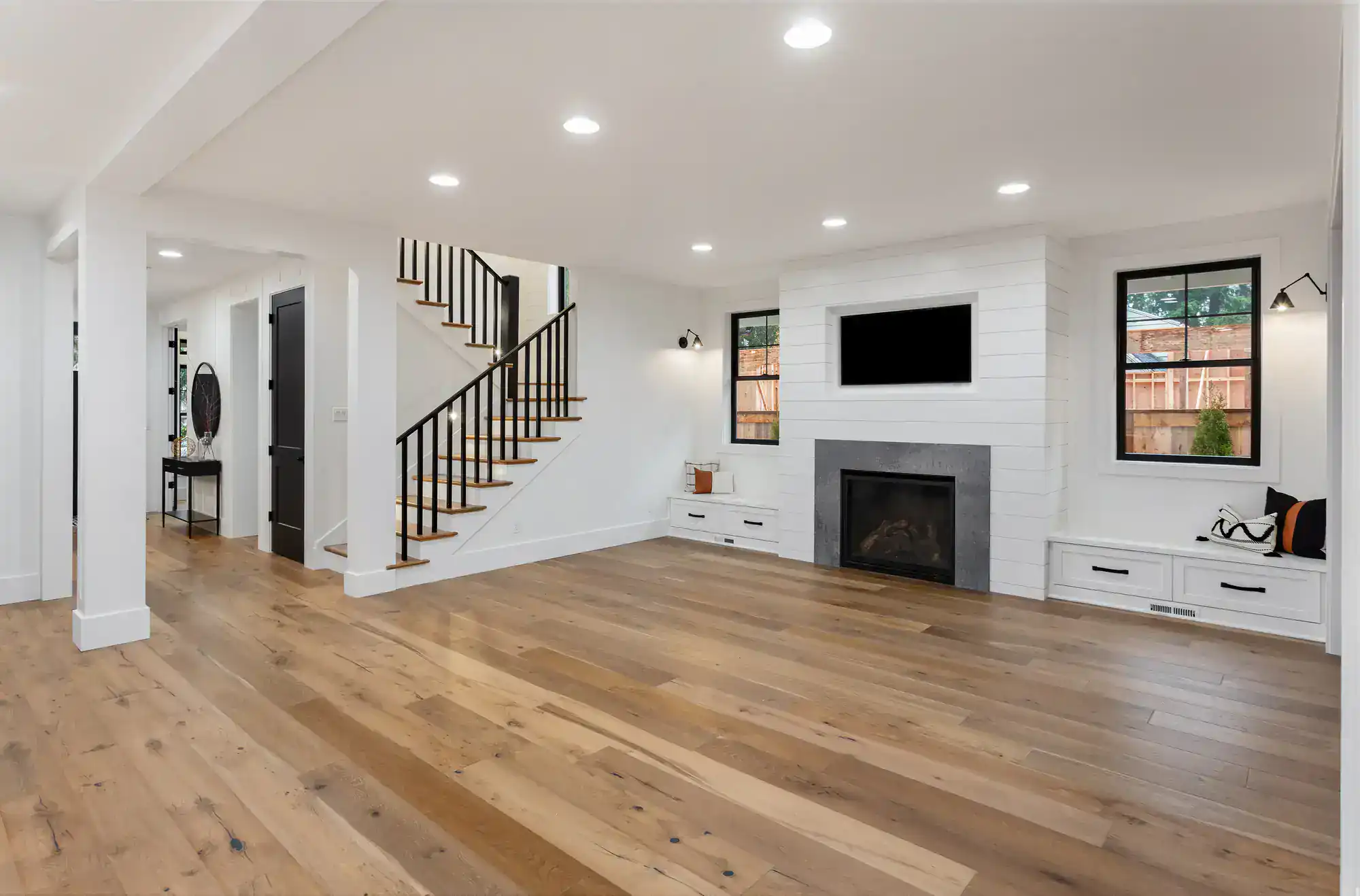
LVT and LVP have become the go-to choice for commercial spaces that need both durability and design flexibility. There’s a reason you see them everywhere from upscale restaurants to hospital corridors.
The construction explains the performance. Multiple layers work together – a dense core for dimensional stability, a photographic layer that can mimic any material, and a protective wear layer on top that takes the abuse. That wear layer thickness matters significantly. For commercial applications, you’re looking at minimum 20 mil thickness. Anything less won’t hold up in truly high-traffic areas.
What makes LVT particularly valuable for business owners is the maintenance reality. You’re not stripping and waxing. You’re not refinishing every few years. Sweep it, mop it with neutral cleaner, and it keeps performing. That simplicity translates to thousands saved annually compared to materials that need constant professional servicing.
The waterproof nature solves problems other materials can’t. Spills don’t damage it. Mopping doesn’t warp it. In restaurants, retail stores, or anywhere moisture is a factor, that protection eliminates a major failure point. And when properly installed, LVT can last 10-20 years in commercial environments – a lifespan that justifies the investment when you calculate cost per year of service.
Design flexibility matters too. You can achieve the look of hardwood, stone, or ceramic tile while getting performance those materials can’t match in commercial settings. For business owners who need their space to look professional while handling real-world use, LVT delivers both without compromise.
Porcelain and Ceramic Tile for Maximum Longevity
When you need flooring that outlasts everything else in your building, porcelain tile deserves serious consideration. It’s the material you choose when “durable enough” isn’t good enough.
Porcelain gets its extreme hardness from firing refined clay at incredibly high temperatures. That process creates a dense, non-porous material that’s essentially impervious to moisture, stains, and wear. Unlike many materials where the finish is just a surface layer, porcelain’s color and pattern run through the entire tile. Chip it, and the damage barely shows because the material is consistent throughout.
This through-body construction is why you see porcelain in the most demanding commercial environments – airport terminals, hotel lobbies, major retail stores. Places where foot traffic never stops and the floor needs to look professional year after year. In these applications, porcelain regularly delivers 20+ years of service without losing its appearance or structural integrity.
Ceramic tile offers similar benefits at a lower price point, though it’s slightly less dense than porcelain. For many commercial applications, ceramic performs excellently – especially in areas that need water resistance and easy cleaning. Restaurant dining areas, office lobbies, and retail spaces use ceramic successfully when properly installed with quality materials.
The installation quality matters enormously with tile. Poor substrate preparation, wrong adhesive, or inadequate grout lead to cracking, lifting, or moisture problems that undermine even the best tile. Professional installation using proper methods and commercial-grade materials is non-negotiable if you want the longevity these materials can deliver.
Maintenance stays straightforward – regular sweeping and mopping with appropriate cleaners. The grout lines require some attention to prevent staining, but modern grout sealers have improved significantly. For businesses that can handle the higher upfront cost and want flooring that essentially lasts as long as the building, porcelain and ceramic tile make economic sense.
Commercial Flooring Options by Application Type
Different commercial spaces have different requirements. What works in a warehouse fails in a restaurant kitchen. What looks great in a retail showroom might not survive an industrial facility.
Matching the material to your specific use case prevents expensive mistakes. A restaurant owner needs different flooring in the kitchen versus the dining room versus the restrooms. An office building has different needs in high-traffic corridors versus individual office spaces. Understanding these distinctions helps you invest in the right solution for each area rather than trying to use one material everywhere and watching it fail where it doesn’t belong.

Restaurant and Commercial Kitchen Flooring Requirements
Restaurant flooring presents some of the most challenging conditions in commercial environments. You’re dealing with grease, moisture, temperature extremes, heavy equipment, constant foot traffic, and safety requirements that don’t leave room for error.
Commercial kitchens specifically need flooring that handles all of that while meeting health code requirements. Quarry tile has been the industry standard for decades because it simply can’t be destroyed. It withstands hot spills, grease buildup, heavy impacts from dropped equipment, and constant traffic from kitchen staff. Properly installed quarry tile with epoxy grout and appropriate adhesives delivers decades of service in conditions that would ruin most other materials within years.
Epoxy flooring is the other top choice for commercial kitchens. It creates a seamless, non-porous surface that prevents moisture and bacteria from getting underneath. That seamless nature makes it easier to keep sanitary – critical in food service environments. Epoxy also offers excellent chemical resistance for cleaning products and can be formulated with slip-resistant additives to meet safety standards even when wet.
The dining area has different priorities. Here you want durability combined with aesthetics that match your restaurant’s brand. LVT excels in this application – it can mimic hardwood or stone for upscale appearance while handling spills, foot traffic, and furniture movement. Engineered hardwood works in dining areas too if you’re willing to handle the maintenance and accept that it won’t be as waterproof as LVT.
Restaurant restrooms need waterproof, easy-to-clean materials that maintain appearance with minimal effort. Ceramic tile or sealed concrete work well here. The key is proper installation that prevents moisture from getting under the flooring where it causes problems you can’t see until they’re expensive.
For restaurant owners, trying to use the same flooring throughout the entire space usually means compromising performance somewhere. The kitchen floor that handles grease and heat might look too industrial for the dining room. The beautiful dining room floor might not survive kitchen conditions. Selecting appropriate materials for each zone costs more upfront but prevents premature failure and replacement.
Office and Retail Commercial Flooring Solutions
Office and retail spaces balance different priorities than industrial or food service environments. Appearance matters significantly because your floor affects customer perception and employee morale. But you still need durability that handles daily traffic without showing wear.
LVT has become increasingly popular in office environments because it solves multiple problems simultaneously. It looks professional – mimicking hardwood or stone convincingly enough that most people can’t tell the difference. It handles office chair casters without damage. It’s quiet underfoot, which matters in open office layouts. And maintenance stays simple enough that your janitorial staff can handle it without specialized equipment or products.
Commercial carpet tile works well in office spaces where you want sound absorption and a softer feel. The modular nature means you can replace damaged sections without redoing the entire floor. Modern carpet tiles with proper backing resist staining and moisture better than traditional broadloom carpet. In office corridors and common areas with heavy traffic, carpet tile typically lasts 7-12 years before needing replacement.
Retail stores have unique demands. Your floor contributes to the shopping experience and brand image. Customers notice when flooring looks worn or cheap. At the same time, retail sees heavy foot traffic, shopping carts, merchandise displays being moved, and spills that need quick cleanup.
Porcelain tile works beautifully in upscale retail environments. It maintains its appearance indefinitely with basic maintenance and can handle the abuse retail dishes out. The design options let you create distinctive looks that reinforce your brand. For retailers who view their flooring as part of the customer experience rather than just a surface to walk on, porcelain justifies the investment.
LVT serves retail well too, especially in spaces that want the warmth of wood appearance with better performance characteristics. It’s softer underfoot than tile, which customers and employees appreciate during long shopping or working sessions. The installation is typically faster than tile, which matters when you’re trying to minimize business disruption.
The mistake many office and retail operators make is choosing residential-grade materials because they look similar and cost less. Those materials aren’t engineered for commercial traffic levels. They show wear quickly, require more frequent replacement, and end up costing more over time than commercial-grade products that last.
Choosing Commercial Flooring That Actually Protects Your Investment
The flooring decision you make today affects your business for the next 10-20 years. Choose well, and you’ve got a surface that handles whatever your operation throws at it while requiring minimal maintenance and looking professional year after year. Choose poorly, and you’re looking at premature replacement, constant repairs, safety issues, or all three.
The materials that perform in commercial environments aren’t mysterious. LVT for versatility and low maintenance. Porcelain tile for maximum longevity and upscale appearance. Epoxy for industrial and kitchen applications. Quarry tile where function matters more than aesthetics. Each has specific applications where it excels.
What matters as much as material selection is professional installation using commercial-grade methods and products. The best flooring material in the world fails if it’s not installed correctly. We bring over 40 years of combined experience to commercial projects throughout Contra Costa County, handling everything from material selection and permits through installation and final cleanup. When your business needs flooring that actually lasts, experience and proper execution make the difference.