
Summary:
You’ve requested three roof replacement estimates. One comes in at $18,000. Another at $28,000. The third at $35,000. Same roof. Same materials—or so you thought. What’s going on?
If you’re trying to figure out why estimates vary so dramatically, you’re asking the right question. Your roof replacement estimate isn’t just about square footage or material choice. It’s shaped by factors most contractors don’t take the time to explain—things like pitch complexity, structural condition, labor rates in your area, and what’s actually included in that number.
This guide breaks down what’s really driving your estimate in Contra Costa County so you can compare quotes accurately and make decisions based on facts, not guesswork.
Understanding Roof Replacement Cost Basics
Your roof replacement cost starts with a few core components. Materials account for roughly 40-60% of your total project cost, while labor makes up the rest. But those percentages shift depending on what you’re installing and how complicated your roof is to work on.
Contractors measure roofs in “squares”—each square equals 100 square feet of roof surface. A typical Bay Area home has between 22 and 26 squares, though your actual roof area is usually 20-30% larger than your home’s footprint due to pitch and overhangs.
In Contra Costa County, you’re looking at higher costs than national averages. Bay Area labor rates run $75-$150 per hour compared to $40-90 nationally. Strict permitting requirements, Title 24 energy compliance, and higher material costs all push numbers up. Most homeowners here pay between $15,000 and $40,000 for a full replacement, with the average landing around $25,000-$28,000.
How Roof Size Impacts Your Estimate
Size is the most obvious cost driver, but calculating it isn’t as simple as measuring your home’s footprint. Your roof covers more area than the square footage of your house because of slope and overhangs.
A 2,000 square foot home might have 2,400-2,600 square feet of actual roof surface. Contractors calculate this precisely using pitch multipliers—the steeper your roof, the more surface area it has. That’s why two homes with identical footprints can have different-sized roofs and different estimates.
Every additional square adds roughly $300-$600 in combined material and labor costs. This is where understanding “roofing squares” matters. If one contractor measures your roof at 24 squares and another at 28 squares, that four-square difference could mean $1,200-$2,400 in cost variation before you even look at materials or labor rates.
Waste factor also plays a role. Simple gable roofs typically need 10% extra material to account for cuts and fitting. Complex roofs with multiple angles, valleys, and dormers may require 15-20% additional materials. That waste gets built into your estimate, and it should—but you need to know it’s there.
Your roof’s accessibility affects the calculation too. If we need to work around landscaping, tight spaces, or multiple stories, that adds time and complexity. More time means higher labor costs, even if your square footage stays the same.
Roofing Material Costs and Options
Material choice creates the biggest price swings in your estimate. Asphalt shingles remain the most common option in Contra Costa County, running $4.50-$9.00 per square foot installed. Within that range, basic 3-tab shingles sit at the lower end while architectural shingles—thicker, more durable, better-looking—cost $6.00-$9.00 per square foot.
Metal roofing costs significantly more upfront at $8.00-$18.00 per square foot, but it lasts 40-70 years compared to asphalt’s 20-30 years. If you’re planning to stay in your home long-term, that longevity changes the value equation. Tile roofing runs $10.00-$20.00 per square foot and handles Bay Area sun exposure exceptionally well, though it requires structural support due to weight.
Material costs aren’t just about the shingles themselves. Your estimate should include underlayment—the protective layer between your roof deck and shingles. Synthetic underlayment costs more than felt but covers more area and performs better in coastal moisture. Quality underlayment matters in Contra Costa County where fog and temperature shifts stress roofing systems.
Flashing is another material component that varies in cost and quality. New flashing around chimneys, valleys, and roof-to-wall intersections should be included in your estimate, not reused from the old roof. Galvanized steel flashing costs less than copper or stainless steel, but in areas with salt air or heavy moisture, cheaper materials fail faster.
Ventilation components—ridge vents, soffit vents, or powered attic fans—also factor into material costs. Proper ventilation extends your roof’s lifespan and improves energy efficiency, but different systems carry different price tags. Your estimate should specify what type of ventilation is included and whether it meets California’s Title 24 requirements.
Don’t overlook the small stuff that adds up. Roof nails, sealants, drip edge, and starter strips all contribute to your material costs. Reputable contractors account for these in their estimates. Less experienced or less honest ones might lowball the initial quote and add these “extras” later.
Labor and Roof Installation Cost Factors
Labor typically accounts for 40-60% of your total roof replacement cost, and in the Bay Area, those rates run high. You’re paying for skilled work in one of the country’s most expensive regions, where roofers face their own housing costs, insurance requirements, and business expenses.
Contra Costa County labor rates reflect this reality. Expect to pay $75-$150 per hour for professional roofing crews, compared to $40-90 in many other parts of the country. That premium buys you contractors familiar with local building codes, seismic requirements, and the specific challenges of Bay Area roofing.
Installation complexity drives labor costs as much as hourly rates do. A simple ranch-style roof with two or four roof planes takes less time and requires fewer safety measures than a complex roof with multiple stories, steep pitches, valleys, dormers, and skylights. More complexity means more hours, which means higher costs.

How Roof Pitch Affects Installation Costs
Roof pitch—the steepness of your slope—significantly impacts labor costs because it determines how safely and quickly crews can work. Pitch is measured as rise over run: a 6:12 pitch means the roof rises 6 inches for every 12 inches of horizontal distance.
Low-slope roofs (4:12 or less) allow workers to move around relatively easily. Standard safety equipment suffices, and installation proceeds at a normal pace. These roofs cost less to replace because labor efficiency stays high.
Moderate pitches (5:12 to 6:12) require more caution and slightly slower work, but experienced crews handle them routinely. You’ll see a modest increase in labor costs compared to low-slope roofs, but nothing dramatic.
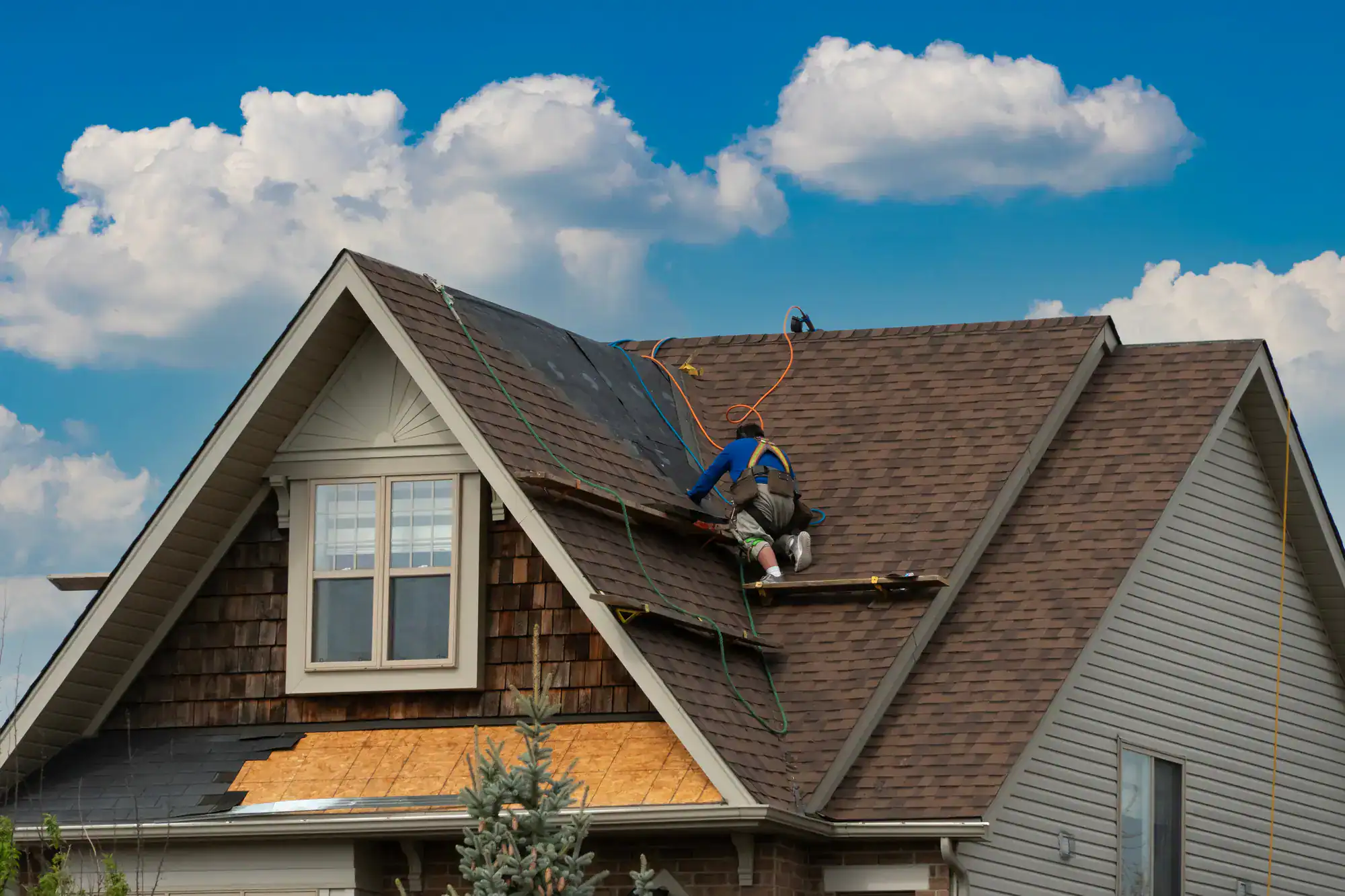
Steep roofs (7:12 and above) change everything. Workers need harnesses, toe boards, and additional safety equipment. They move more slowly and carefully. What might take two days on a walkable roof could take three or four days on a steep one. That extra time translates directly to higher labor costs—often 20-40% more than a comparable low-slope roof.
Some roofs are so steep or complex that they require scaffolding or specialized equipment. That adds both rental costs and setup time to your project. If your estimate includes scaffolding, that’s a legitimate expense, not padding.
The number of roof penetrations also affects labor time. Every chimney, skylight, plumbing vent, or HVAC duct requires careful flashing and waterproofing. A roof with ten penetrations takes longer to complete than one with three, even if the square footage is identical.
Hidden Factors That Change Your Estimate
Some cost factors don’t show up until work begins, but reputable contractors account for them in estimates or explain how they’ll be handled. Roof decking condition is the biggest unknown. The wooden boards that form your roof’s foundation can’t be fully assessed until old shingles come off.
If decking is rotten, water-damaged, or compromised, it must be replaced before new roofing goes on. Replacement decking typically costs $70-$100 per sheet. A few sheets won’t break your budget, but extensive damage can add $1,000-$3,000 or more to your project. Good contractors include a line item for decking replacement in their estimates, specifying the cost per sheet so you know what to expect if issues arise.
Tear-off complexity varies based on how many layers of old roofing exist. Single-layer removal costs $1-$2 per square foot. Multiple layers cost more because there’s simply more material to remove and dispose of. California building codes often require removing all layers before installing new roofing, so this isn’t optional.
Disposal fees for old roofing materials should be included in your estimate. Dumpster rental, hauling, and landfill fees all cost money. Some contractors itemize this separately; others roll it into their overall price. Either way, it needs to be accounted for.
Permits represent another cost that varies by city within Contra Costa County. Most jurisdictions require permits for full roof replacements, with fees ranging from $150 to $800. The permitting process also takes time—typically 2-3 weeks—which affects your project timeline. Experienced contractors handle permit applications as part of their service, but the fees still get passed to you.
Structural issues occasionally emerge during tear-off. Sagging rafters, inadequate support, or damage from previous leaks may require repairs before roofing can proceed. These aren’t common, but they happen, especially in older Bay Area homes. Contractors should explain upfront how they’ll handle unexpected structural work if it’s discovered.
Making Sense of Your Roof Replacement Estimate
Your roof replacement estimate reflects a combination of measurable factors—size, materials, pitch, labor rates—and project-specific variables like complexity, access, and structural condition. Understanding what drives your number helps you compare quotes accurately instead of just picking the lowest price.
When estimates vary significantly, ask why. Is one contractor using cheaper materials? Excluding permits or disposal? Underestimating the scope? Or are they simply being more thorough and transparent about what your project actually requires?
The right contractor explains your estimate clearly, accounts for all factors upfront, and handles the details—permits, inspections, protection of your property—without you having to chase them down. If you’re looking for that level of transparency and professionalism in Contra Costa County, we bring 40+ years of combined experience and a Never Get Burnt Guarantee that means zero upfront payments. Your investment stays protected, and you only pay as work is completed to your satisfaction.