Your kitchen cabinets look tired. The finish is peeling, the style feels stuck in another decade, and you’re ready for a change. But here’s the question that stops most homeowners cold: should you reface what you have or replace everything?
It’s not a small decision. Cabinets represent the biggest visual element in your kitchen and one of the largest line items in any remodel budget. Make the wrong call, and you either waste money on a cosmetic fix that doesn’t last, or you overspend on a full replacement you didn’t actually need.
This guide walks you through the real costs, timelines, and conditions that determine which path makes sense for your Contra Costa County kitchen. No sales pitch. Just the information you need to make a decision you’ll feel good about.
What Cabinet Refacing Actually Involves
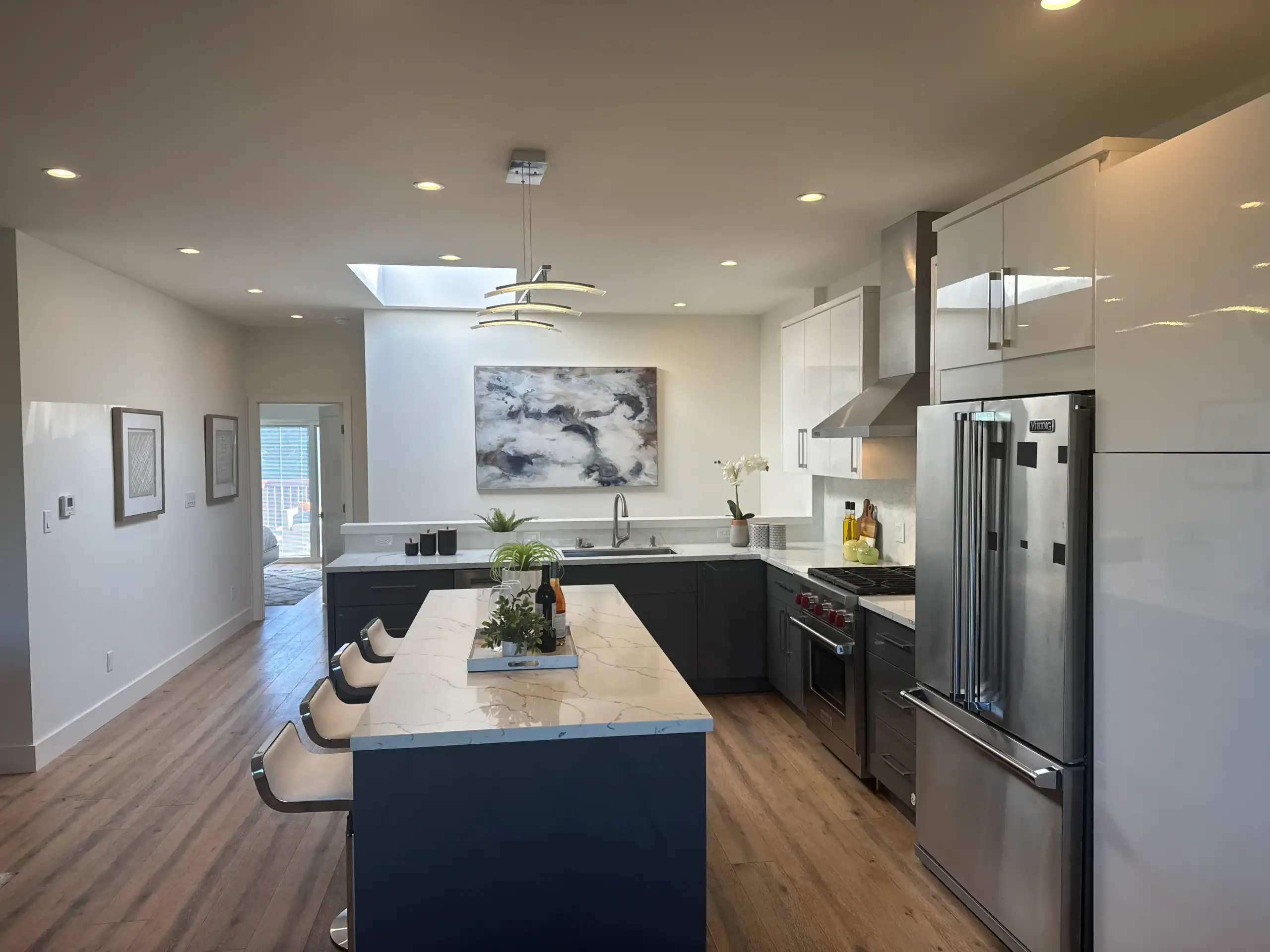
Cabinet refacing keeps your existing cabinet boxes in place while updating everything you see. The doors and drawer fronts get replaced entirely. The visible surfaces of your cabinet frames get covered with new veneer or laminate that matches your new doors. Hardware gets swapped out for fresh hinges and pulls.
The cabinet boxes themselves—the structure attached to your walls—stay exactly where they are. That’s what separates refacing from replacement and why the cost difference is so significant. You’re updating the appearance without the labor and expense of demolition, new box construction, and reinstallation.
Most refacing projects in Contra Costa County take three to five days from start to finish. Your kitchen stays mostly functional during the work. Compare that to full replacement, which can leave you without a working kitchen for three to eight weeks.
How Much Does Cabinet Refacing Cost in 2026
Cabinet refacing in Contra Costa County typically runs between $4,000 and $9,500 for an average-sized kitchen. Most contractors price by linear foot, which works out to $100 to $250 per linear foot depending on materials and kitchen size.
That range isn’t arbitrary. A small kitchen with 10-15 linear feet of cabinets and basic laminate materials might land around $4,000. A larger kitchen with 25-30 linear feet, wood veneer, and upgraded hardware can push toward $9,500 or higher.
Labor represents 50 to 70 percent of your total cost. The rest covers materials—your new doors, drawer fronts, veneer or laminate for the cabinet boxes, and hardware. Solid wood doors cost more than laminate. Custom paint finishes cost more than standard stains. Soft-close hinges and designer pulls add to the total.
The key factor is what you’re keeping. Your existing cabinet boxes, the most expensive component of any cabinet system, stay in place. That’s where the savings come from compared to replacement.
Material choice makes a real difference. Laminate offers durability and affordability, running on the lower end of the cost spectrum. Wood veneer delivers a richer appearance and costs more. Solid wood doors with custom finishes sit at the top of the range but still cost significantly less than full replacement.
Most homeowners recoup 70 to 80 percent of their refacing investment in added home value. That return on investment makes refacing one of the smarter kitchen upgrades, especially in Contra Costa County’s competitive real estate market where median home values exceed $1.2 million and kitchen condition heavily influences buyer decisions.
When Cabinet Refacing Makes Sense
Refacing works when your cabinet boxes are structurally sound. Open your cabinet doors and check the boxes themselves. Look for warping, water damage, soft spots, or separation at the joints. Press on the bottom and sides. If everything feels solid and the boxes are level and firmly attached to the walls, refacing is a viable option.
Many Contra Costa County homes built between the 1960s and 1980s have solid plywood or hardwood cabinet construction that’s actually higher quality than what you’d get in many new cabinet systems. Those older cabinets were built to last. If the bones are good, refacing gives you a modern appearance while keeping that quality construction.
Your current layout also matters. Refacing keeps your cabinets in their existing locations. If your kitchen workflow makes sense—if the relationship between your sink, stove, and refrigerator works well and you have adequate storage—refacing delivers a fresh look without layout changes.
Budget often drives the decision. Refacing costs 50 to 70 percent less than full replacement. If you want a dramatic visual update but need to control costs, refacing provides that transformation without the expense of new cabinet boxes, demolition, and the ripple effects of a full replacement like new countertops and potential flooring repairs.
Timeline also plays a role. If you’re selling your home soon or have a tight deadline, refacing’s three-to-five-day completion beats replacement’s weeks-long process. You get the updated appearance buyers expect without the extended disruption.
The environmental angle resonates with many Bay Area homeowners. Refacing keeps quality cabinet boxes out of landfills, reducing waste while delivering a like-new appearance. It’s a practical choice that aligns with California’s sustainability values.
Refacing also works well when you like your existing countertops and they’re in good condition. Replacement typically requires new countertops because removing old cabinets often damages the counters. Refacing lets you keep countertops you’ve already invested in.
Kitchen and Bath Remodeling Contractors: Understanding Full Cabinet Replacement
Cabinet replacement means exactly what it sounds like. Everything comes out. Your old cabinets get removed entirely, and new boxes, doors, and hardware get installed from scratch.
The process involves demolition, potential wall and floor repairs, precise measurement and leveling of new base cabinets, and coordination with countertop installation. It’s comprehensive, disruptive, and expensive. But sometimes it’s the right call.
Full replacement gives you complete freedom. You can change your kitchen layout, add an island, extend cabinets to the ceiling for extra storage, or reconfigure your entire workflow. If you’ve ever thought “I wish this cabinet was over there instead,” replacement makes those changes possible.
Contractors for Kitchen and Bathroom Remodeling: Replacement Costs and Timeline
Full cabinet replacement in Contra Costa County typically costs $15,000 to $35,000 or more, depending on cabinet quality and kitchen size. Stock cabinets run $100 to $400 per linear foot installed. Semi-custom cabinets cost $150 to $650 per linear foot. Custom cabinets can reach $500 to $1,200 per linear foot.
That’s just the cabinets. Replacement usually triggers additional costs. You’ll likely need new countertops since removing old cabinets typically damages existing counters. Flooring often needs repair or replacement where old cabinets sat. Backsplash work, plumbing adjustments, and electrical updates add to the total.
Timeline runs longer too. Stock cabinets might arrive in a few weeks, but semi-custom and custom cabinets can take eight to twelve weeks for production alone. Add two to three weeks for installation, and you’re looking at three to eight weeks without a fully functional kitchen.
The permit process in Contra Costa County adds time to the front end. Depending on the scope of work and whether you’re in Walnut Creek, Concord, or another city in the county, permits can take two to four weeks for approval. Most cabinet replacement projects require building permits, especially when they involve electrical, plumbing, or structural modifications.
Labor costs run higher for replacement. Cabinet installers must precisely level base cabinets. If a shelf isn’t level, you’ll notice every time you put something on it for the rest of your life. The technical complexity of proper installation drives up labor costs compared to refacing.
But replacement delivers benefits refacing can’t match. You get brand new interiors, modern storage solutions like pull-out shelving and soft-close drawers, and the ability to incorporate features your old cabinets didn’t have. You can also address any underlying issues with your kitchen’s structure or layout that refacing would simply cover up.
When Cabinet Replacement Becomes Necessary
Some situations demand replacement rather than refacing. If your cabinet boxes are damaged, warped, or failing structurally, refacing just masks the problem. Water damage, mold, particle board that’s swollen or crumbling, or boxes pulling away from the wall all point toward replacement.
Layout issues also favor replacement. If your kitchen workflow doesn’t work—if you constantly backtrack between work zones, if you lack adequate storage, or if the configuration just doesn’t match how you cook—refacing won’t fix those problems. The cabinets stay in the same spots with refacing. Replacement lets you redesign from scratch.
Many homes in Pleasant Hill, Lafayette, and throughout Contra Costa County have kitchens that weren’t designed for how families use space today. Modern cooking involves more appliances, more storage needs, and different workflow patterns. If your kitchen layout feels fundamentally wrong, replacement gives you the chance to fix it.
Electrical limitations matter too. Older Contra Costa County homes often have 60 to 100 amp service that can’t handle modern kitchen demands. During replacement, walls are exposed, making it the perfect time to upgrade to a 200-amp panel, add dedicated circuits for high-end appliances, or install under-cabinet lighting. Refacing leaves you stuck with your existing electrical layout.
If you’re planning a comprehensive kitchen remodel that includes new countertops, flooring, and appliances, replacement often makes more sense. The disruption is happening anyway. Coordinating everything at once can actually save money compared to refacing now and replacing later when those new countertops need to come out.
The condition of your existing cabinets matters most. If they’re constructed from particle board or low-quality materials, refacing puts new doors on a structure that won’t last. Better to invest in quality replacement cabinets that will serve you for decades.
Cabinet replacement also makes sense when you want features your current cabinets can’t accommodate. Deep drawers for pots and pans, pull-out spice racks, built-in lazy Susans, designated appliance garages—these organizational features require specific cabinet box construction. You can’t retrofit them into existing boxes during refacing.
Making the Right Decision for Your Contra Costa County Kitchen
The choice between refacing and replacement comes down to three factors: the condition of your existing cabinets, whether your layout works, and your budget. If your cabinet boxes are solid, your layout makes sense, and you want to control costs while achieving a dramatic visual update, refacing delivers excellent value. If your cabinets are failing, your layout doesn’t work, or you’re planning a comprehensive remodel anyway, replacement gives you the freedom to redesign completely.
Neither option is universally better. They serve different purposes. The homeowners who regret their choice are usually the ones who refaced damaged cabinets that failed a few years later, or who replaced perfectly good cabinets when refacing would have delivered the results they wanted at a fraction of the cost.
We bring over 40 years of combined experience to kitchen remodeling projects throughout Contra Costa and Alameda counties. Our team can assess your existing cabinets, discuss your goals and budget, and provide honest recommendations about which approach makes sense for your specific situation. With dual licensing in general contracting and roofing, BBB accreditation, and our Never Get Burnt Guarantee that requires zero upfront payments, you get the expertise and protection you need to make this decision with confidence.