Attached ADUs Contra Costa Alameda County

More Space Without Breaking the Bank

An attached secondary unit provides the extra living space your family requires or the steady rental revenue you have been envisioning—without the significant investment required for a standalone building. You are viewing practical solutions that match your property and your financial goals, managed by a dedicated team that truly understands the craft.
A modern CA house with large glass doors opens to a wooden patio. Two people relax on outdoor sofas surrounded by desert plants and a palm tree, showcasing General Contractor Services Bay Area expertise under a sunny sky.

Get a Free Estimate Today!

Don’t compromise on quality. Hire only the best.

Approved FHA Title I Lender

Financing Through Service Finance Company

Service Finance Company, LLC is a nationally licensed sales finance company providing outstanding financial solutions to homeowners looking to invest in their homes.

Flexible Financing Options

Choose from a variety of loan term options to find the one that fits your financial plan best — so your home improvements work with your budget, not against it.

Quick & Easy Approvals

Get a fast credit decision with a simple, streamlined application process. Less waiting means you can start your project sooner.

No Equity Required

Unlike traditional financing methods, you don't need home equity to qualify. Open the door to improvements regardless of how long you've owned your home.

Competitive Rates

Service Finance offers competitive rates to ensure your home improvements are both beneficial and affordable — maximizing the value of every dollar.

Fund Your Home Improvement Project Today

From energy-efficient upgrades to a complete home makeover, Service Finance LLC provides financing solutions so you can invest in your home without the financial worry.

Apply for Financing No obligation · Quick credit decision

Dual Licensed Contractor

We hold both general contractor and roofing licenses. That means your entire project stays under one roof—literally—with no coordination headaches between multiple companies.

No Money Down Ever

Our Never Get Burnt Guarantee means you never pay a dime upfront. We’ve seen too many Bay Area homeowners lose deposits to sketchy builders. That won’t happen here.

Dedicated Project Manager

You get one person managing your entire build, plus weekly progress updates. No wondering what’s happening or when things will actually get done.

Four Decades Combined Experience

Our team brings over 40 years of construction expertise to your project. We’ve handled everything from foundation issues to complex permits across Contra Costa and Alameda Counties.

Our Related Services!

Guest Suite Additions

Junior Adu

A modern, single-story house with large glass doors opens to a green lawn and minimal landscaping, surrounded by trees and plants under a clear blue sky—crafted with expert General Contractor Services Bay Area, CA.

Attached ADU Construction Contra Costa Alameda

What an Attached ADU Actually Is

An attached ADU connects directly to your existing home. It shares at least one wall with your house, which is exactly why it costs less and builds faster than a detached unit. You might be converting your garage, adding onto the side of your home, or finishing that basement that’s been sitting empty for years.

These units work especially well if you’re dealing with a smaller lot, tighter budget, or need easy access between your main home and the new space. Think aging parents who need to be close but want their own kitchen and bathroom. Or adult kids who aren’t quite ready to buy but need more than a bedroom.

In Contra Costa and Alameda Counties, your attached ADU can be up to 1,200 square feet or 50% of your primary home’s size—whichever is less. That’s enough space for a full one-bedroom unit with everything someone needs to live independently.

Attached ADU Benefits Bay Area Homeowners

What You Actually Get From This

An attached ADU isn't just square footage. It's rental income, family housing, and a serious boost to your property value—all without the six-figure premium of building a separate structure.
You will save a significant amount compared to a standalone cottage because you are utilizing your current foundation, structural walls, and existing utility connections.
Your project wraps up in 7 to 10 months instead of dragging on for over a year like most detached builds.
You can walk from your kitchen to check on your parents without going outside—huge for caregiving or just peace of mind.
Your property’s market worth increases significantly on average across our region, frequently offsetting your entire building investment and providing additional equity.
You will generate a substantial amount of monthly revenue if you choose to lease the space, helping balance your home loan payments or supporting your future retirement.
Permitting moves faster because you’re modifying an existing structure, not building from scratch with new setback requirements and utility trenching.
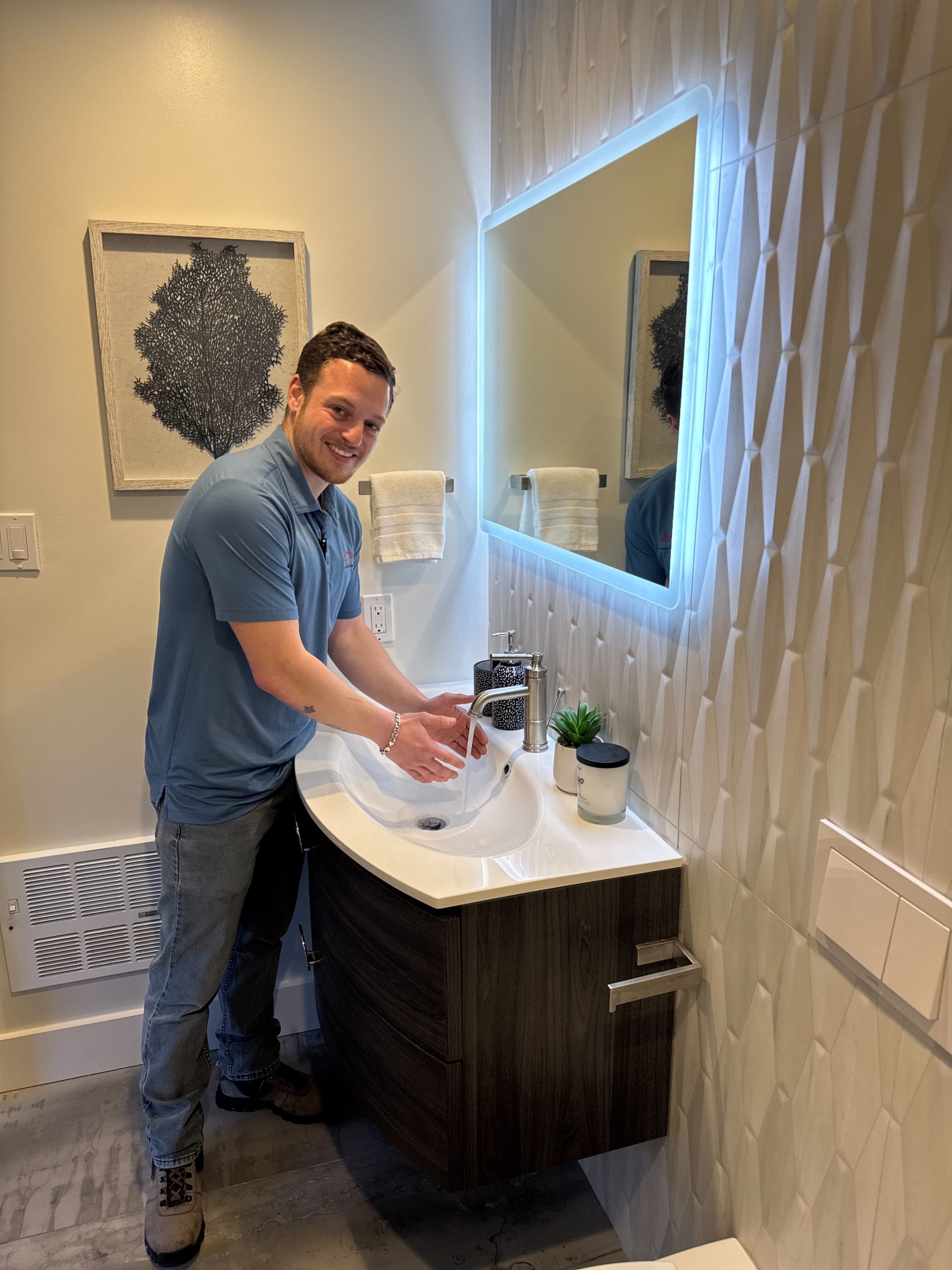
A man in a blue shirt washes his hands at a modern bathroom sink below an illuminated mirror. The wall has a textured pattern, and there is a framed artwork, towel, and small plant on the sink.

Why Attached ADUs Cost Less

The Real Reason This Saves You Money

Attached secondary units are more affordable because you aren’t starting from scratch. Your house already features a foundation, a roof, and essential utility lines. When we construct your attached suite, we connect to systems that are already in place instead of digging up your yard to install new plumbing and power. That saves you a massive amount of resources compared to building a standalone cottage. We aren’t skipping steps or sacrificing quality. We are simply avoiding the need to pay for things you already own. You get the same premium materials, the same rigorous building standards, and the same official permits—just a more efficient use of your current home.

Another big advantage is the timeline. Attached suites are finished more quickly because we are working within an existing structural shell. Faster building means lower labor requirements and less time spent on site expenses like equipment rentals and project management. You also begin producing rental revenue or providing a home for your family months sooner than you would with a separate build.
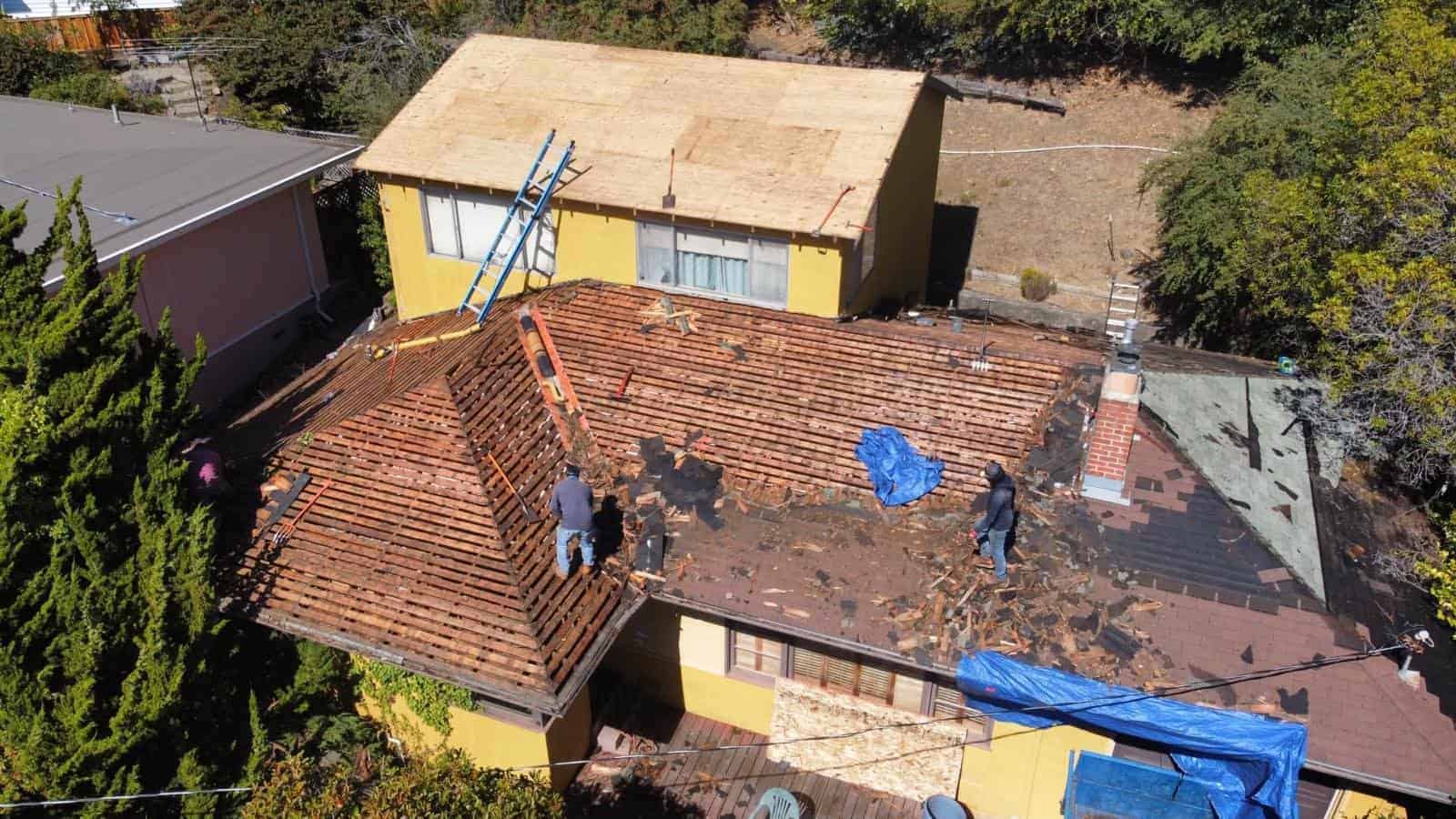
Aerial view of a house in CA with workers removing old shingles and debris from the roof. Part of the roof is stripped to wooden beams, ladders and blue tarps visible, showing ongoing General Contractor Services Bay Area.

Attached ADU Permits Contra Costa Alameda

We Handle the Permitting Nightmare

Permitting is where most ADU projects stall. Contra Costa and Alameda Counties each have their own requirements on top of California state law, and if you submit incomplete plans, you’re looking at months of back-and-forth revisions.

We manage the entire permit process. That includes site plans, fire-rated separation details, Title 24 energy calculations, and structural engineering stamps. We know which departments to contact, what documentation they actually want to see, and how to respond when they inevitably ask for clarifications.

You’ll also need fire-rated walls and ceilings between your ADU and the main house—that’s non-negotiable. If you’re converting an attic or basement, expect upgrades to insulation, moisture barriers, and ventilation to meet current code. We factor all of that into your estimate upfront so there are no surprises three months into construction.

Frequently Asked Questions

How much does an attached ADU cost in Contra Costa or Alameda County?
Attached secondary units in our local region typically fall within a specific investment range depending on their scale, the quality of materials, and your property’s layout. This is considerably more affordable than what you would invest in a standalone backyard cottage. The difference in commitment stems from utilizing your existing foundation, roof structure, and utility hookups. If you are transforming an existing garage or basement space, you will likely find yourself at the more accessible end of that spectrum. If you are constructing a brand-new addition with premium finishes, expect your investment to be toward the higher end of the range. We provide clear, honest projections that cover everything from the initial designs and city permits to the final construction and finishing touches—ensuring no surprise costs appear in the middle of your project.
In both Contra Costa and Alameda Counties, your attached ADU can be up to 1,200 square feet or 50% of your primary home’s existing floor area—whichever is less. So if your main house is 2,000 square feet, your attached ADU maxes out at 1,000 square feet. If your house is 3,000 square feet, you can build the full 1,200. The height limit is typically 25 feet or the height of your main residence, whichever is lower. These are county-level rules, but individual cities within the counties may have additional requirements. We verify your specific property’s allowances during the site evaluation so you know exactly what you’re working with before design starts.
Plan on 7 to 10 months total from your first consultation to moving in. That breaks down to roughly 1 to 2 months for design, 2 to 4 months for permit approval, and 4 to 5 months for construction. Permit timelines vary by city—some move faster than others. San Ramon and Walnut Creek tend to process ADU permits more quickly than smaller cities with fewer staff. The construction phase is more predictable because we’re working with your existing structure, which means fewer surprises than digging a foundation for a detached unit. Your dedicated project manager will give you a realistic timeline specific to your property and city during the planning phase.
Not usually, and that’s one of the biggest ways you save. Attached units typically connect directly to your current water, sewer, electrical, and gas lines. You might need separate shut-offs or meters in some situations, but you aren’t digging up your yard to install entirely new infrastructure. That saves you a significant amount of money compared to building a standalone unit. Your electrical panel might need an upgrade if it cannot handle the extra power for a full kitchen and climate control system—this is something we look at during our first visit. We also check your water and sewer capacity to ensure your existing connections can support the new living space without any problems.
Yes, but only on the value you’re adding, not your entire property. California’s Proposition 13 protects your existing home’s assessed value. The county assessor will add the construction cost of your secondary unit to your tax roll, which typically results in a modest annual increase in property taxes depending on your project scale. If you invested a standard amount building your attached suite, expect a proportional yearly increase in your tax bill. The good news is your home’s market worth increases by a much larger margin on average, and if you’re leasing the unit out at a competitive rate, that creates a substantial amount of gross annual income. The tax adjustment is real but manageable compared to the total financial benefits.
You can definitely lease your attached secondary unit as a long-term home. California law allows property owners to rent these dwellings without having to live on the site themselves—a requirement that was updated in 2024. Short-term stays of less than a month might be limited depending on your specific city’s rules, so check your local guidelines if you are hoping for vacation-style income. Most regional homeowners lease their attached suites for a significant monthly amount based on the home’s size, neighborhood, and quality. You will likely need a business license in most areas, and your rental earnings are subject to taxes. If you are constructing a junior unit instead of a standard attached suite, residency rules may still apply—these are the smaller spaces under 500 square feet that share a bathroom with your main residence.

Site Evaluation and Planning

We assess your property, confirm zoning compliance, and map out utility connections. You’ll know exactly what’s possible before we draw a single plan.

Design and Permitting

Our team creates construction documents, submits to the county, and handles all permit revisions. This phase takes 60 to 120 days depending on your city.

Construction and Final Inspection

We build your ADU, coordinate inspections, and walk you through the final walkthrough. Your dedicated project manager keeps you updated weekly until you get your certificate of occupancy.
Scroll to Top