
Flooring in Abbington at Gale Ranch
Floors Built for How Abbington Families Actually Live
Hear from Our Customers

Hardwood and LVP Flooring Abbington at Gale Ranch
When your original 2008-era floors start showing their age — the scuffs near the entry, the worn patch in the great room, the carpet that’s seen one too many school years — replacing them isn’t just about aesthetics. It’s about getting a floor that actually works for your home and holds its value in a neighborhood where buyers notice these things.
Abbington townhomes sit on slab-on-grade main levels adjacent to attached garages, which means moisture management isn’t optional — it’s essential. Skip that step and even a beautiful hardwood floor can cup, gap, or squeak within a year. San Ramon’s seasonal humidity swings make this worse: indoor humidity climbs to around 80% in January and drops sharply through the dry summer months, and wood floors that weren’t properly acclimated before installation will move with every cycle.
Upper-level floors in Abbington carry a different challenge entirely. Bedrooms and hallways above living spaces need sound-dampening underlayment — without it, every footstep travels straight to the room below. It’s a detail that flooring-only contractors often skip, and one that makes a real difference in a multi-story townhome. Getting the right product on the right level, installed the right way, is what separates a floor that lasts from one that creates problems.
Licensed Flooring Contractor Abbington at Gale Ranch
We’re a licensed General Contractor based in Walnut Creek, serving Contra Costa County — including the Gale Ranch community in San Ramon where Abbington is located. Our GC license isn’t a detail. It means that if your flooring project uncovers subfloor moisture damage, structural irregularities, or anything else underneath the surface, we handle it in-house without stopping your project or calling in a separate contractor.
Most flooring companies can’t say that. A flooring-only specialist who runs into a damaged subfloor has to stop, refer out, and restart — which costs you time and money. We don’t. One team, one contract, one project manager keeping you updated throughout.
We’re also BBB Accredited, ranked in the top 4% of 336,931 licensed California contractors on BuildZoom, and we’ve been active in the Abbington community long enough to know what these townhomes are built like and what they need. Our Never Get Burnt Guarantee means you pay nothing upfront — not a deposit, not a partial payment. You pay when the work is done.

Flooring Installation Process Abbington at Gale Ranch
It starts with a conversation — not a hard sell. We look at your home, understand what you’re working with, and help you figure out what flooring makes sense for each level of your townhome. Main level near the garage? Moisture testing comes first. Upper-level bedrooms and hallways? We factor in underlayment for sound control before we ever talk about product selection.
Once the scope is clear, we handle the full process. San Ramon doesn’t require a building permit for standard flooring replacement — swapping carpet, tile, or vinyl doesn’t trigger a permit requirement under the city’s current building codes. But if we find subfloor damage or structural issues during the project, we’re licensed to address those too, and we’ll walk you through what that involves before anything changes. No surprises.
Installation itself is clean and organized. We protect your home throughout the process — floors, walls, furniture. You get a dedicated project manager and weekly updates, so you’re never left wondering what’s happening while you’re at work or picking up kids from local schools. When the work is done, the space is clean and ready. You inspect, you approve, and then you pay.

Ready to get started?
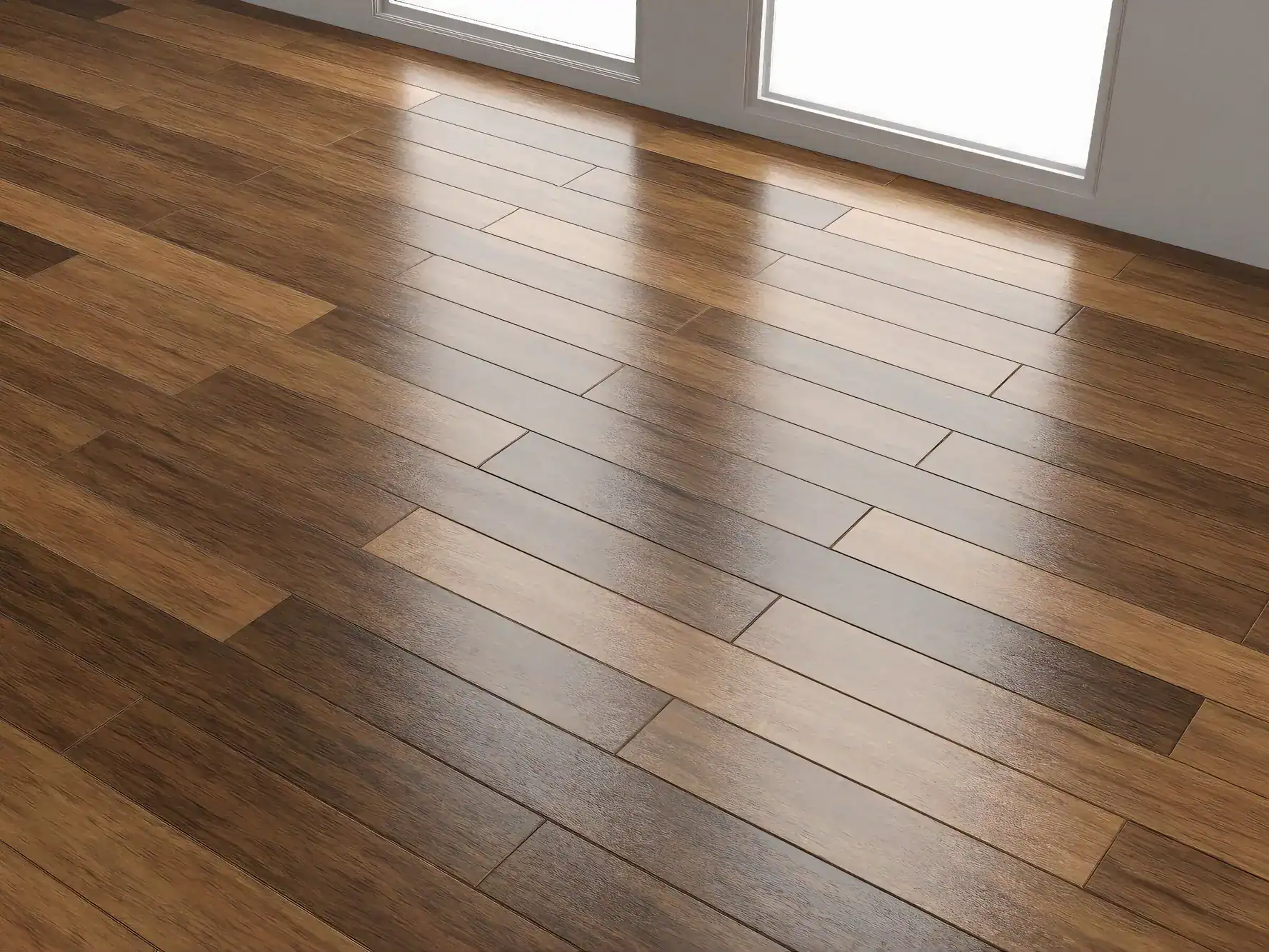
Hardwood Laminate Tile Carpet Vinyl Plank Abbington at Gale Ranch
Abbington townhomes were built with hardwood in the kitchen and great room, tile at the entry, and carpet in the bedrooms — a finish package that’s now 12 to 17 years old and showing it. Depending on which level you’re updating and how your household uses the space, the right replacement isn’t always the same material.
Engineered hardwood is the prestige choice for main-level living areas and primary suites — it handles San Ramon’s humidity cycling better than solid hardwood because of how it’s constructed, and it photographs beautifully in listing photos when the time comes to sell. LVP has taken over kitchens and entries in Abbington for good reason: it’s waterproof, scratch-resistant, and handles foot traffic from kids and pets without showing wear. Wide-plank formats are the current standard in Gale Ranch — narrow strip hardwood reads as dated in homes at this price point. Laminate offers a cost-effective alternative in lower-traffic rooms. Carpet still makes sense in bedrooms and upper hallways, where it provides the acoustic dampening that multi-story townhomes genuinely need.
Every installation includes proper subfloor prep, moisture barrier where required, and underlayment selected for the specific level of your home. We don’t apply the same method everywhere — because the main level and the third floor have different requirements, and getting that wrong is how floors fail early.

Do I need a permit to replace flooring in my Abbington at Gale Ranch townhome?
For most standard flooring replacements in San Ramon — swapping out carpet, tile, vinyl, or hardwood — no building permit is required. The City of San Ramon’s building codes explicitly state that removing and replacing these materials doesn’t trigger a permit requirement under normal circumstances.
The exception is when the project involves subfloor framing alterations, or when water damage or termite damage is discovered underneath the existing floor. In those cases, permit requirements may apply. As a licensed General Contractor operating under the 2022 California Building Code, we know exactly when a permit is needed and handle the process when it is. You won’t be left figuring that out on your own mid-project.
One additional consideration for Abbington residents: your community has both an Abbington Owners Association and the Mosaic Owners Association governing the community. While HOA rules primarily cover exterior changes and common areas, it’s worth reviewing your CC&Rs before starting any renovation work, particularly if the project involves shared walls or structural elements.
What's the best flooring for a multi-level townhome in Abbington at Gale Ranch?
The honest answer is that it depends on the level. In Abbington townhomes, the main level sits at or near slab grade adjacent to the attached garage, which creates a real moisture risk. Before any hardwood or engineered hardwood goes down on that level, the slab needs to be tested for moisture vapor transmission. Skipping that step is one of the most common reasons hardwood floors fail in newer construction — and at 12 to 17 years old, Abbington’s slabs can have moisture dynamics that weren’t fully visible when the home was new.
On upper levels — bedrooms, hallways, the primary suite — sound transmission between floors is the main concern. LVP and laminate installed without proper underlayment on an upper level will transmit impact noise directly to the room below. In a townhome where there’s no separate wing to retreat to, that matters. We select underlayment based on the specific level and the floor structure beneath it.
For most Abbington main levels, engineered hardwood or LVP are the strongest choices. Engineered hardwood handles humidity cycling better than solid hardwood in San Ramon’s climate. LVP is fully waterproof and nearly indestructible in high-traffic zones. Wide-plank formats in both materials are consistent with what the Gale Ranch market expects at this price point.
How do San Ramon's summers affect hardwood floors, and what should I watch for?
San Ramon has a Mediterranean climate — dry, hot summers and wet winters — and that seasonal swing has a direct effect on wood floors. Relative humidity in the area climbs to around 80% in January and drops significantly through the dry summer months, when temperatures can push past 93°F. Wood expands when humidity is high and contracts when it’s low. Over time, that cycling causes gaps between planks in summer and potential cupping or buckling in winter if the floor wasn’t installed correctly.
The two most important safeguards are proper acclimation and moisture testing before installation. Hardwood and engineered hardwood need time to adjust to the humidity conditions inside your specific home before the first plank goes down. Rushing that step — which low-bid contractors often do — is the primary cause of gap and movement issues later on.
Gale Ranch also sits at roughly 643 feet of elevation. If you’re choosing flooring with a long-term view, LVP and engineered hardwood both handle temperature extremes more reliably than solid hardwood, and they’re worth considering for that reason alone.
How long does a flooring installation typically take in an Abbington townhome?
For a full main-level replacement in an Abbington townhome — typically 800 to 1,100 square feet of living space — most installations take two to four days from start to finish, depending on the material and whether subfloor prep is needed. If the project includes upper-level bedrooms and hallways as well, plan for four to six days total.
The variable that most affects timeline is subfloor condition. If moisture testing reveals a problem or the existing subfloor needs leveling or repair, that adds time — but it’s time that protects the investment. Skipping subfloor prep to finish faster is how you end up with a floor that fails in 18 months.
Because most Abbington residents are working professionals who can’t be home every day during a project, we assign a dedicated project manager to your job. You get weekly updates and a clear schedule from day one. If anything changes — a subfloor issue, a material delivery shift — you hear about it immediately, not after the fact.
Is LVP or engineered hardwood a better choice for resale value in Gale Ranch?
Both add real value, but they tend to appeal to buyers differently. Engineered hardwood carries a perceived premium — it photographs well, reads as a high-end finish, and is consistently called out in Gale Ranch listing descriptions as a selling feature. In a community where homes sell in the $835,000 to over $1.2 million range, buyers at that price point notice the difference between engineered hardwood and a lookalike product.
LVP has closed the gap significantly in recent years, and in kitchens, entries, and main-level areas where moisture is a factor, it’s often the smarter long-term choice. A buyer who understands flooring will recognize quality LVP — especially in wide-plank format — as a practical, durable upgrade rather than a compromise.
The general rule for Abbington: use engineered hardwood where you want the visual impact to land — the great room, the primary suite — and LVP where performance matters most, like the kitchen and main entry. That combination tends to photograph well, hold up to real use, and satisfy buyers who know what they’re looking at.
Does DoPro Construction handle flooring in HOA-governed communities like Abbington?
Yes, and it’s something we’re familiar with in the Gale Ranch community specifically. Abbington has a two-layer HOA structure — the Abbington Owners Association and the Mosaic Owners Association — which means renovation work needs to be handled with that governance in mind. While most interior flooring replacements don’t require formal HOA approval, there are practical considerations: contractor vehicle parking, noise during working hours, and access to the property all need to be coordinated in a way that respects the community’s rules and your neighbors.
We work within HOA-governed communities regularly and understand how to operate professionally inside them — showing up on time, keeping the work area contained, and not creating issues that reflect on you as a homeowner. If your CC&Rs have specific requirements around renovation work or shared-wall projects, we’ll work within those parameters from the start.
If you’re unsure whether your specific project requires HOA notification or approval, we’d recommend reviewing your Abbington CC&Rs or reaching out to your HOA management directly before work begins. We’re happy to help you think through what questions to ask.
Other Services we provide in Abbington At Gale Ranch