Summary:
Visible Roof Damage You Can See From the Ground
The most obvious warning signs are the ones you can spot without climbing onto your roof. Visible shingle damage from high winds, hail, or aging materials can cause shingles to crack, curl, or go missing altogether.
Take a walk around your property and look up. Missing or damaged shingles expose your roof’s protective barrier to the elements. According to roofing experts, shingles are the protective layer that keeps water from reaching your roof deck, and once they’re compromised, leaks are almost inevitable.
You might also notice granules collecting in your gutters—those small, sand-like particles that give asphalt shingles their color and protection. In California’s intense UV environment, excessive granule loss exposes the underlying mat to accelerated deterioration.
Storm Damage That Demands Immediate Attention
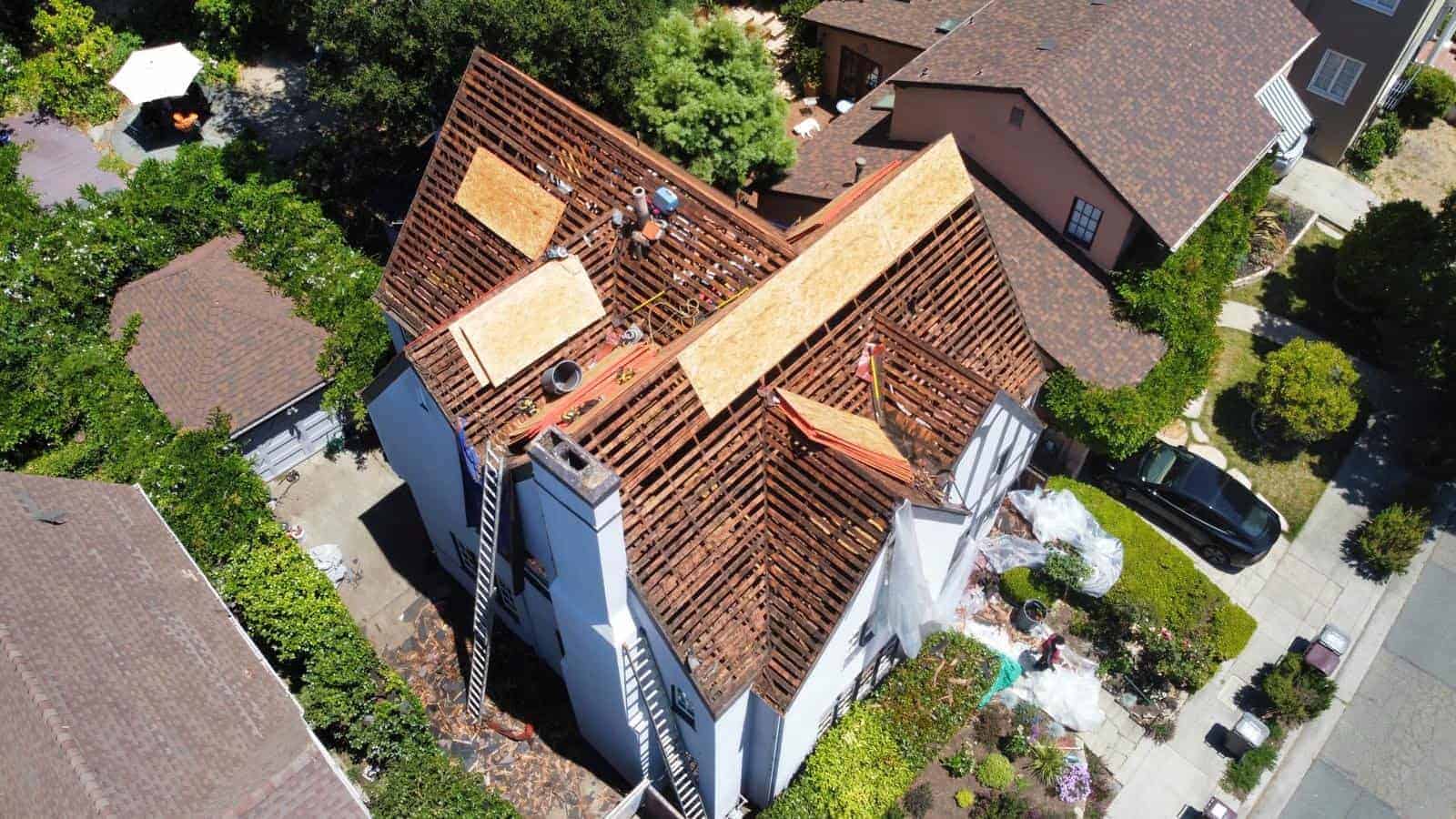
Recent Bay Area storms have brought sixty-mile-per-hour gusts causing branches to fall everywhere, creating holes in roofs and damaging power lines. If you’ve experienced severe weather, your roof may have sustained damage that isn’t immediately visible from the ground.
High winds, hailstorms, or heavy rain can tear off shingles, dislodge flashing, and even cause branches or entire trees to fall onto your roof, often leaving visible damage such as punctures, holes, or broken materials. Don’t assume your roof escaped unscathed just because you can’t see obvious damage.
Hail damage typically appears as bruising, dark circular marks, or missing granules on asphalt shingles, and severe impacts can expose the fiberglass mat underneath. Even small hail can cause significant damage that compromises your roof’s integrity over time.
After any major storm, it’s crucial to have your roof inspected by a professional. Experts recommend scheduling a professional inspection after any storm with hail, documenting damage early for insurance claims, and repairing impacted materials promptly to maintain your roof’s protective performance. What looks like minor damage from the ground could be hiding more serious structural issues that need immediate attention.
The key is understanding that storm damage often creates a domino effect. A few loose shingles might seem manageable, but they can allow water infiltration that leads to much more expensive problems. In emergency situations, time is of the essence, and choosing a company known for prompt response to emergencies is critical.
Sagging Areas and Structural Warning Signs
A drooping or sagging area on your roof usually signals structural issues beneath the surface, which could be caused by waterlogged decking, rot, or weakened support beams—problems that need immediate attention to avoid collapse. This is one warning sign you absolutely cannot ignore.
Sagging doesn’t happen overnight. It’s typically the result of prolonged water exposure that has compromised your roof’s structural integrity. Continued water exposure weakens a home’s structural components, including ceilings, walls, and support beams, which can lead to dangerous living conditions requiring major renovations.
If you notice any areas where your roofline doesn’t look straight or appears to dip inward, this is a clear sign that immediate professional intervention is needed. The longer you wait, the more extensive—and expensive—the repairs become.
Any damage to the structural integrity of your roof, such as sagging or a collapse, poses an immediate danger and requires emergency attention. Don’t wait to see if it gets worse. Structural roof problems can escalate quickly, especially during California’s rainy season when additional water weight can push a compromised structure past its breaking point.
Other structural warning signs include doors or windows that suddenly stick or don’t close properly, cracks in interior walls, or gaps where the roof meets exterior walls. These symptoms often indicate that your roof structure is shifting due to water damage or other structural compromise.
When faced with emergency roof damage, swift action can make the difference between a quick fix and a full-scale disaster, and temporary protective measures should be implemented while waiting for professional help. If you suspect structural damage, contact a licensed roofing contractor immediately.
Interior Signs Your Roof Needs Emergency Repair
Sometimes the most telling signs of roof problems show up inside your home, not outside. Brown or yellowish stains on your ceilings or walls are strong indicators of roof leaks, and water infiltration often appears indoors long after the initial leak begins.
Warning signs like interior water spots, musty odors, or rising energy bills indicate your roof’s integrity has been compromised, and at that point, professional intervention is usually the most reliable solution. These interior clues often signal that damage above may already be more extensive than it appears.
Don’t dismiss small stains or assume they’ll dry up on their own. A small leak, if caught early, isn’t a major issue, but water intrusion problems left unchecked can cause thousands of dollars of damage and be a long, difficult fix.
Water Damage and Mold Growth in Your Attic
Your attic is often the first place where roof problems become apparent. Damp attic insulation means water is penetrating the roof deck, and moisture in insulation doesn’t just reduce energy efficiency—it can also increase fire risk when combined with certain roofing materials.
If you notice mold, mildew, or black streaks in your attic or along interior walls, excess roof moisture is often the culprit, and indoor mold growth caused by roof leaks can create health risks, especially for those with asthma or allergies. This isn’t just a structural issue—it’s a health concern for your family.
Check your attic regularly, especially after storms or heavy rain. Look for water stains on the underside of your roof deck, wet insulation, or any signs of mold growth. A deteriorating roof allows water to penetrate underlayment and insulation, leading to mold, rot, and weakened framing, and over time, this moisture seeps into ceilings and walls.
If you find any of these signs, don’t try to handle the cleanup yourself. Mold remediation requires proper equipment and techniques to avoid spreading spores throughout your home. Contact a professional roofer who can address the source of the moisture while coordinating with mold remediation specialists if needed.
If you see light through the roof boards in an unfinished attic, this clearly indicates that your roof needs attention, and if water is gushing into your home, contact a professional immediately. These are signs of immediate structural compromise that can’t wait for a convenient appointment.
Rising Energy Bills and HVAC Strain
If your energy bills are unexpectedly high, while you might not be experiencing an emergency, your home’s insulation and sealing have likely been compromised. A damaged roof often allows conditioned air to escape and outside air to infiltrate your home, forcing your HVAC system to work harder.
This might seem like a minor inconvenience, but it’s actually an early warning sign of roof deterioration that will only get worse. Regular upkeep, including addressing minor repairs promptly, can extend a roof’s lifespan, and adequate attic ventilation helps regulate temperature and humidity, reducing stress on the roof.
When your roof’s integrity is compromised, it affects your entire home’s energy efficiency. Gaps, cracks, or damaged areas allow heated or cooled air to escape, creating hot and cold spots throughout your house. Your HVAC system compensates by running longer and more frequently, driving up your energy costs.
Pay attention to rooms that suddenly become difficult to heat or cool, or areas where the temperature feels noticeably different from the rest of your home. These temperature variations often indicate air leaks through your roof system.
The local climate, including temperature fluctuations, precipitation, and sunlight exposure, can impact a roof’s durability, and dark shingles in warm climates like California are more likely to wear and tear due to heat absorption. This makes energy efficiency monitoring even more important for Bay Area homeowners.
If you notice a sudden spike in energy bills without an obvious cause, have your roof inspected. What starts as a small efficiency problem can quickly become a major structural issue if water begins infiltrating your home’s envelope.
When to Call DoPro Construction for Emergency Roof Repair
Don’t wait for a small problem to become a major expense—early detection and professional intervention are key to protecting your home’s value and your family’s safety. The five warning signs we’ve covered—visible damage, storm impact, structural sagging, interior water signs, and energy efficiency problems—all demand immediate professional attention.
While some roofing emergencies are unpredictable, taking proactive steps and scheduling routine inspections by professional contractors can minimize the likelihood of unexpected mishaps. Remember, the cost of prevention is always less than the cost of emergency repairs.
If you’ve identified any of these warning signs in your Contra Costa or Alameda County home, don’t hesitate to contact us at DoPro Construction. Our experienced team provides rapid emergency response, comprehensive inspections, and transparent repair solutions that protect your investment and give you peace of mind.